There is a particular weight to whisky aged in the tropics. Present, tactile — a viscosity that coats the glass differently than its Scottish counterparts. Vanilla, cinnamon, ripe pineapple, and something else: a subtle briny edge, almost umami, that rarely appears elsewhere. This is the signature of Indian single malt, and Heemanshu Ashar, Global Brand Ambassador at Paul John, has spent three decades learning how to read it.
When he began working in the whisky industry in the mid-1990s, the vocabulary was simpler: smoothness, lightness, brand reputation. “Labels mattered more than liquid,” he recalls. Single malts were rare, expensive, mostly found in five-star hotels or duty-free shops. The idea of flavour was narrow, and the whisky world in India was narrower still. Blended Scotch dominated, and that was that.
Three decades later, Ashar’s palate — and the consumer’s palate — has expanded enormously. “I now look for texture, balance, origin, cask influence, and how a whisky evolves in the glass,” he says. “Whisky is no longer about smoothness alone; it is about character, honesty, the maker, and place.” Exposure to global styles, travel, tastings, and education has made drinkers more curious and more confident. The question has shifted from prestige to honesty.
And India, it turns out, has found its voice.
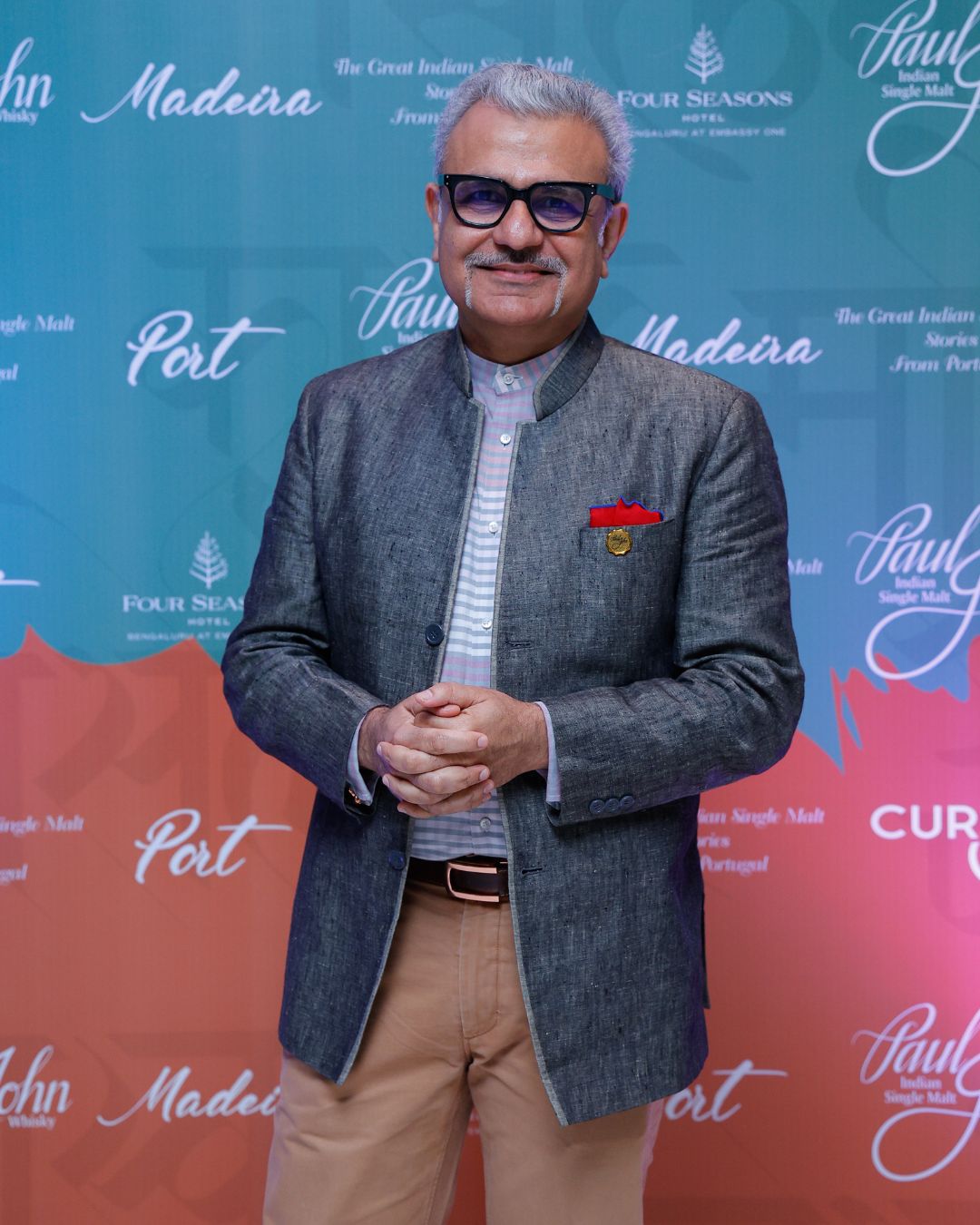
Heemanshu Ashar, Global Brand Ambassador at Paul John
Indian single malt has developed a very clear sensory identity. “The base is 6-row barley, which gives a pronounced maltiness and a naturally oily, viscous texture,” Ashar explains. Tropical maturation plays the defining role. In coastal locations like Goa, faster interaction with oak brings forward roasted nuts and ripe tropical fruits within a few years. “There is also a subtle briny, umami edge in coastal whiskies, something rarely found elsewhere,” he notes. Malts matured inland show slightly dried fruit profiles but still lean tropical. This combination of malt weight, fruit richness, and texture is distinctly Indian.
The shift mirrors what happened decades ago with wine. Old world traditions gave way to new world expressions, each with their own character. “Provenance now matters more than age statements,” Ashar observes. “Consumers understand that climate affects maturation. Tropical whisky matures faster and differently, just as wines from warmer regions express fruit earlier than cooler climates.” Whisky drinkers today are more open, informed, and willing to explore beyond tradition.
This is where the conversation about age becomes crucial. Indian single malts often skip age statements because tropical maturation works on an accelerated timeline. Convincing a sophisticated drinker that a younger whisky can have depth requires explanation — and proof. “In the tropics, wood interaction and evaporation are intense. Angel’s share can be 8-10% annually, compared to 2% in Scotland,” Ashar shares. “Depth comes from concentration, not age alone. Once people taste and understand this, the conversation changes naturally.”
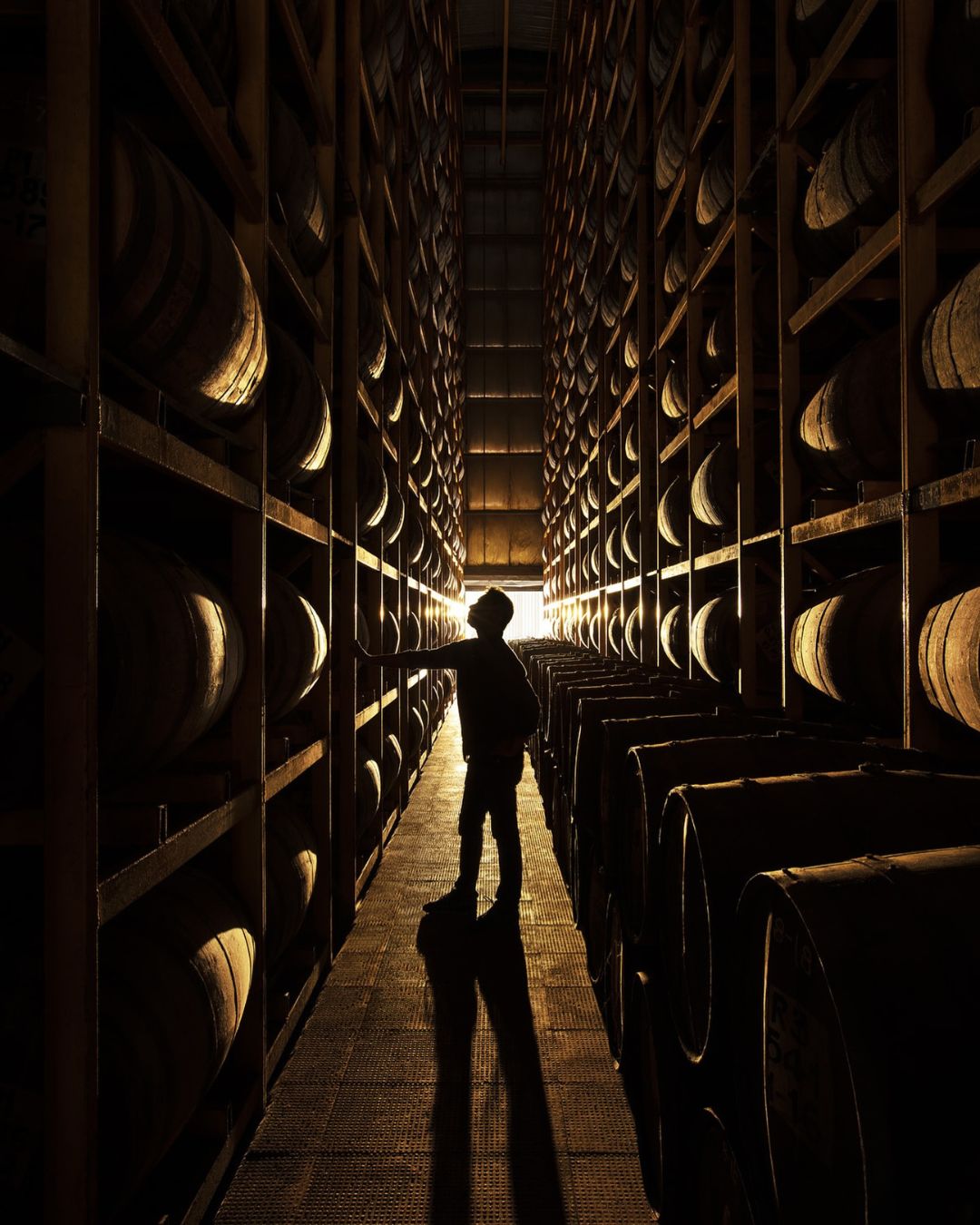
Whisky casks maturing at the Paul John Visitor Centre in Goa, India
It is a conversation that has been changing rapidly. Globally, the whisky industry is experiencing a tectonic shift. New regions are offering something new. India’s emergence is part of this larger movement, one that values innovation alongside tradition. Whisky is being judged for what it is, on its own merits.
After three decades in the industry, Ashar’s mission remains straightforward. “A simple idea,” he says. “India makes genuinely good whisky — and it deserves to be judged on its own terms.”
That simplicity is deceptive. Behind it lies years of distillation, cask selection, and a deep understanding of how climate and craft intersect. It is the work of someone who has watched an entire category grow from obscurity to legitimacy, and from novelty to respect. The language of whisky has expanded beyond Scotland. It is being spoken in Goa, in the tropics, in the weight of 6-row barley and the viscous texture of a spirit shaped by heat, humidity, and time — just not the kind of time we once thought mattered most. The vocabulary has changed, and India is fluent.
Feature Image Courtesy Arzchillect on Pinterest