The root word for textile and architecture is the same: teks, meaning “to weave” or “to fabricate”. This weaving moves from the literal to the figurative. And in the act of weaving, Kengo Kuma and Jaipur Rugs came together to showcase a collection of sixteen pieces at Salone 2026 in Milan. The event was held from April 21st-26th on bridging the divide between craftsmanship and Innovation. The rugs are crafted around Kuma’s architectural philosophy and are not a direct translation of what is ‘built’ onto what is ‘woven’. There are no buildings imprinted upon fabric. Rather, they work with the fundamentals of Kuma’s philosophy wherein he centres light, materiality and spatial rhythm in his projects. Each piece was handcrafted in Rajasthan, using a blend of wool and regenerated viscose. This allowed for a mix of warmth and structural integrity to capture the effect of 3D textures from architecture and the surrounding natural elements.
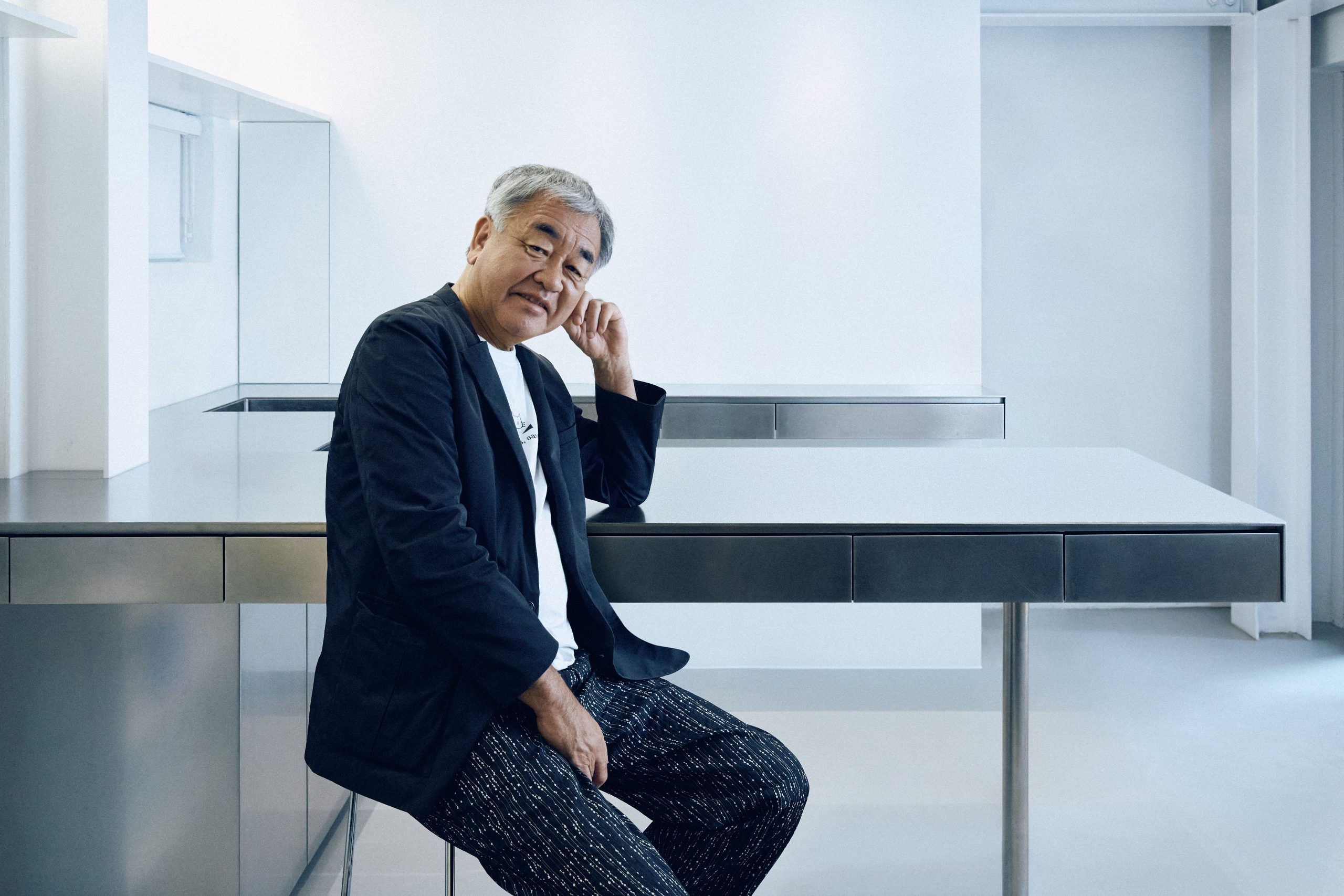
[Profile] Kengo Kuma
Between the two media, Kuma has found the elements responding to similar natural stimuli. Buildings breathe, filter light and cast shadows, and so do fabrics, patterns and textures. On this common ground, Jaipur Rugs and Kuma initiate a dialogue, a symphony, between Japanese minimalism and Indian artisanal heritage. From the conception to the unification and the final product, these subtle yet significant threads are delicately balanced. What is born creates a play of shifting atmospheres and moods, beyond the decorative to interactive and interpretive.
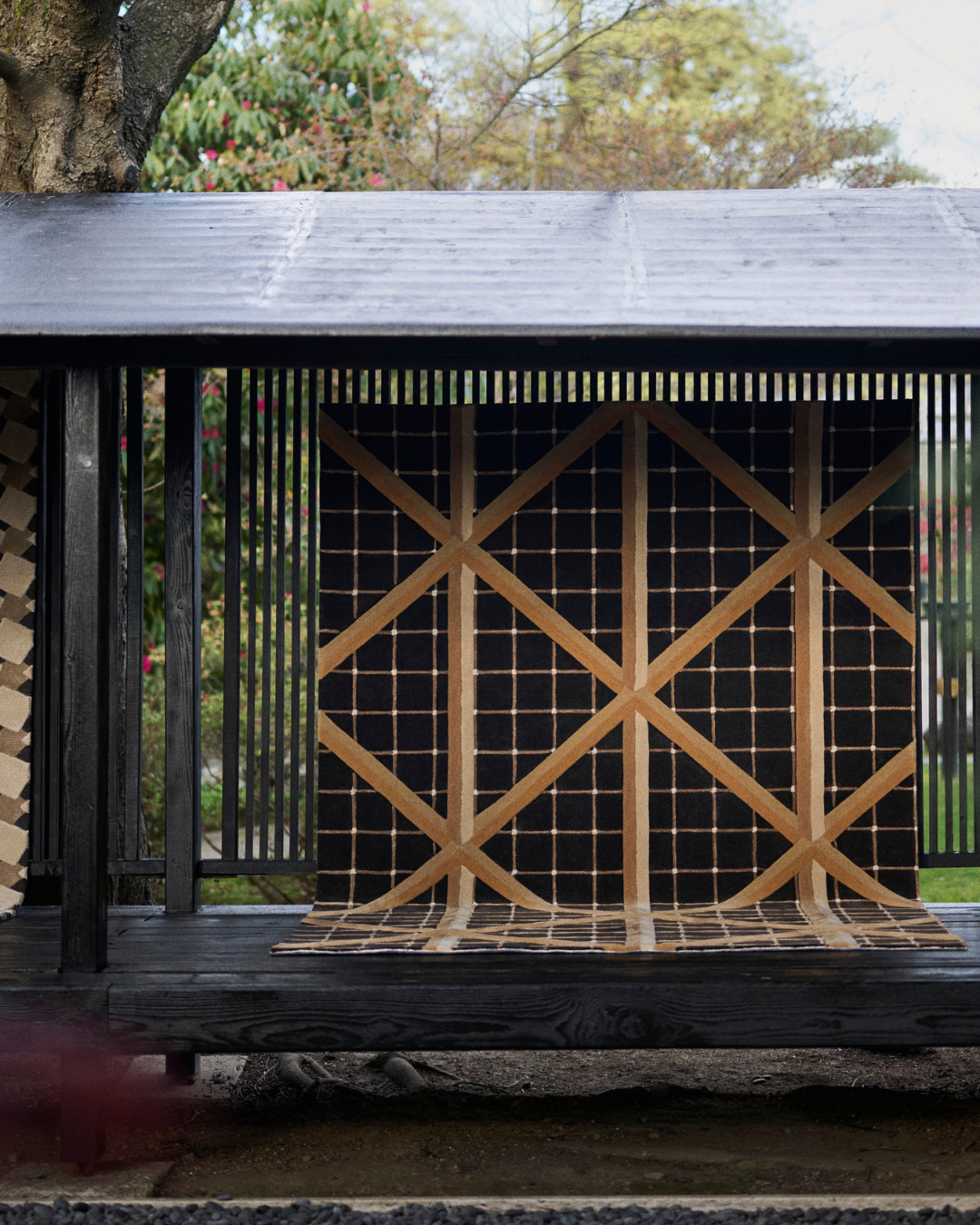
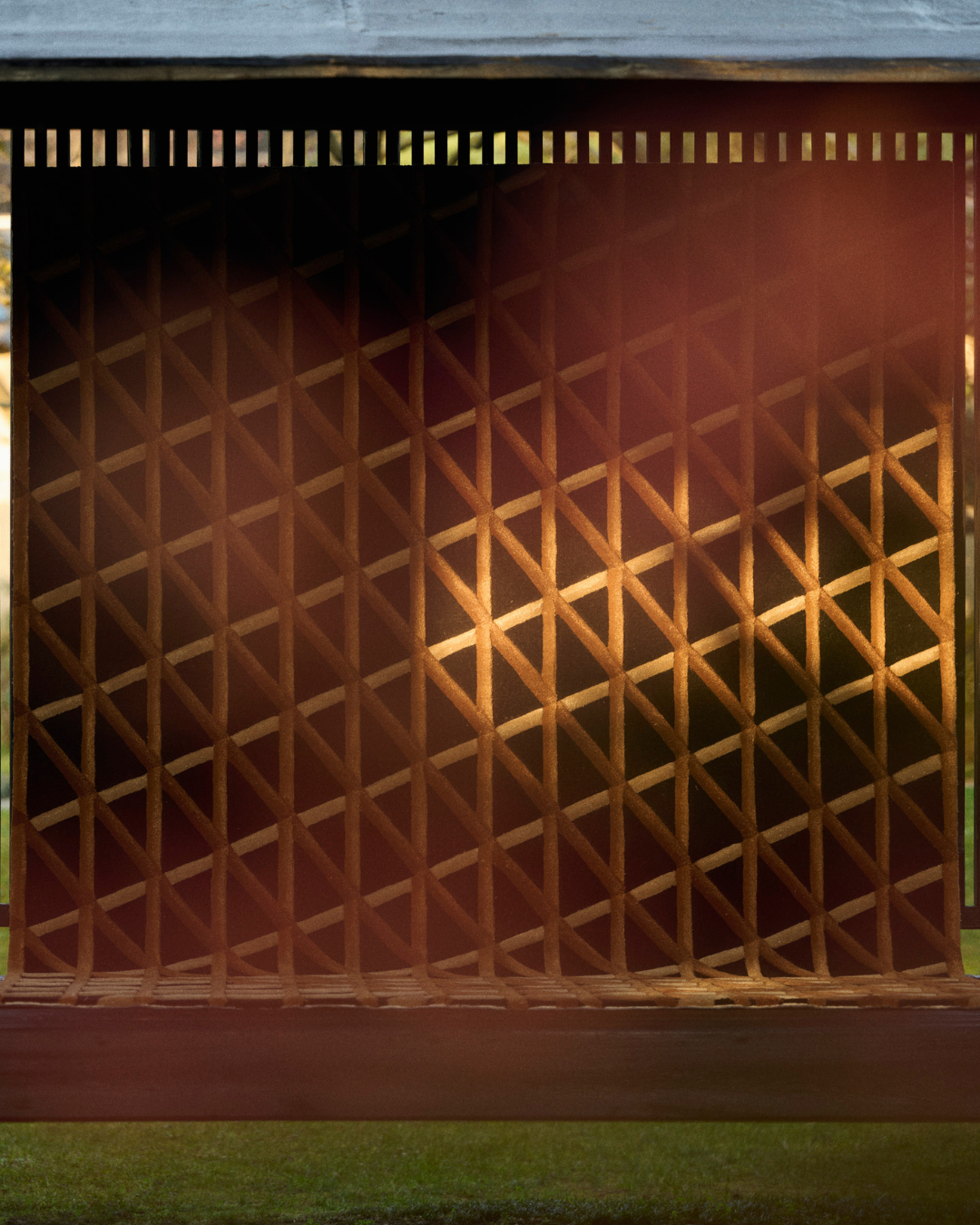
Craft takes centre stage in philosophies of Jaipur Rugs and Kuma
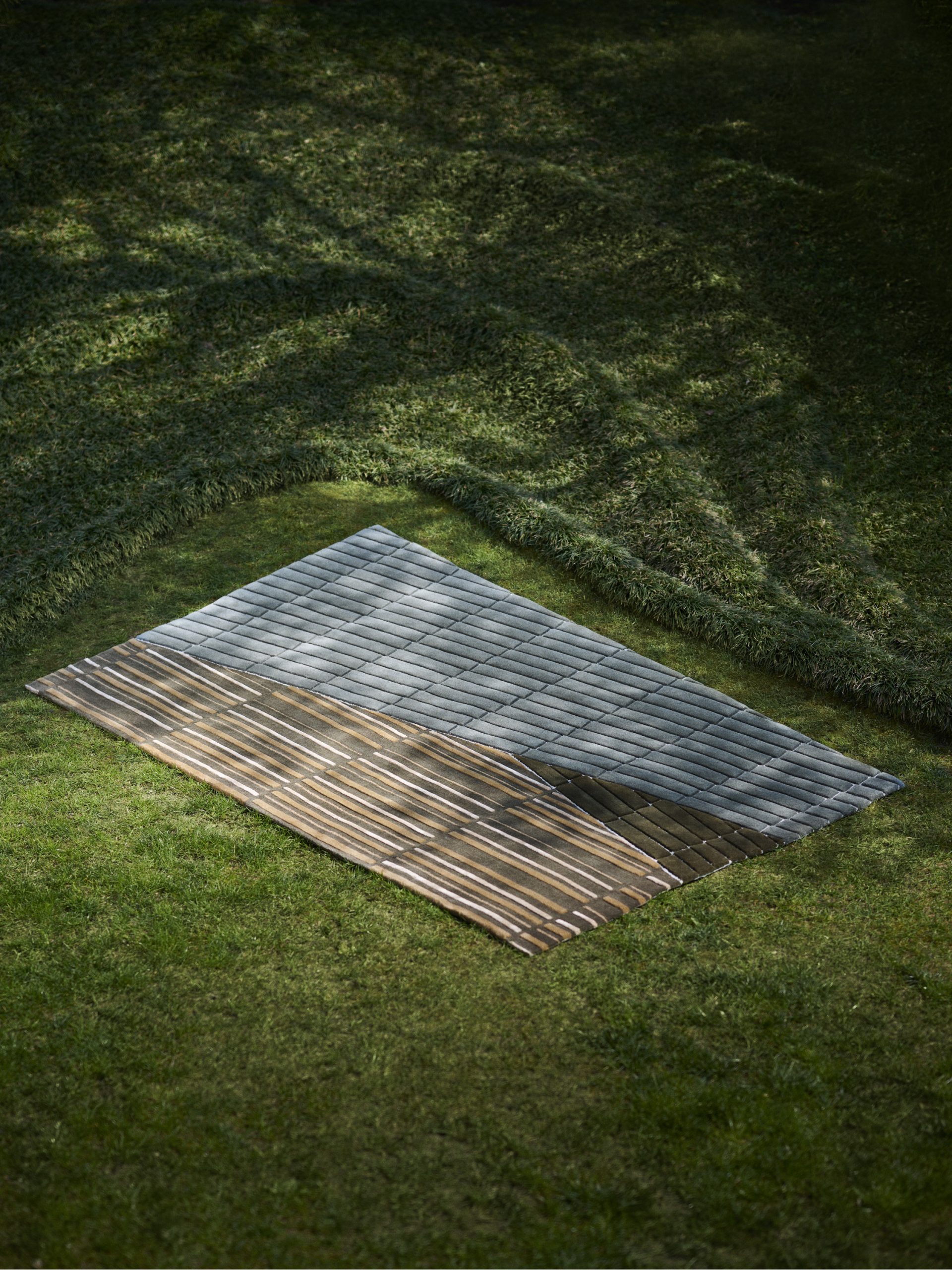
In the collection at Faces designs like Sukima-6 recreate the traditional Musogoshi lattice, inspired by the Suntory Museum of Art. The airy and breathable effect of blank spaces is mimicked in the pattern on the rug. Similarly, Kigumi-5 and Kasane-3 also work with the recreation of layerings and textures found in Japanese wood joinery and Chidori grid, to harmonise the flow between interior and exterior, the natural and the crafted. These rugs are inspired by the GC Prostho Research Museum Centre and Albert Kahn Museum, both renowned projects by Kumo. Another piece inspired by a museum, Chirashi-1, captures the fluidity of the stone structure of Kanayama Castle Ruin onto the textile. The weaving captures the shades and depth of the sturdy ancient gentleness of stone.
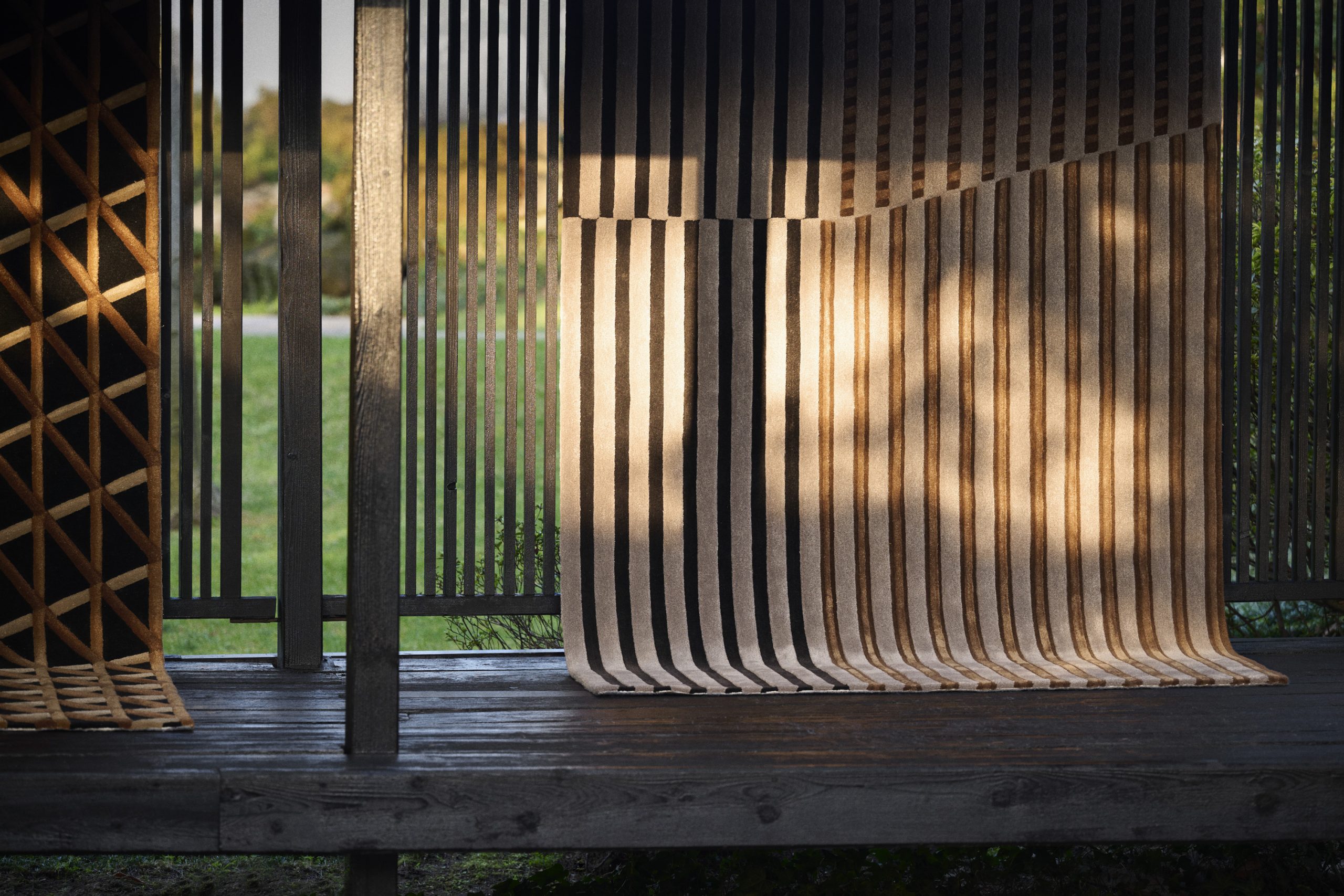
Sukima under the sun
Jaipur Rugs, founded in 1978 by N.K. Chaudhary, began as a humble enterprise with two looms and nine artisans. Today, as the Kengo Kuma collaboration Faces shows, the brand is worldwide, putting Indian artisanal craft, along with the artisan, on the global map. It has revolutionised Indian craft practices by removing middlemen and bringing recognition to those who are doing the weaving with their hands. Today, there are forty thousand craftsmen with seven thousand looms across six hundred villages. The process is decentralised, and the artisans have the agency and freedom to design their own products independently. Their speciality is hand-knotted, hand-tufted, and hand-loom techniques using raw materials such as silk, wool, jute, bamboo-silk and viscose. Milan, Paris, New York and London are key capitals for the design house whose sister branch, Jaipur Living, operates the US businesses.
The collection- Faces, at Salone 2026, held deep fascination for a varied audience. Those who work with design, those in architecture, those in the art world, and all who wish to contemplate the dynamic nature of space and texture and its impacts upon mood and atmosphere. The result is not a curation of art objects alone but a shift in perception as to what can be art and how its interpretive potential exceeds its immediate utilitarian purpose.
Jaipur Rugs and Kengo Kuma have built a reputation beyond the point where it has to be earned or kept. It is set. And Faces served as an opportunity for us to partake of it.
Words by Ayesha Suhail.
Featured photo courtesy Jaipur Rugs.