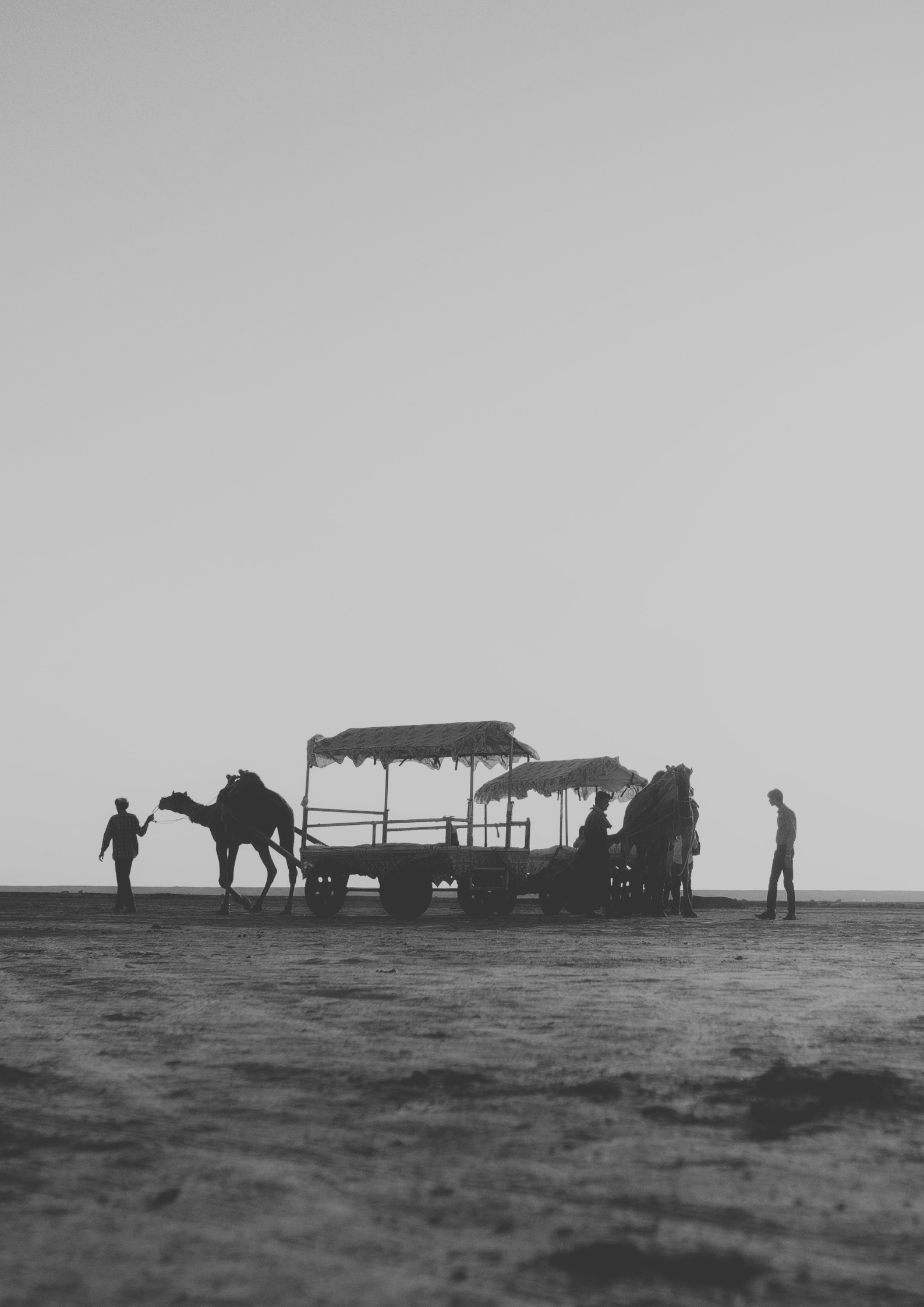
Salt, in expanse, contains the infinite possibilities of a blank canvas. I am driving through the Rann of Kutch from the Harappan citadel of Dholavira, cruising along the Road to Heaven which is flanked by the white desert. Emerging from this vast, open landscape — a parade of people dressed in intricate patterns, mirror work, block prints, weaves, embroidery. How on earth, I wonder, as they pass me on the side of the road, did they come up with this design language all those years ago in such a desolate landscape, where there’s really nothing much to see?
Look closer, and each outfit tells you about its maker — which animals they herd, which plants they extract dye from, which mythologies they are drawn to. Some glimmer with hand-blown mirrors that nobody makes anymore; others have intricate stitching that can only be done by tiny, nimble hands. Some, like the abstract constellations of the Rabari tribe, have gone extinct: So obsessive were the community’s women about their bridal looks, that in the mid-1990s elders banned them from making their own clothes to prevent women delaying their weddings into their late 30s, and mid-40s.
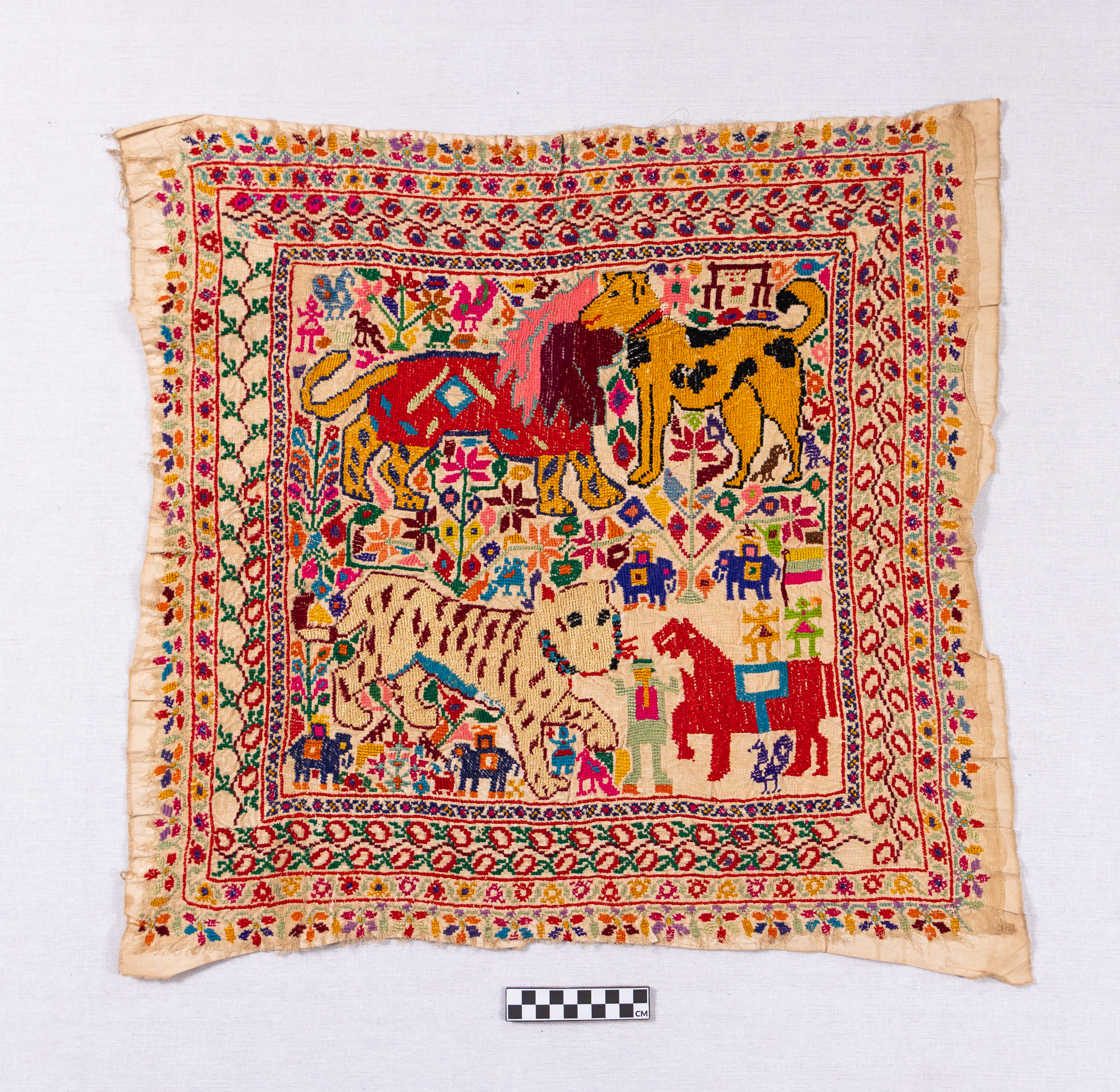
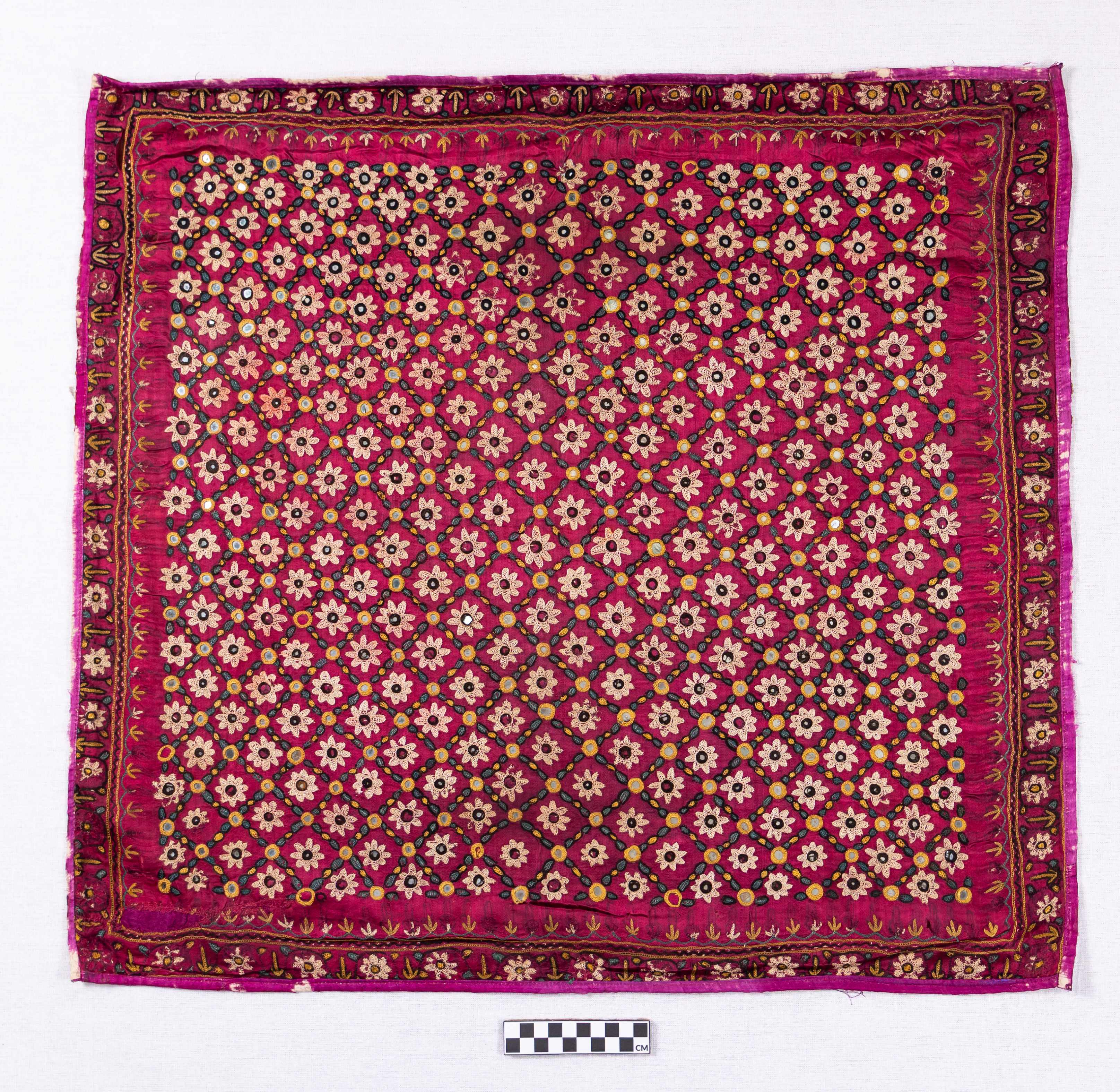
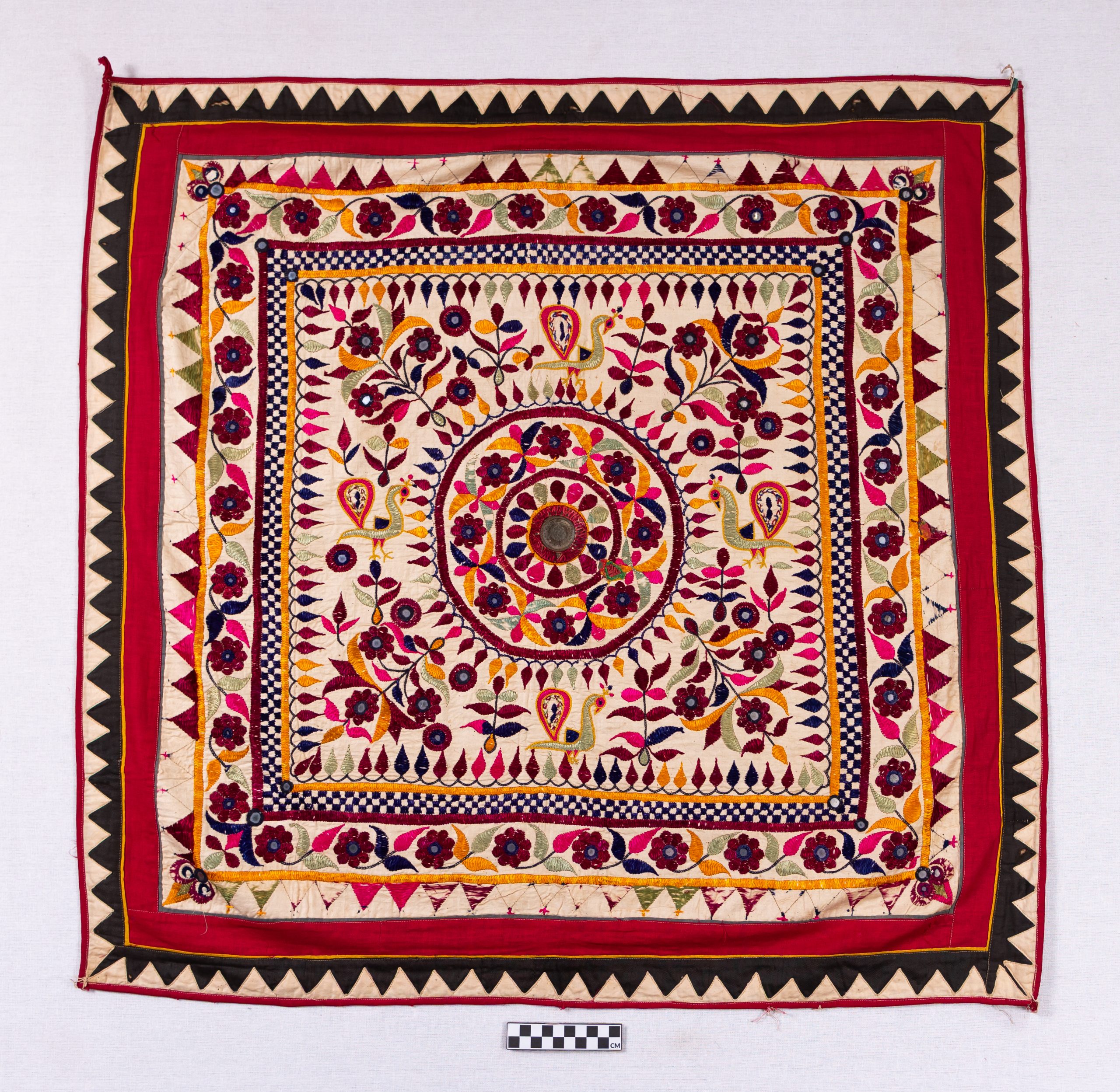
(L-R) Chakla (Embroidered square) belonging to the Jain community from west Kutch, Gujarat, over 100 years of age; Chakla from the Lohana community of west Kutch, Gujarat, over 100 years of age; Chakla of the Patel community, Saurashtra, Gujarat, 65/70 years of age
In the main city, Bhuj, I stop for chai at the home of Salim Wazir. It is an empire in a matchbox — 6000-odd pieces of cloth, collected by his father Abubaker who travelled through the callous heartlands of the Indian subcontinent from the 1960s onwards, gathering rare, vanishing textiles. Trained at the Prince of Wales Museum (now, Chhatrapati Shivaji Maharaj Vastu Sangrahalaya) in Mumbai, Abubaker specialised in identifying authentic Mughal miniature paintings before he began his life’s opus — recording a patchworked history of South Asia that dwelt in the private lives of rural women.
“There is no value for any of this,” says Salim, who inherited his fathers collection after Abubaker’s death four years ago. In one hand he has a multicolored toran that would decorate the entrance of a Rajput home; in the other is a blouse that once hugged an Ahir woman’s chest. In the old days, he says, women made cloth for themselves. Because they were not created for commercial usage, the stories they carry are deeply personal — advice from a mother to a daughter, myths learned in childhood, expressions of personal goals, and desires. “Cloth was the old way that women told their families, their communities, who they were,” he says. “It was a person’s identity.”
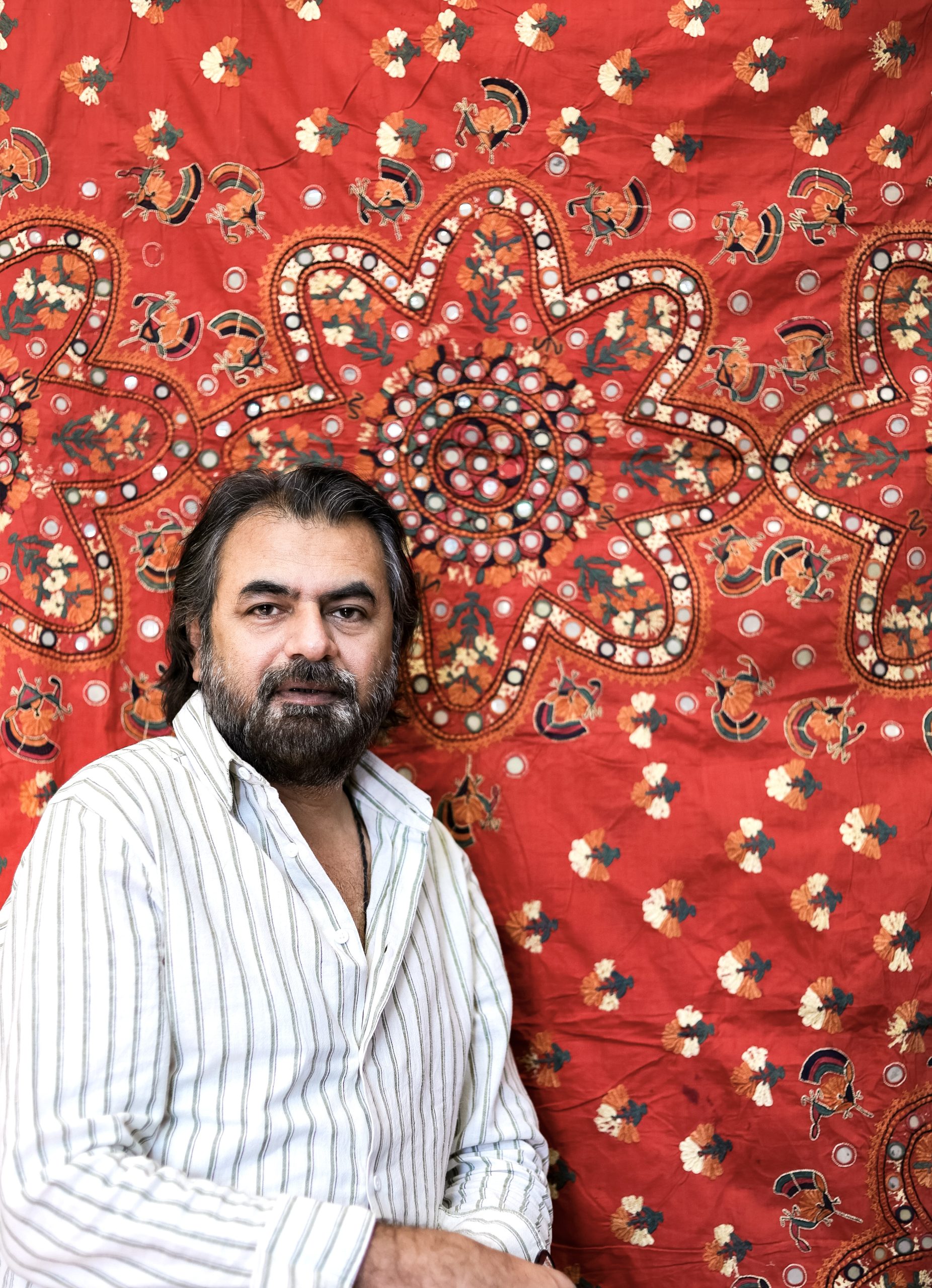
Salim Wazir, a second-generation textile collector from Bhuj in possession of around 6,000 rare textiles
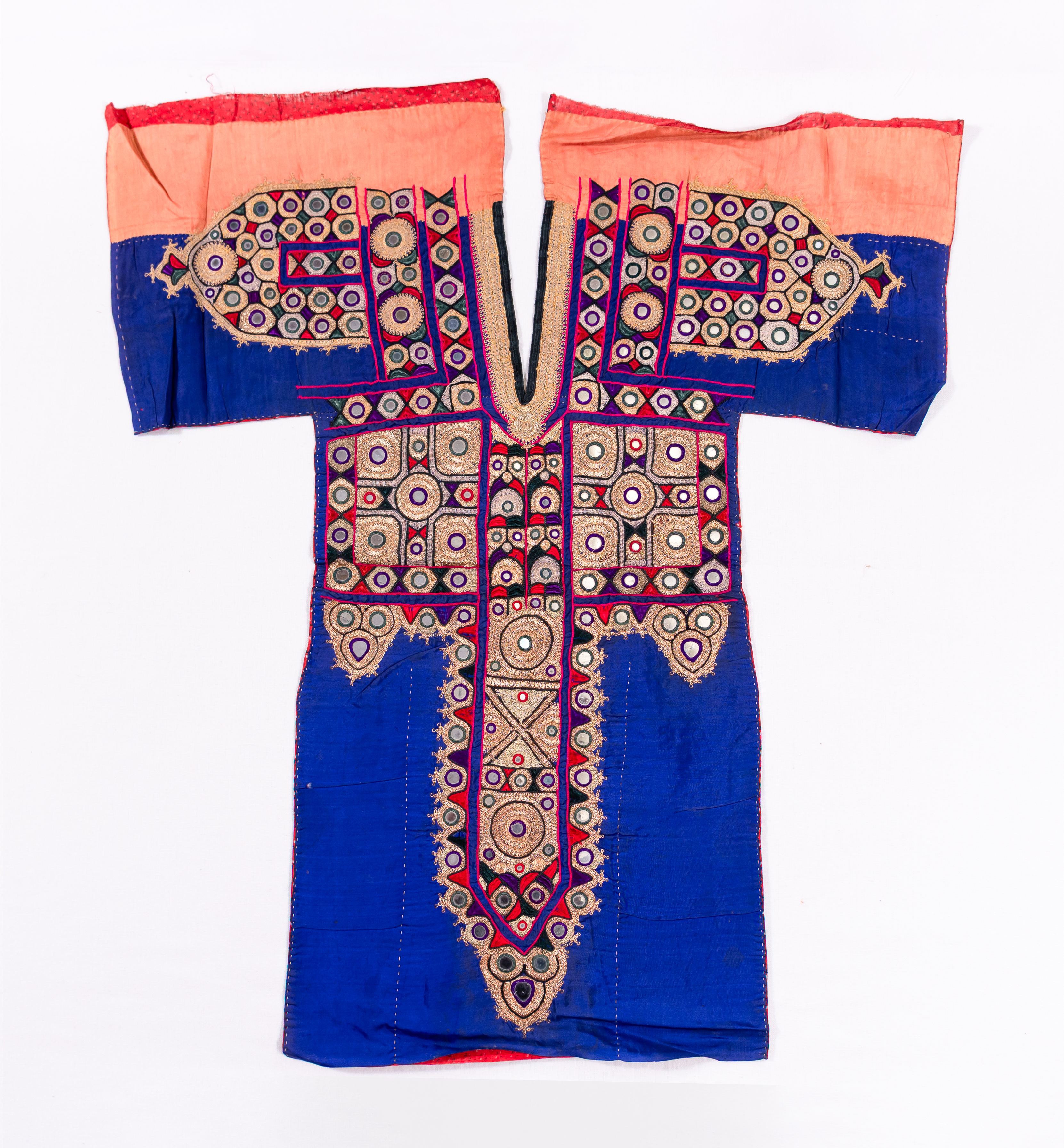
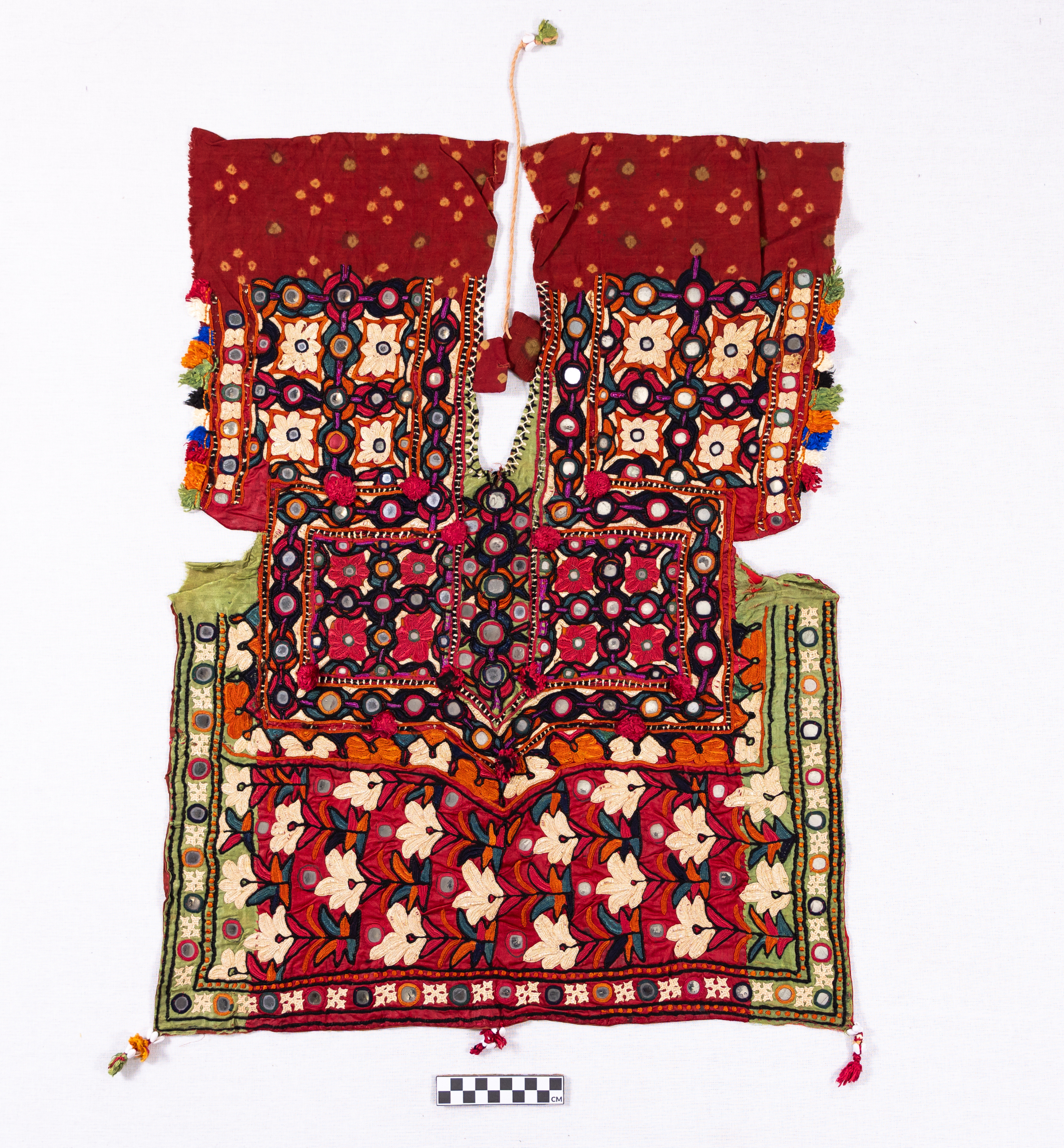
(L-R) Zari-embroidered Gaj from Sindhi Memons of north-east Kutch, Gujarat, 75/80 years of age; Gaj from the Lohana community of Sind, Tharparkar, Pakistan, 85/90 years of age
Nearby, in the town of Ajrakhpur, I meet men who turned to traditional block printing after the 2001 Bhuj earthquake shattered their lands, livestock, and livelihoods. In Bhujodi, another village in the area, men pedal their wooden looms, weaving wool into rugged shawls that can withstand the desert night. From the 1980s onwards, Salim says, a number of NGOs and social workers made efforts to revive textile heritage by commercialising and selling craft items to support livelihoods. Skills passed down from mother to daughter became security that people fell back upon to survive disasters. But production to commercial timelines naturally led to a decrease in quality. “The old things we made are amulya,” he says, priceless. “Those cannot be made again.”
When markets became globalised, people and goods became displaced from their environments. The difference, Salim says, was that in the old days, people made things for themselves, their families, their homes, their bodies. Materials were gathered from the surrounding landscape, dyes were extracted from local flora and fauna — fashions did not need to change to keep buyers buying. They were rooted, changing only with the seasons. Each community preserved an aesthetic passed down ancestrally. Each woman wore garments that were unique but distinctly identifiable. “A Meghwal woman would never copy the Sodha community’s style, or the Ahirs,” Salim says. “Quality wise, the things they made were much better because more time went into making them. When you have to make things to a commercial timeline, the quality gets compromised.”
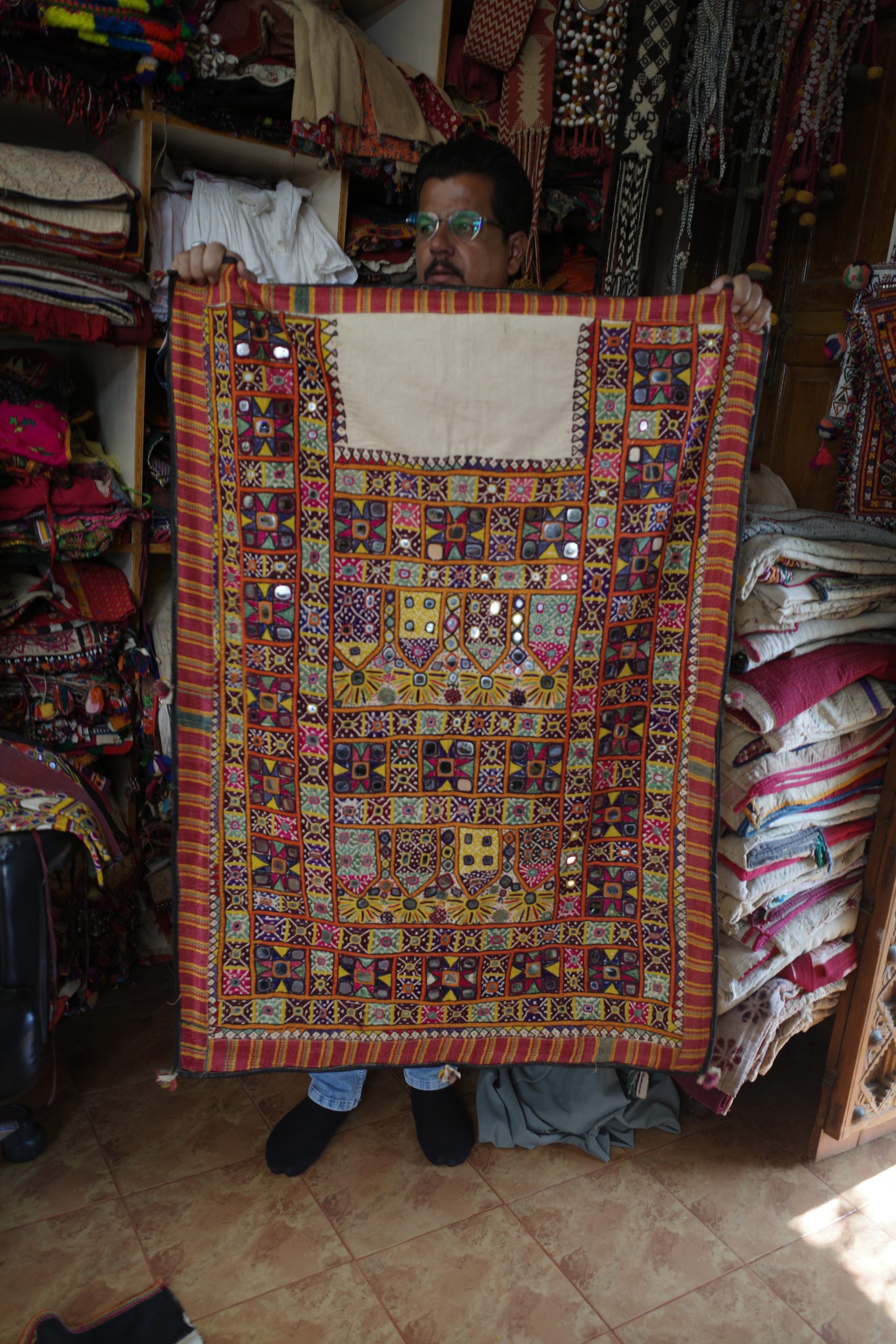
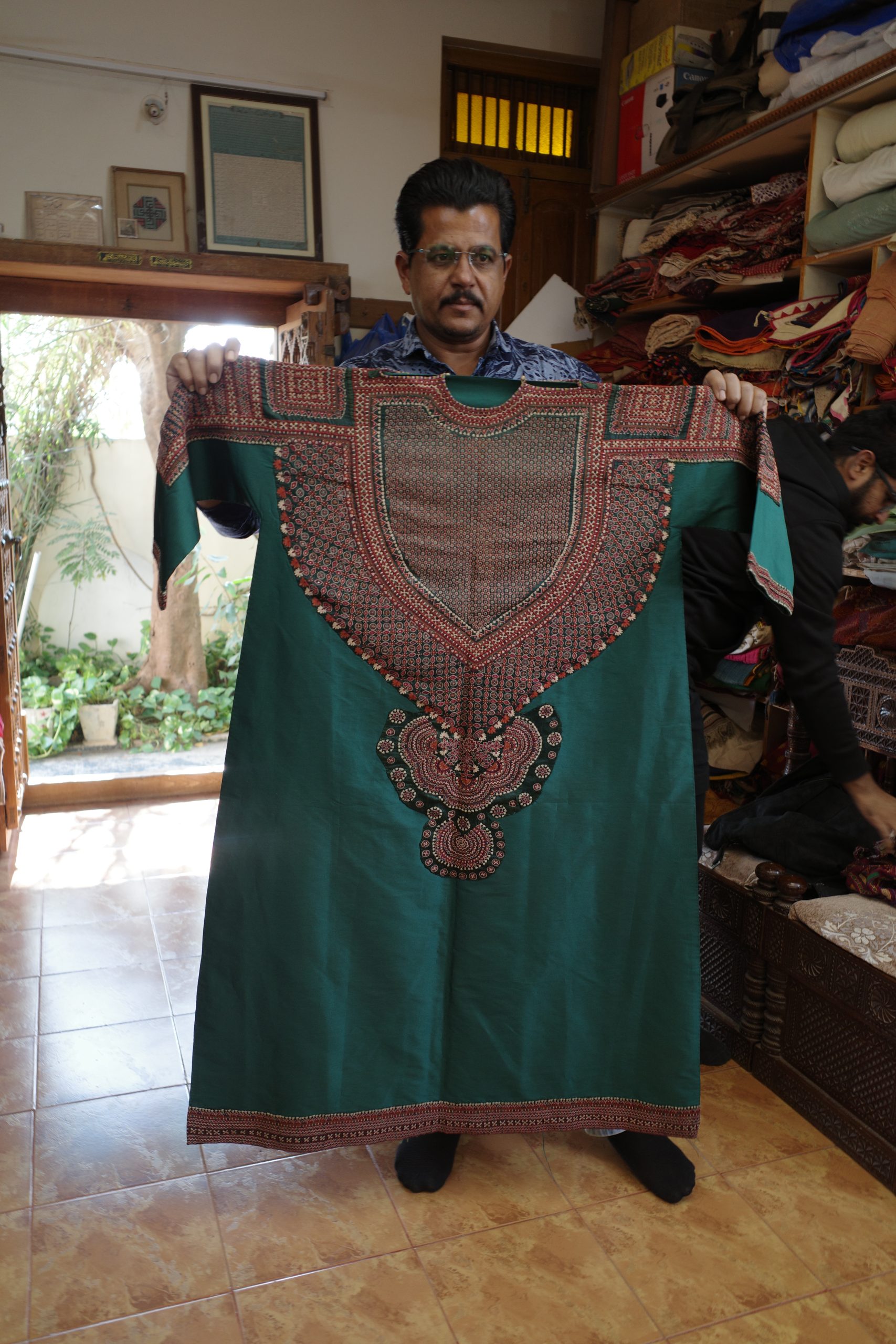
(L-R) Dhaniyo, an embroidered quilt cover used by the Rajputs of north-east Kutch. 60/65 years of age; Abho, a finely embroidered garment worn by the Saiyed Muslims of West Kutch as a wedding tunic. Over 100 years old.
Although young designers, craftspeople, fashion brands frequent his collection to learn antique techniques and styles, Salim hopes its value can be understood more widely among ordinary people. His dream is to house his father’s collection in a museum in Bhuj, where it can be accessed by the public and especially the local and rural populations nearby. “Papa’s dream has become my dream. And when we gather enough funds, we’ll put the museum up right here in Bhuj,” he says. “It’s better these things remain here, where they have history.”
To support Salim’s work, or buy pieces from his collection, contact him directly on Instagram at @salim_wazir
Words by Vidhi Doshi.