Silk represents many crafts, periods of time, and places of belonging in India. With Cartographing Silk — a recurring series where Svasa Life speaks to textile businesses across the subcontinent to explore how silk is transformed from a raw material to objects of inheritance and luxury collectables — we scratch at the curiosities around silk, its past, and importantly, its future.
The Dancing Paisley of Banaras
In eastern Uttar Pradesh, on the banks of the Ganges, stands the ancient city of Kashi, a significant pilgrimage site in India that has attracted folks from all walks of life – Mark Twain famously called it older than history and tradition. American poet Mary Oliver also described a scene of a woman carrying water to refresh the shrine of Shiva in her 2012 poem Varanasi. It is the city where people come to attain enlightenment, and where our existence dissolves in the fog of history and time.
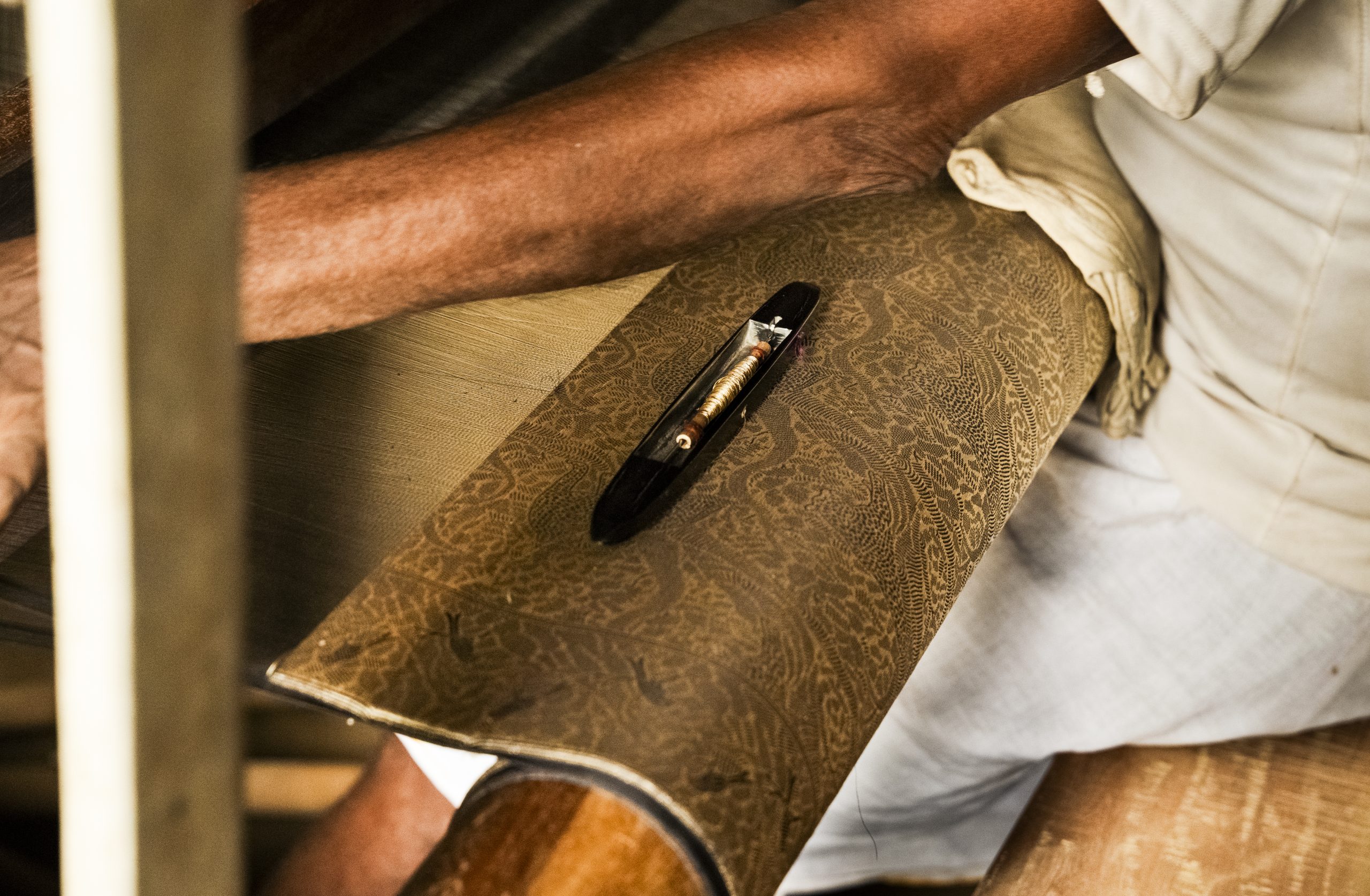
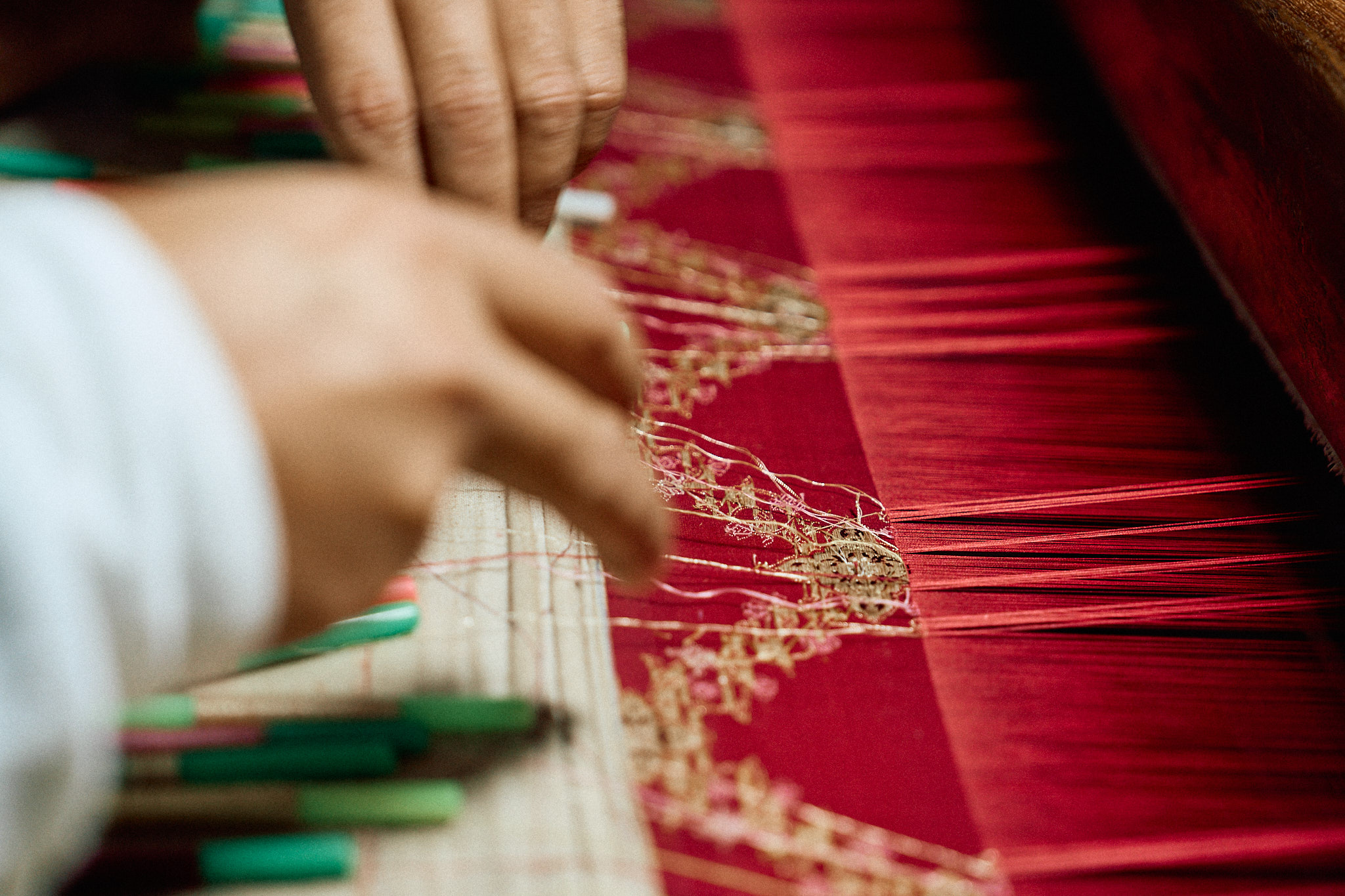
Tilfi bets on the intricacies of Banarasi and makes us question the importance of intergenerational craft knowledge
At this intersection of life and death is a weave that has evolved and adapted to the transience of time. Banarasi is what I had grown up hearing was an heirloom — a weave of opulence kept exclusively for big days, the one that adorns the bride and becomes her first love. It isn’t something one pulls out of their wardrobe regularly. It demands an occasion, a celebration that is worth wrapping it around the waist and carrying its history on the shoulder. Today there are many custodians of the weave of Banaras, but few treat that knowledge as something sacred.
It was exactly a decade ago when Udit Khanna and Aditi Chand found their way back home from France — it wasn’t particularly a calling or homesickness per se, but the homecoming was for something larger. They stood on the streets of Banaras on a hot summer afternoon, letting the city take over their senses, awaiting a new chapter of their lives in the holy land. What started as a reflection on the continuation of craft and cultural heritage has now become a brand that works with over 2,000 weavers across the region. Tilfi began in 2016 not as a rebrand of an old, dated family business but rather as a continuation of a legacy while staying true to the historic weave. Aditi prefers to call it a collective that builds on what already exists but attempts to branch out to a different business route altogether. “With Tilfi, we were very conscious that we would take a governance issue with creative consequences by structurally de-risking the weaver. We will bear the cost of innovation if there is a continuity of employment for the artisan which encourages them to focus on innovation,” she says.
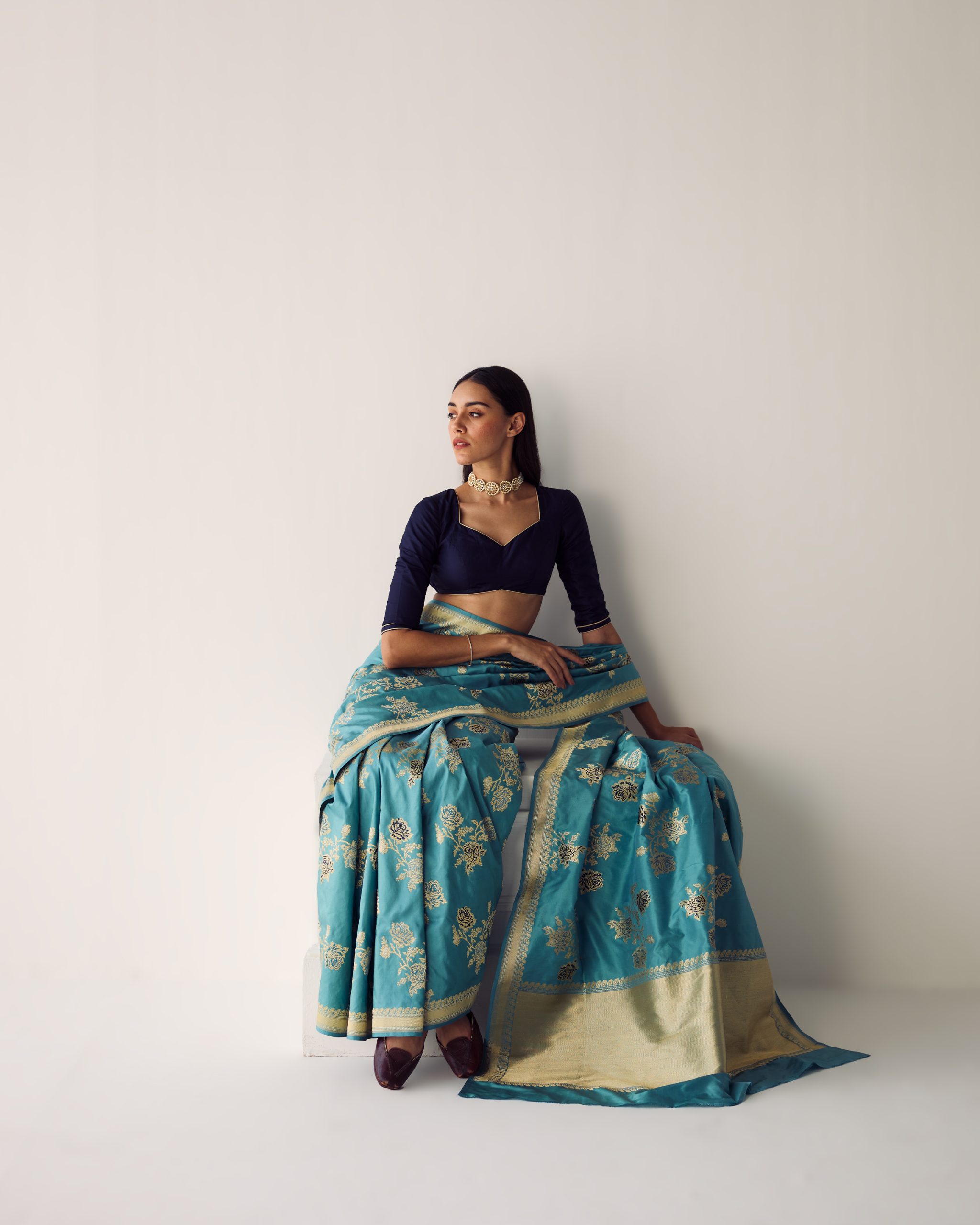
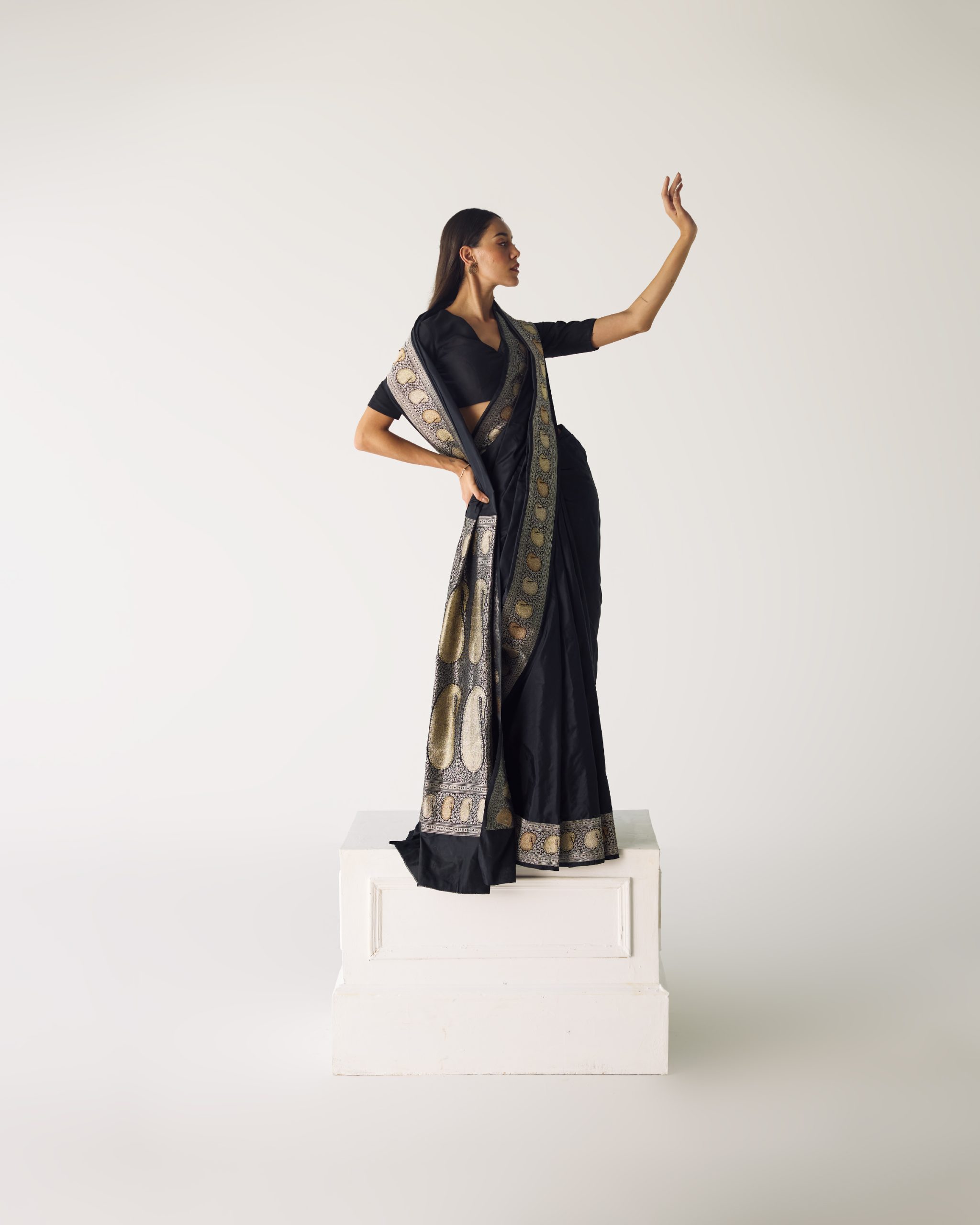
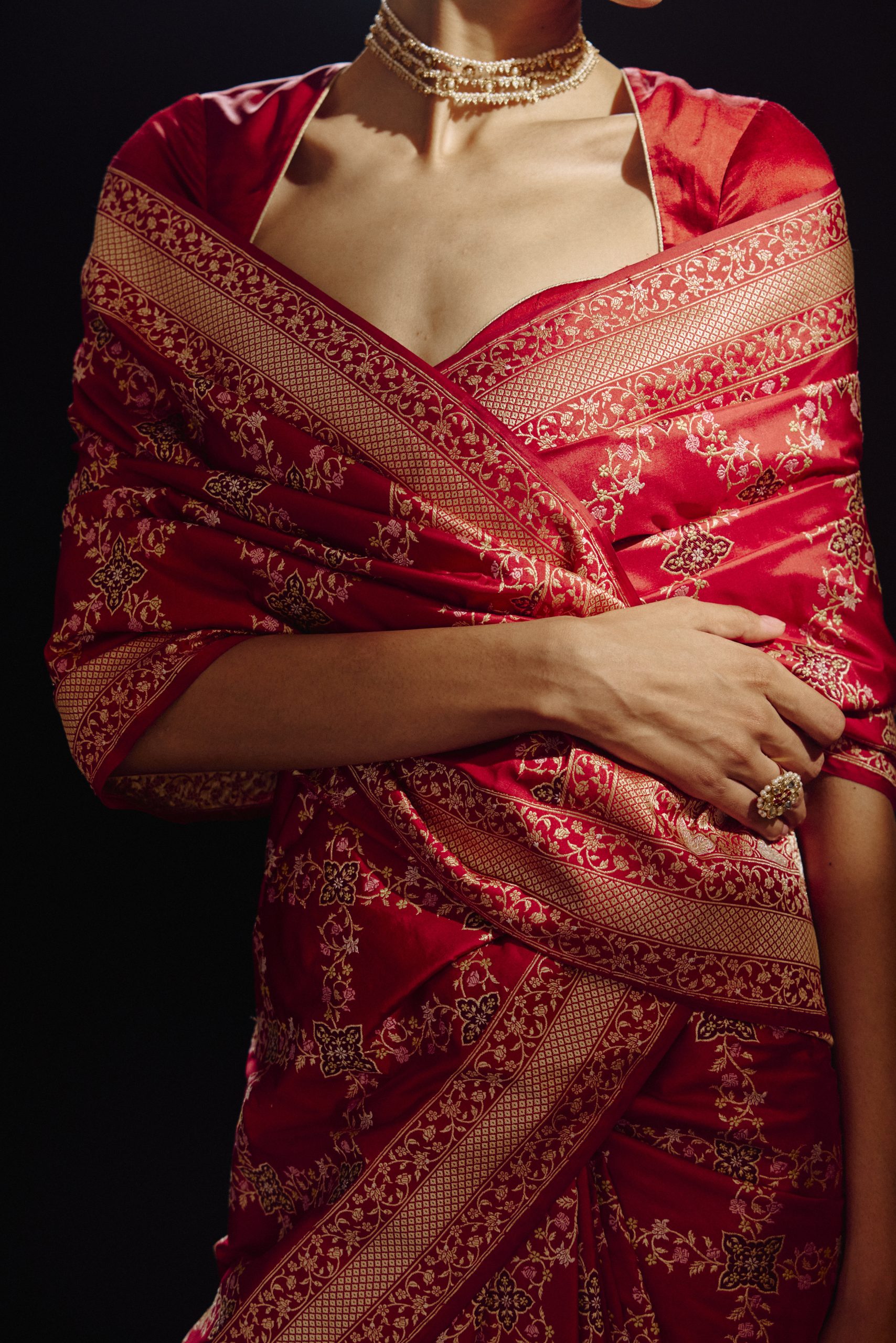
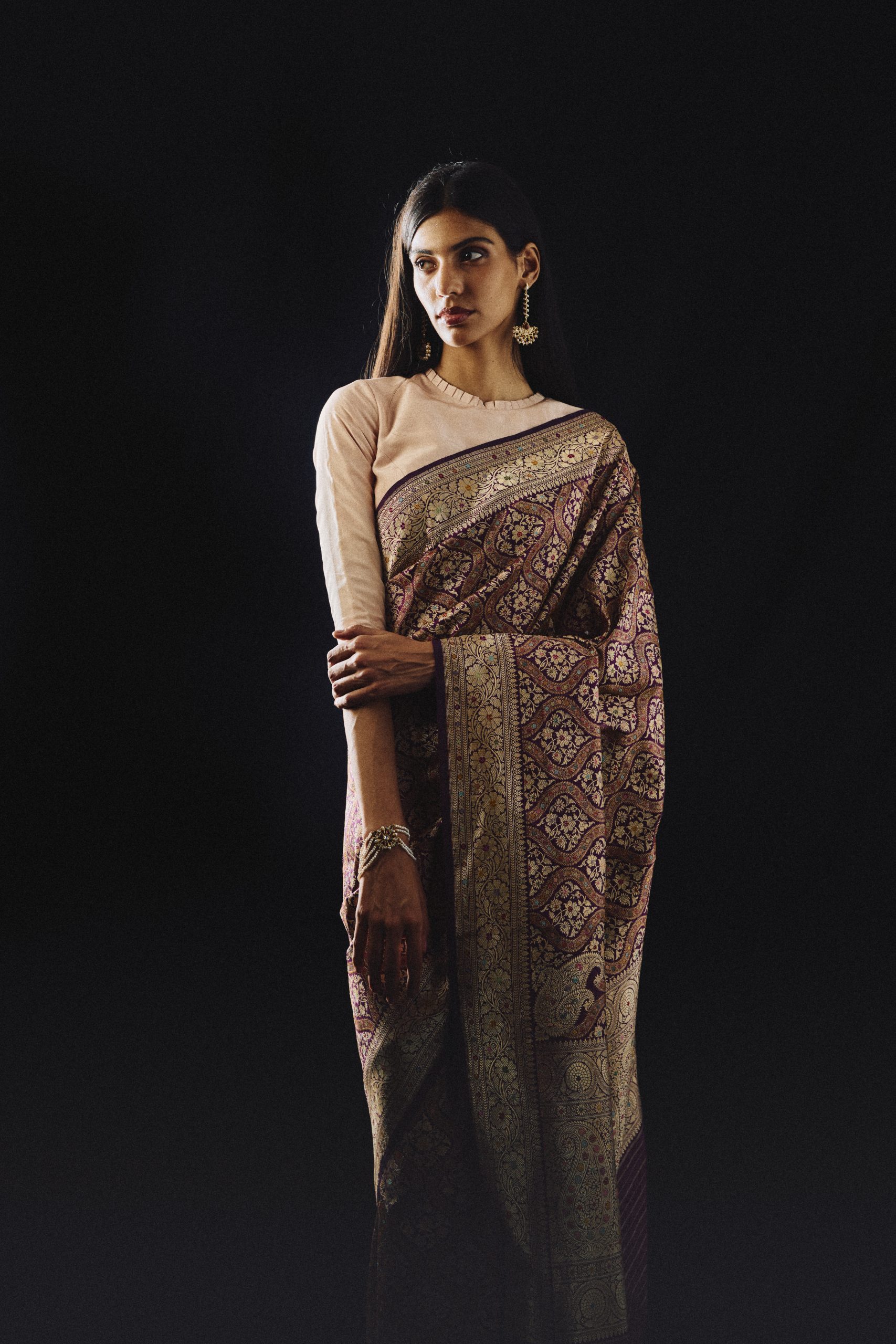
Traditional Banarasi motifs continue to play a crucial role in adapting the sarees for contemporary handloom consumer of India
Banaras was where Tilfi could exist as an independent brand that plays around with the traditions of the weave, slowly pushing the boundaries of conventional understanding of a Banarasi saree. Tilfi builds on the quintessential, archival designs, and motifs. “It is quite redundant to say we need to ‘modernise’ or make a weave contemporary. What we try to do is to be more ambitious while staying true to the traditional techniques. There is a reason why a Paisley or a Shikaargah continues to be so relevant to the design vocabulary,” Chand shares. “We don’t come from a strict, purist standpoint where one shouldn’t meddle with a craft at all, as long as it comes from a foundation of understanding and deeper study. The process of creating a craft is sacred to us, and we take that process very seriously.”
Since its inception, they have never shied away from taking risks; the brand finds power in restraint. “We talk a lot about labour that goes behind handlooms in India, but we rarely acknowledge the intelligence behind a craft,” they say. Tilfi attempts to make that argument and asks pertinent questions to its consumer — can we make craft intelligence visible and argue for its value on those terms? It is a difficult case to make for multiple reasons – a relationship to the artisan, in South Asia, looks at handloom production through a rose-tinted lens of a single weaver sitting in an unassuming room where the value is measured by hours spent on the loom, not realising that craft like Banarasi easily takes at least eight sets of hands and multiple minds working together to bring it to life.
The consumer, then, needs a little nudge to look at other intricacies where knowledge is equally appreciated as the physical labour. There is a hope for the buyer to be open-minded and to look at the other risks that the weaver takes in an attempt to create magic on a loom. With the focus on craft knowledge and technical understandings, Tilfi’s weaves come out finer and softer while staying true to the original ideas of what a Banarasi is meant to be. “We slowly started tweaking the codes of what came before, which has instilled a lot of confidence in us to take more risks now,” says Aditi.
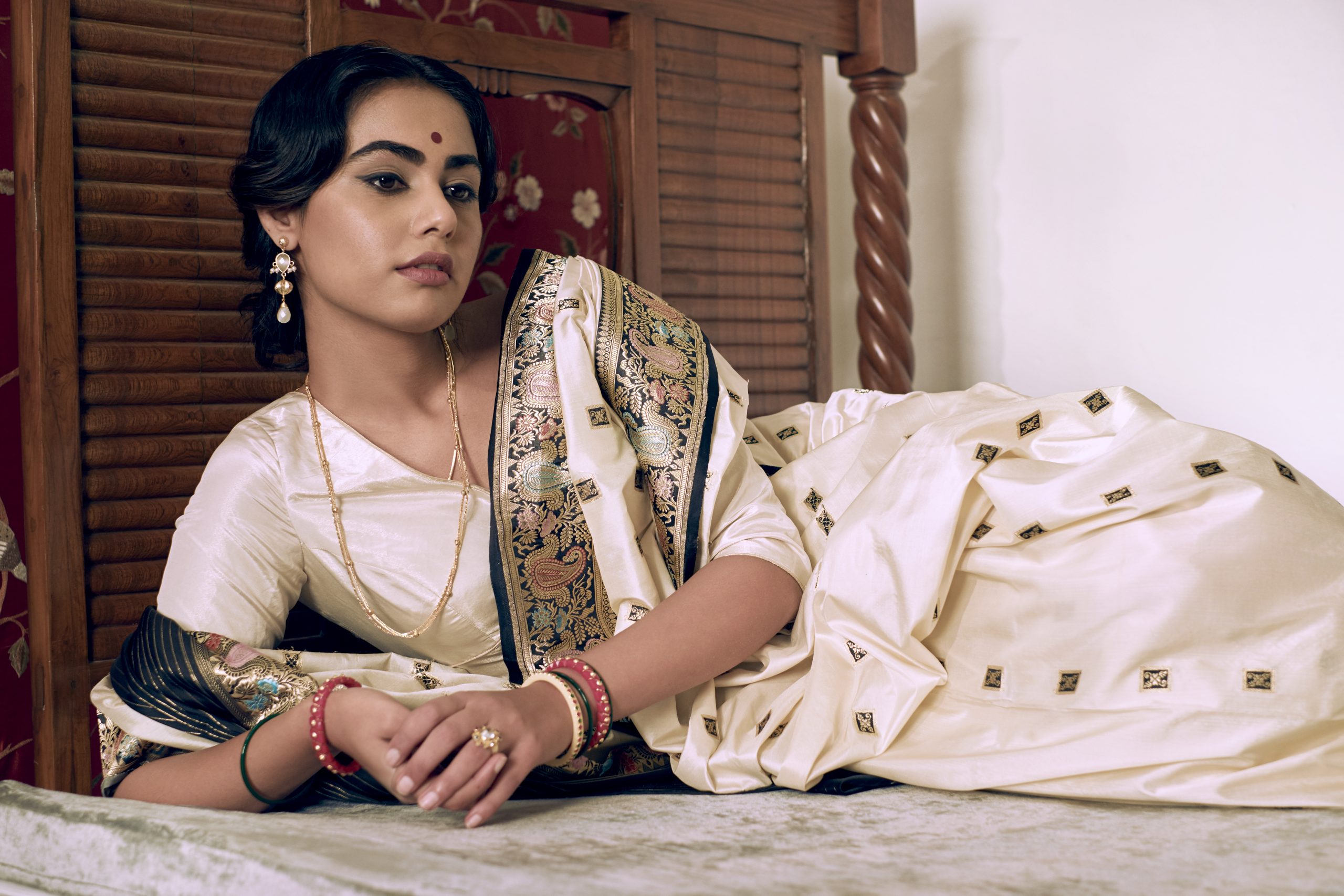
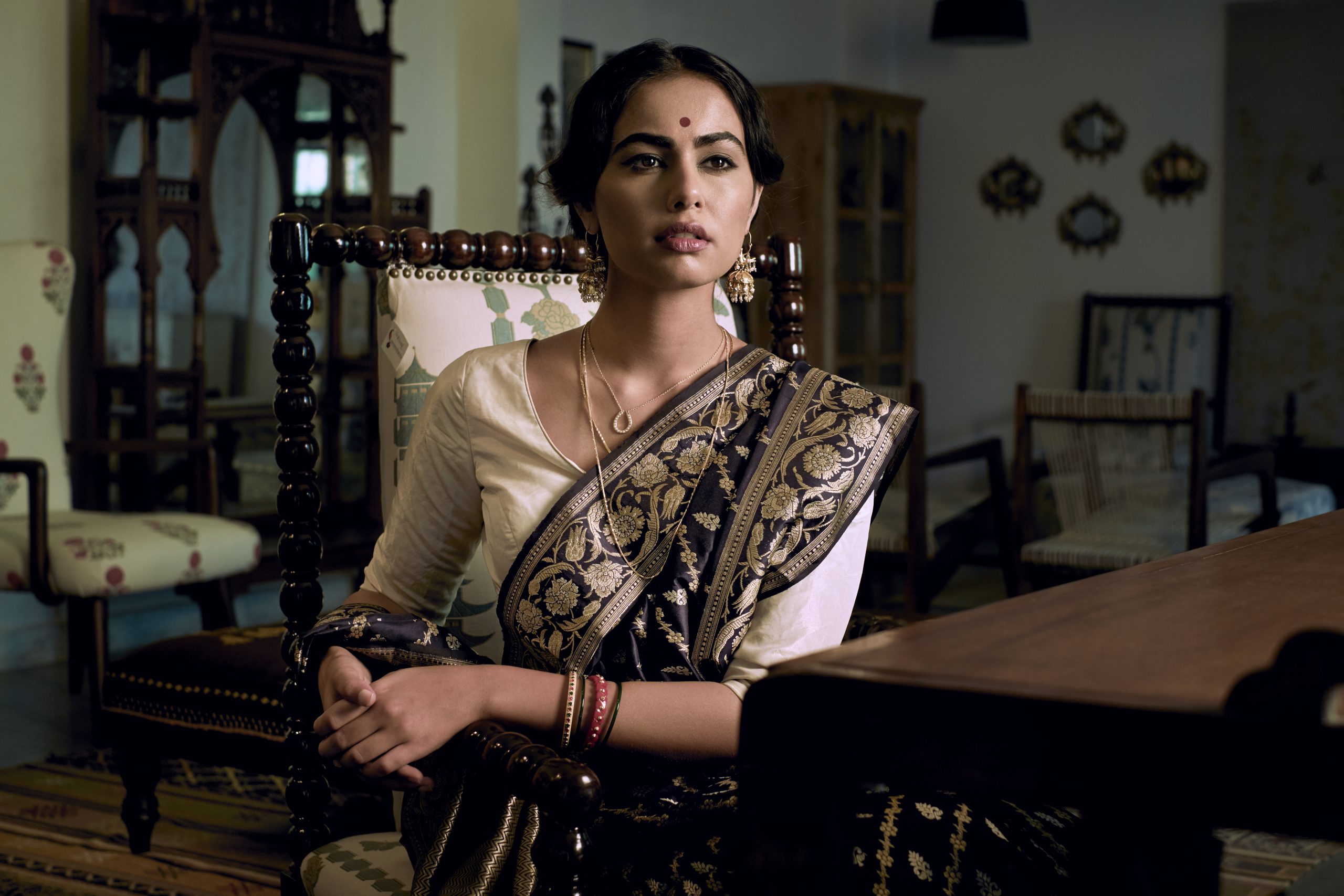
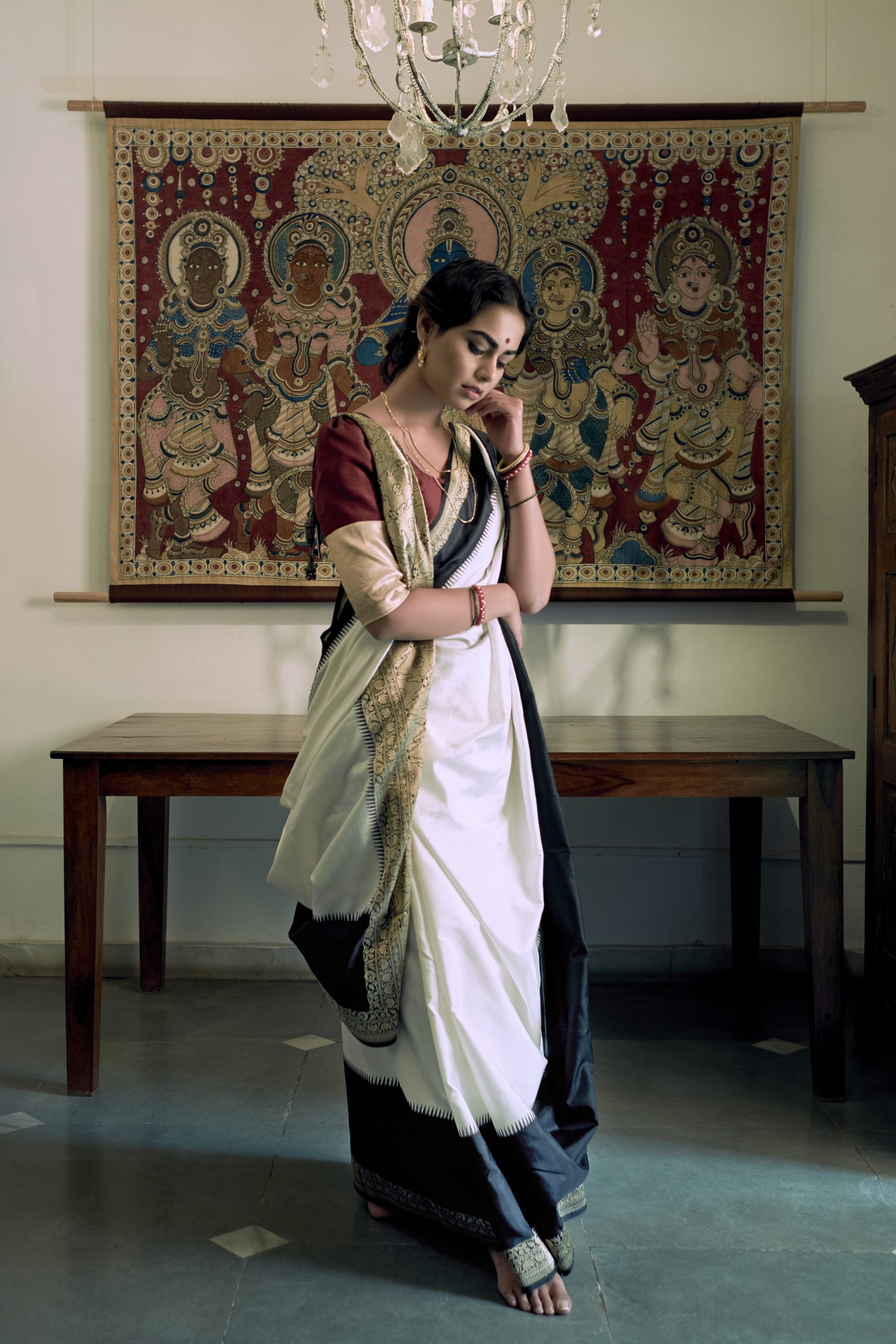
The 2019 Charulata collection was inspired by Satyajit Ray and was recreated from vintage, heirloom sarees
The risks that Tilfi takes go back to the time when Aditi Chand was slowly discovering what Banaras had to offer in terms of its textile traditions. “My idea of Banaras as a historic centre of excellence was fairly narrow, but as I learnt more about it, I felt like I was a kid at a candy shop”, she recalls. As Chand’s understanding of silk and its variety expanded, so did the questions and ideas of cross-pollination of the various silks, which gave a new meaning to the weave. “Part of it was just knowing and learning the diversity of expression was possible for exploration within silk — tussar, munga, katan, georgette. The loom allows you the space to experiment with them. Working with different twists and types like tussar georgette, kura georgette has been incredibly gratifying.”
Silk has become central to the brand, but as they grow, Tilfi has mastered the art of alchemising silk with other materials and cultures. In their Charulata collection, they pay homage to the cerebral relationship between the cities of Calcutta and Banaras, intrinsically connected through the silk sarees of the latter, draped around a body of a woman mirroring Satyajit Ray’s heroine. Meanwhile Silk and Wool becomes more audacious — it brings together the harmony of pashmina and the opulence of silk, woven together to give a new meaning to what we call “quiet luxury.” Shikaargah Tales, on the other hand, finds inspiration in India’s hunting-ground past and marries distinct flora and fauna with silk through zari, drawing motifs of deer and tigers.
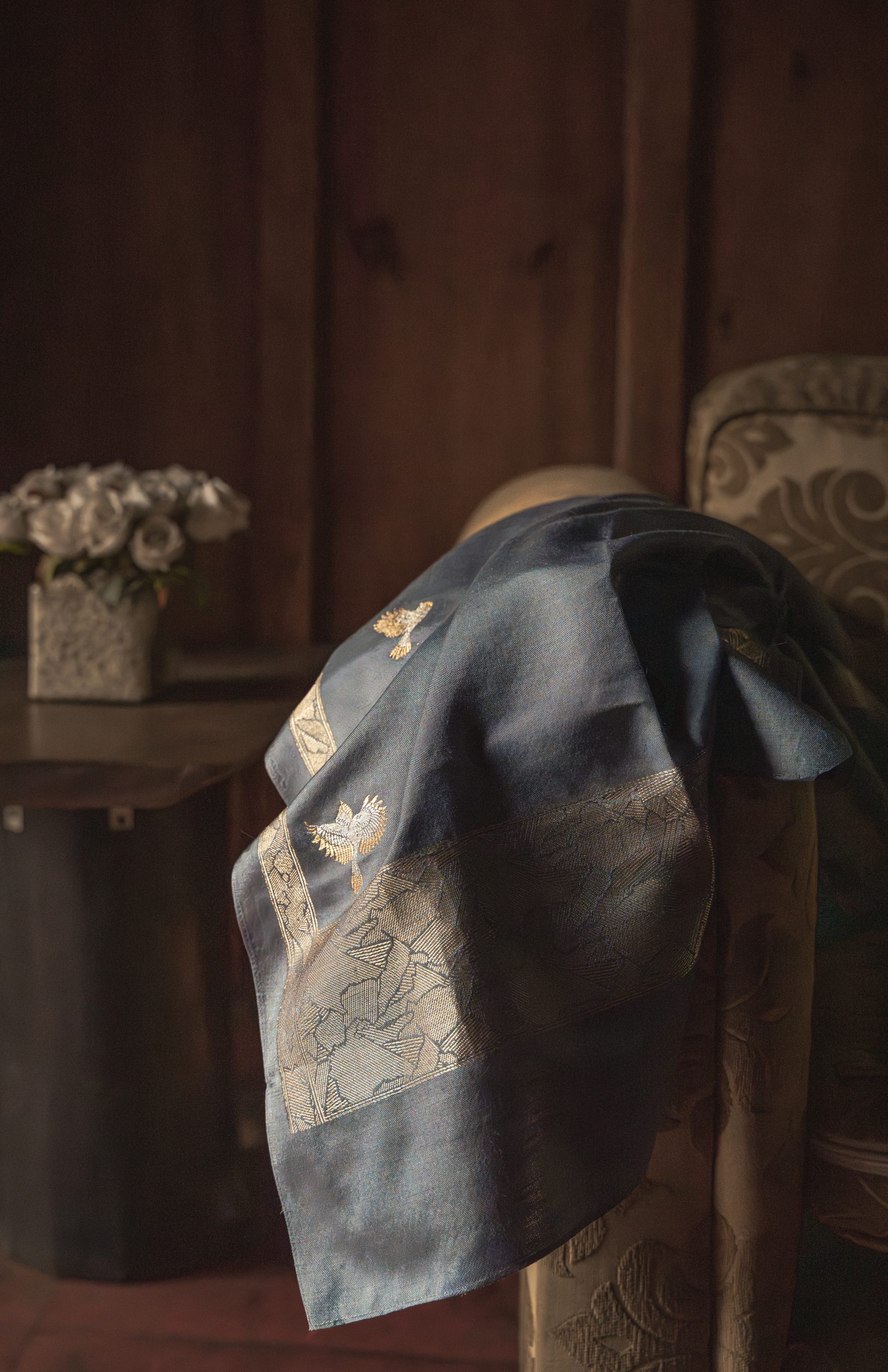
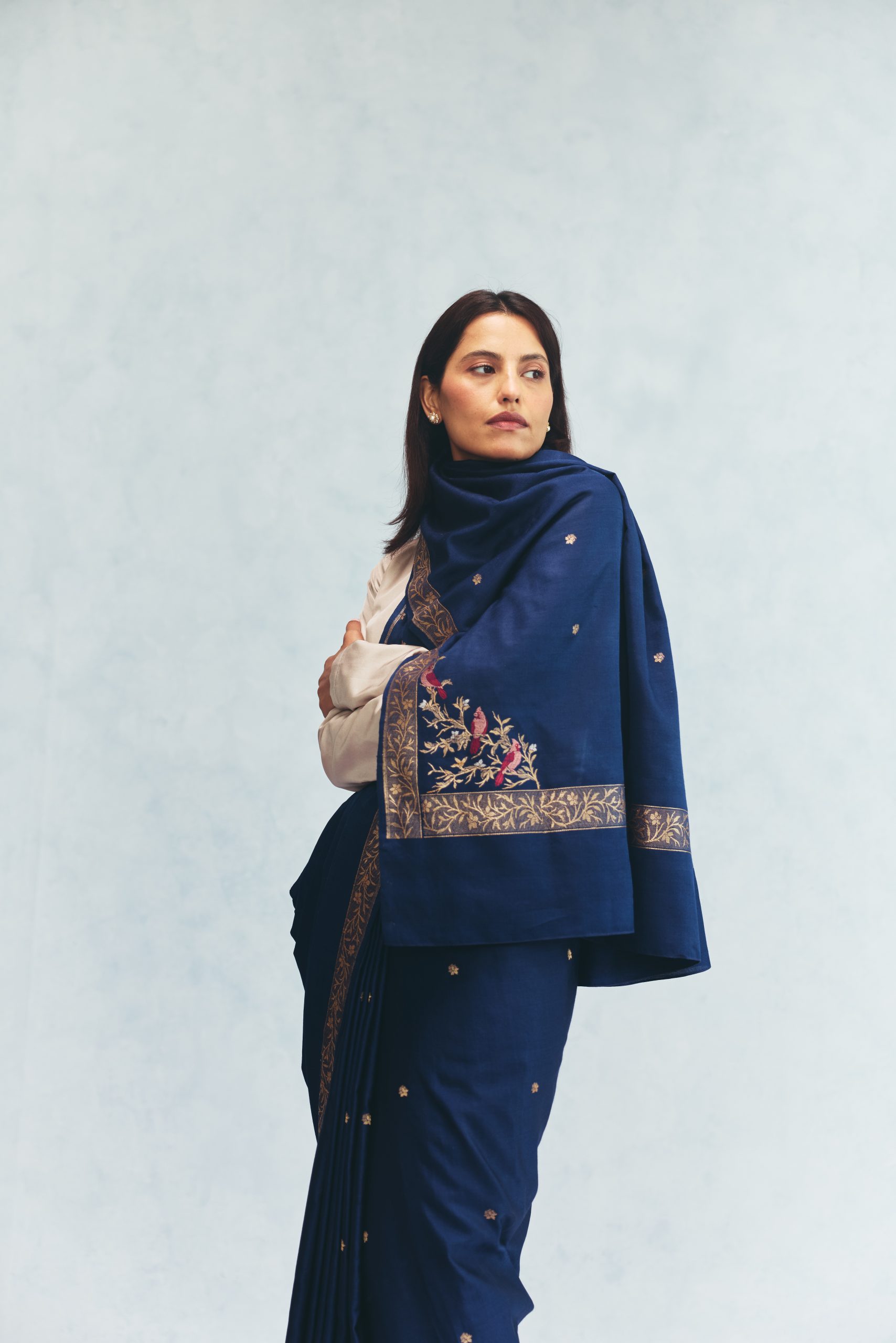
Silk and Wool (2024) brings together the harmony of Pashmina with opulence of Silk
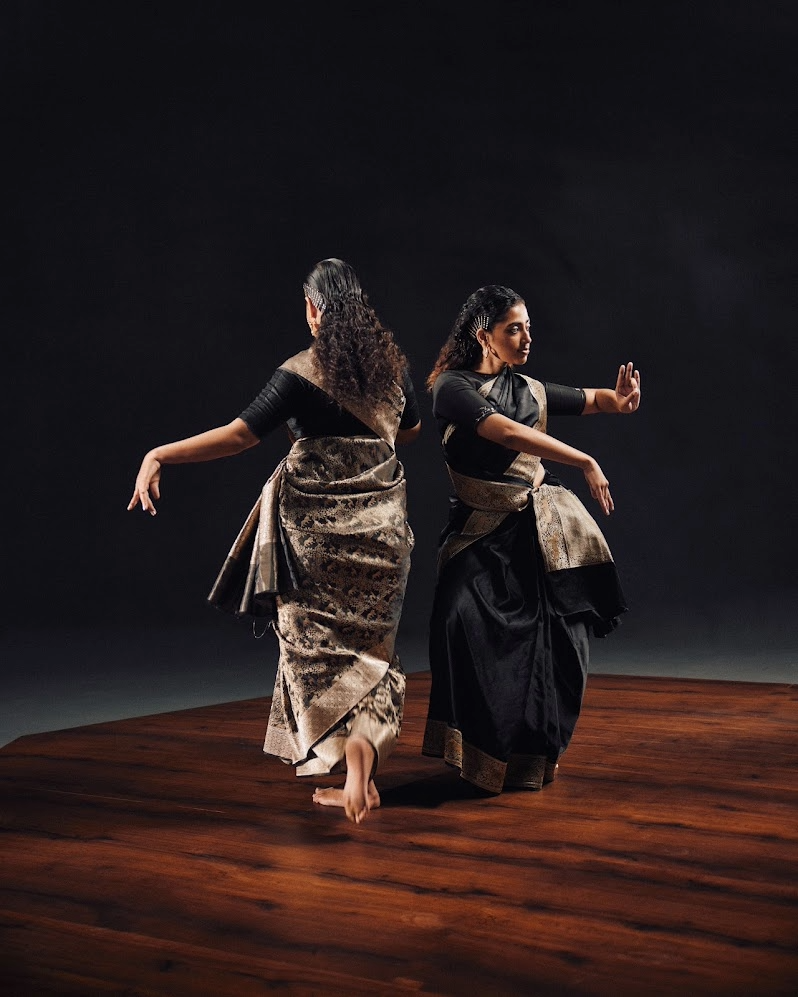
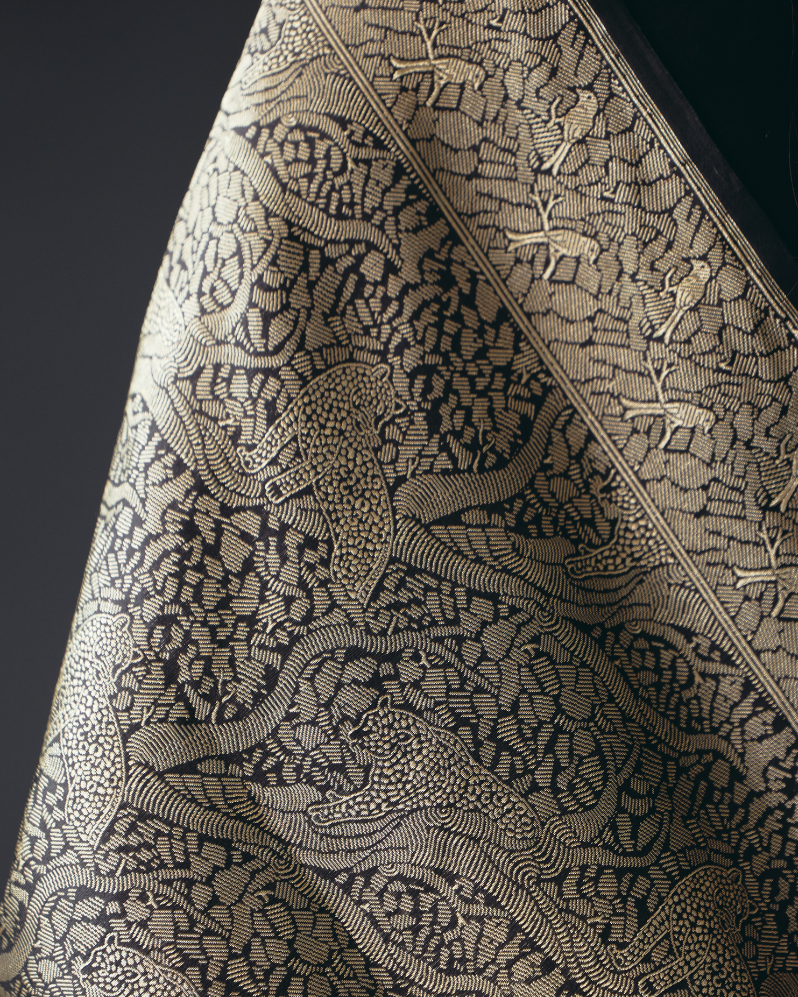
Shikargah Tales (2025) translates the flora and fauna of the hunting grounds of India through zari
“We look at craft tradition as a living, thriving ecosystem which keeps finding new expressions. It requires an investment that speaks to different contexts and different people. The same is with Banarasi — different people gravitate to different expressions of it, and we have been fortunate enough to be on the radar of those groups. The wedding shopper, the collectors, textile enthusiasts and, now, an actively growing set of people who are invested in a more contemporary expression while still seeking the same value that the craft traditions represent. Our consumers value the foundation of the craft.”
From the land of Banaras, Tilfi has slowly found a way through which a centuries-old weaving practice could sustain itself through the patrons of present times, while simultaneously staying true to its history. There is an attempt to convince us that Banarasis can exist beyond the days of celebrations, reminding us of the possibility for it to be worn to commemorate the ordinary, less ornate days of our lives.
Words by Harsh Aditya
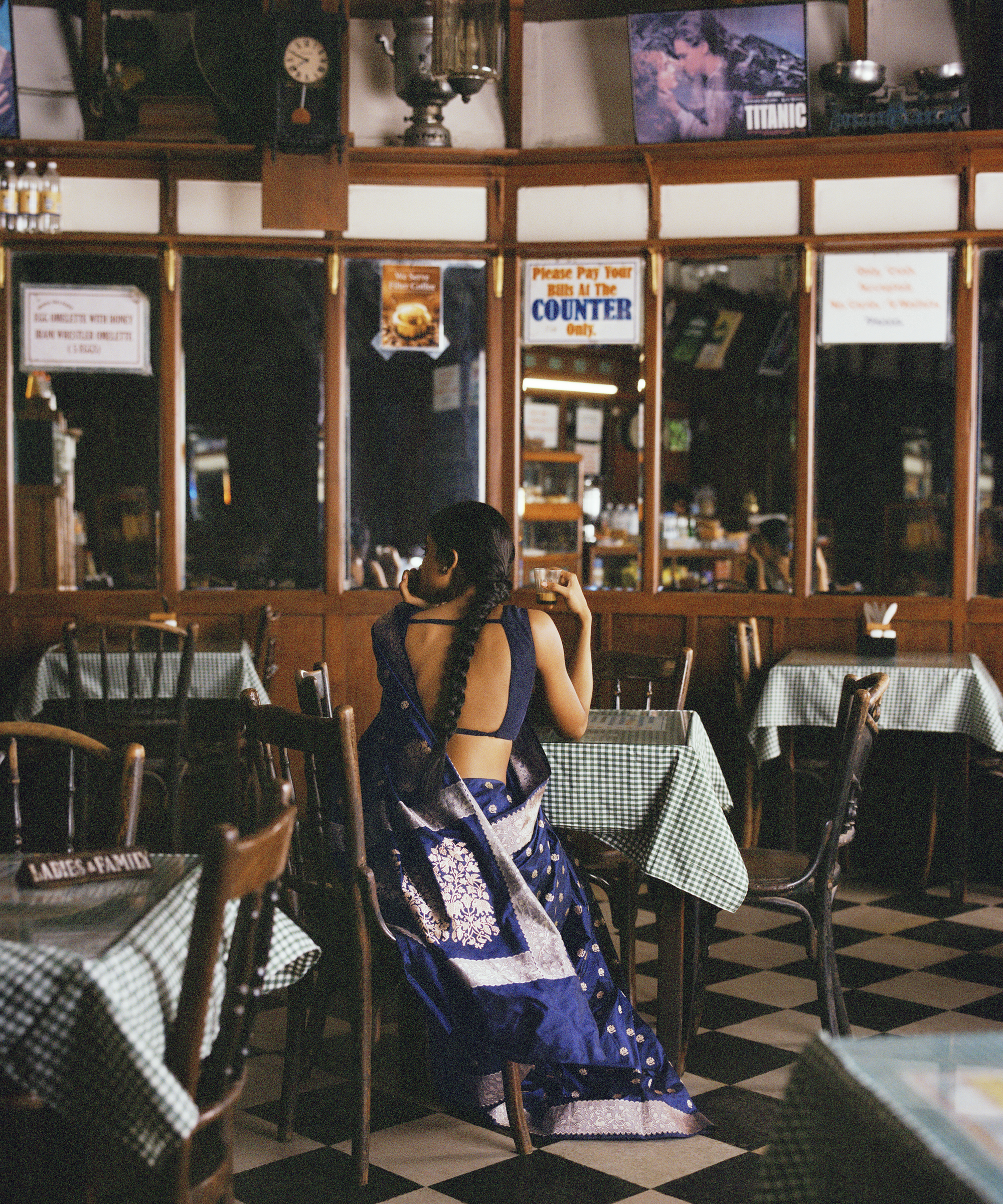
Featured image: Banaras, Bombay by Bikramjit Bose