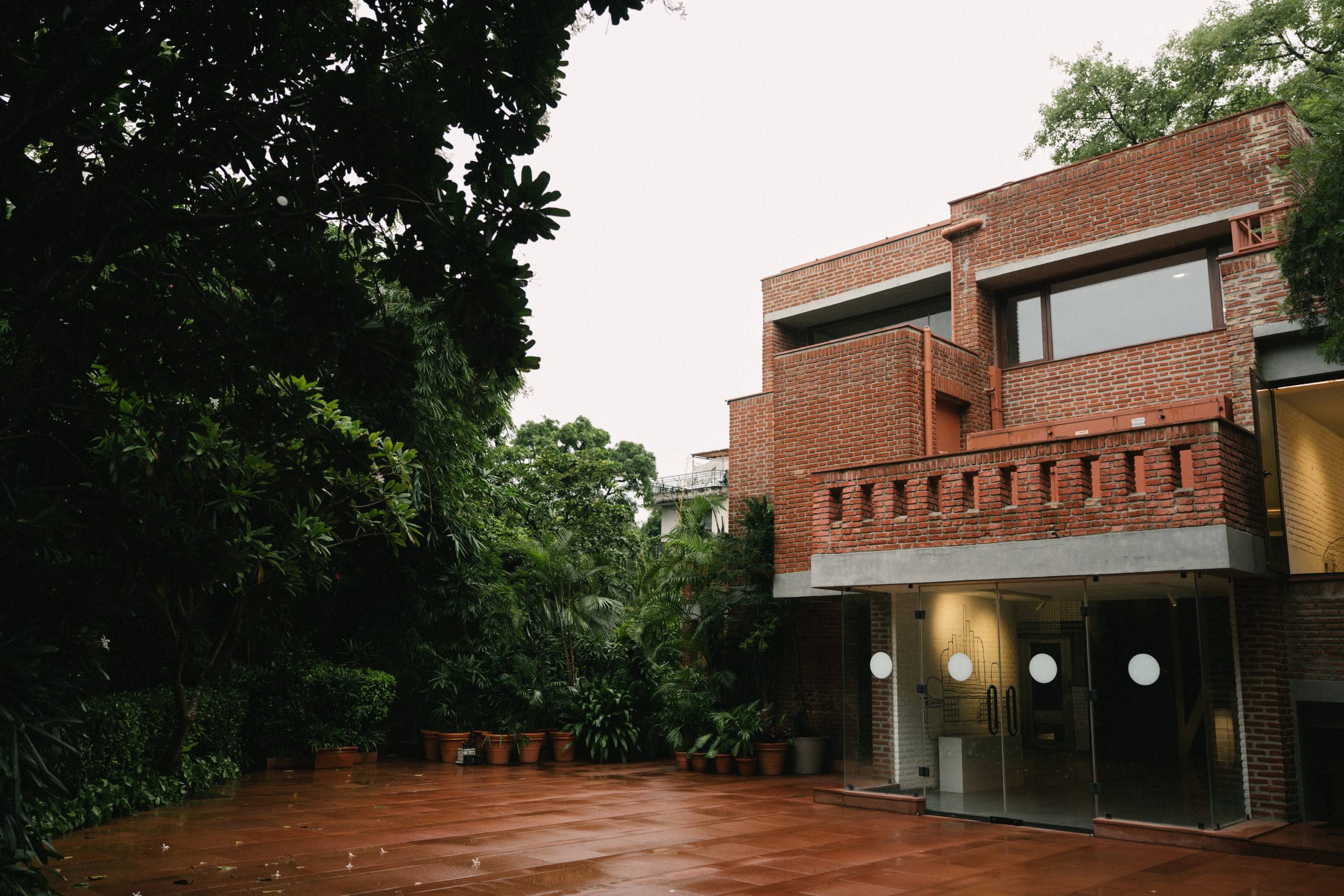
A home is the first and final glimpse of a person’s reality. It is an intimate setting where an individual is presented in their bared totality, a space where private and overt entanglements resound through the facade. A real home is built in the image of its residents. It is a wonder that the newly restored Gujral House stays true to its first patron, Satish Gujral’s character. “My parents lived a very rich life,” Mohit Gujral, his son and distinguished architect, offers, a statement that explains the grandeur of his family home. It takes a moment to fully grasp the extent of the 17,800-square-foot residence turned cultural centre, not only due to its physicality. It’s the cultural weight of the famed address that strikes you. The evidence of your imagination’s demise is sprawled across the many rooms, stacked with coveted antiques, paintings, carpets, and furniture, all accumulated by the family over time.
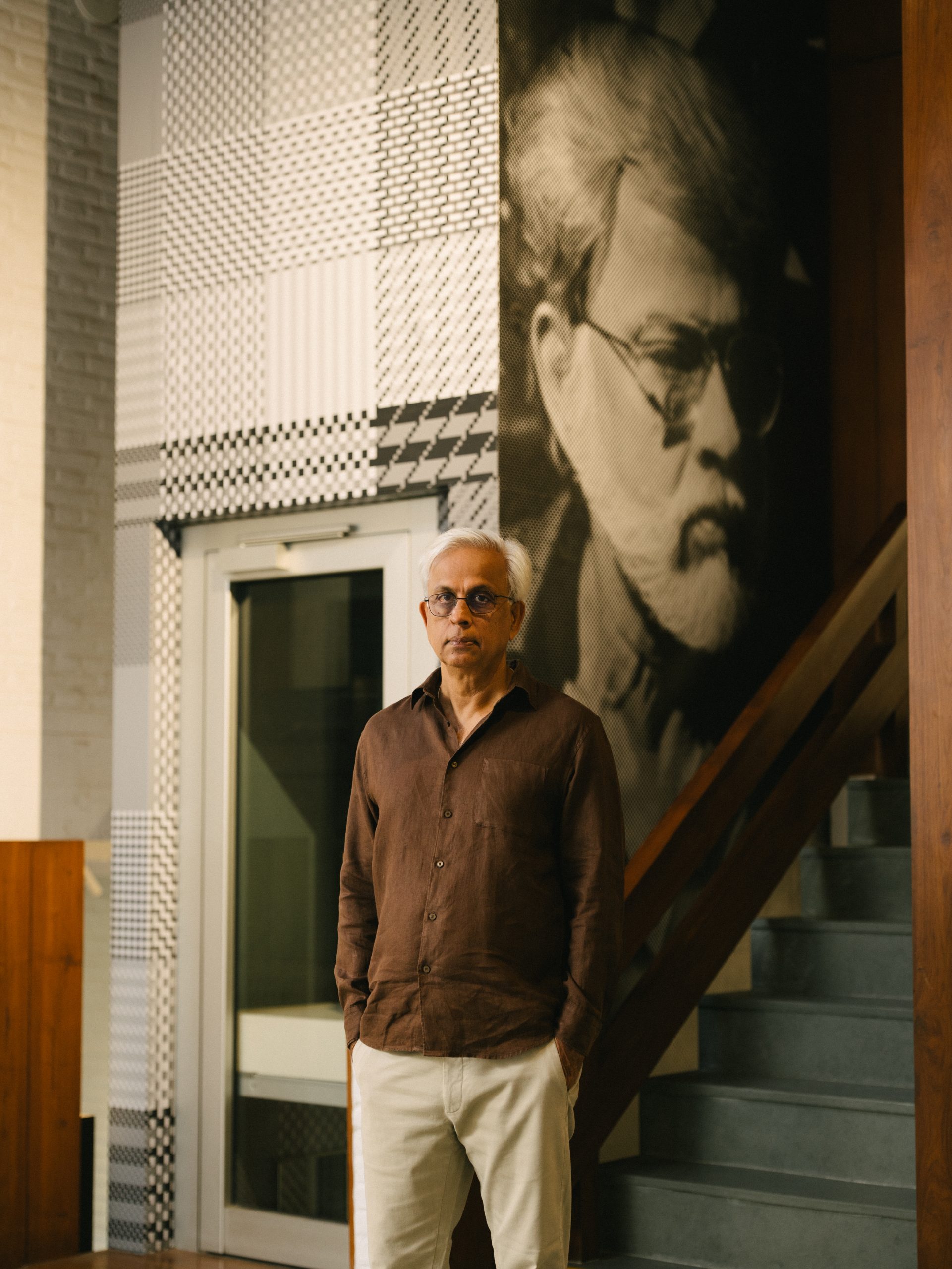
Architect Mohit Gujral, who oversaw the revitalisation of the Gujral House, turning it into a legacy-led cultural centre
The South Delhi abode was erected in 1969-70 by Satish and architect Raj Rewal to realise a singular vision for the famed address: To reflect, and serve its residents’ unconventional life. The dual personality of the home was a trait from the get-go. The family created their safe haven, a place where the kids were raised. Its part-time role was to be the parents’ studio and exhibit venue. “The time I was growing up in this house was a time when India and the art world were converging,” Mohit recalls. “It was quite heady here. You’d meet all the various faculties of the arts.”
Prominent artists, writers, photographers, diplomats — his parents’ contemporaries and friends — often crowded his childhood home. A big house, with an even bigger personality, fit for individuals who lived to defy regularity. And what other way is an artist expected to reside, if not to indulge his art, and that of others?
The renewed Gujral House realises the late modernist’s wishes well, holding onto that headiness. It’s ever so apparent in the objects one spots as they make their way through the space. Satish’s own works offer a fitting backdrop to original Corbusier furniture, collected in an effort to preserve modernist design. Contemporary art is also lining the walls — a Hanif Kureshi painting complements Chandigarh’s treasures, a historic contrast.
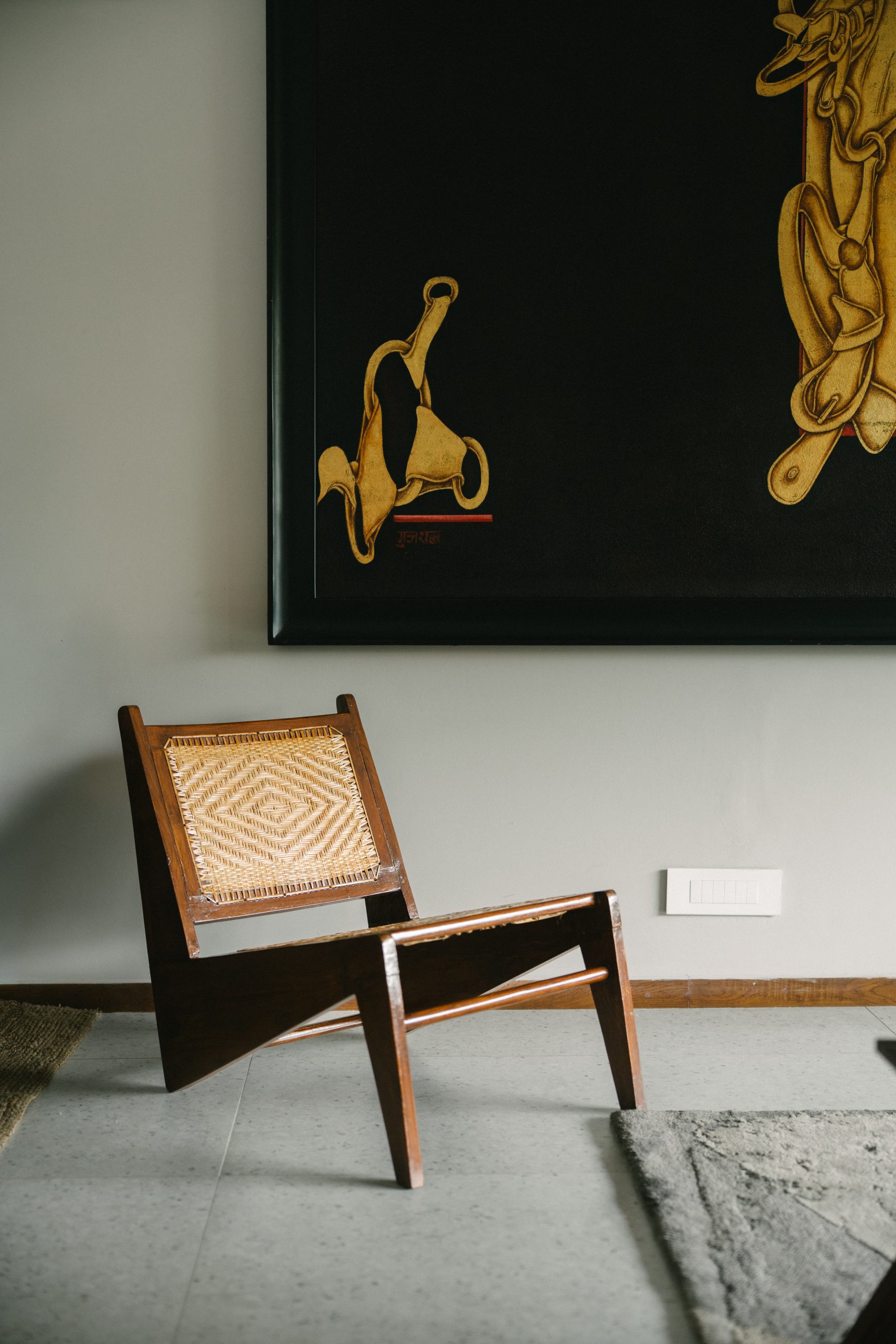
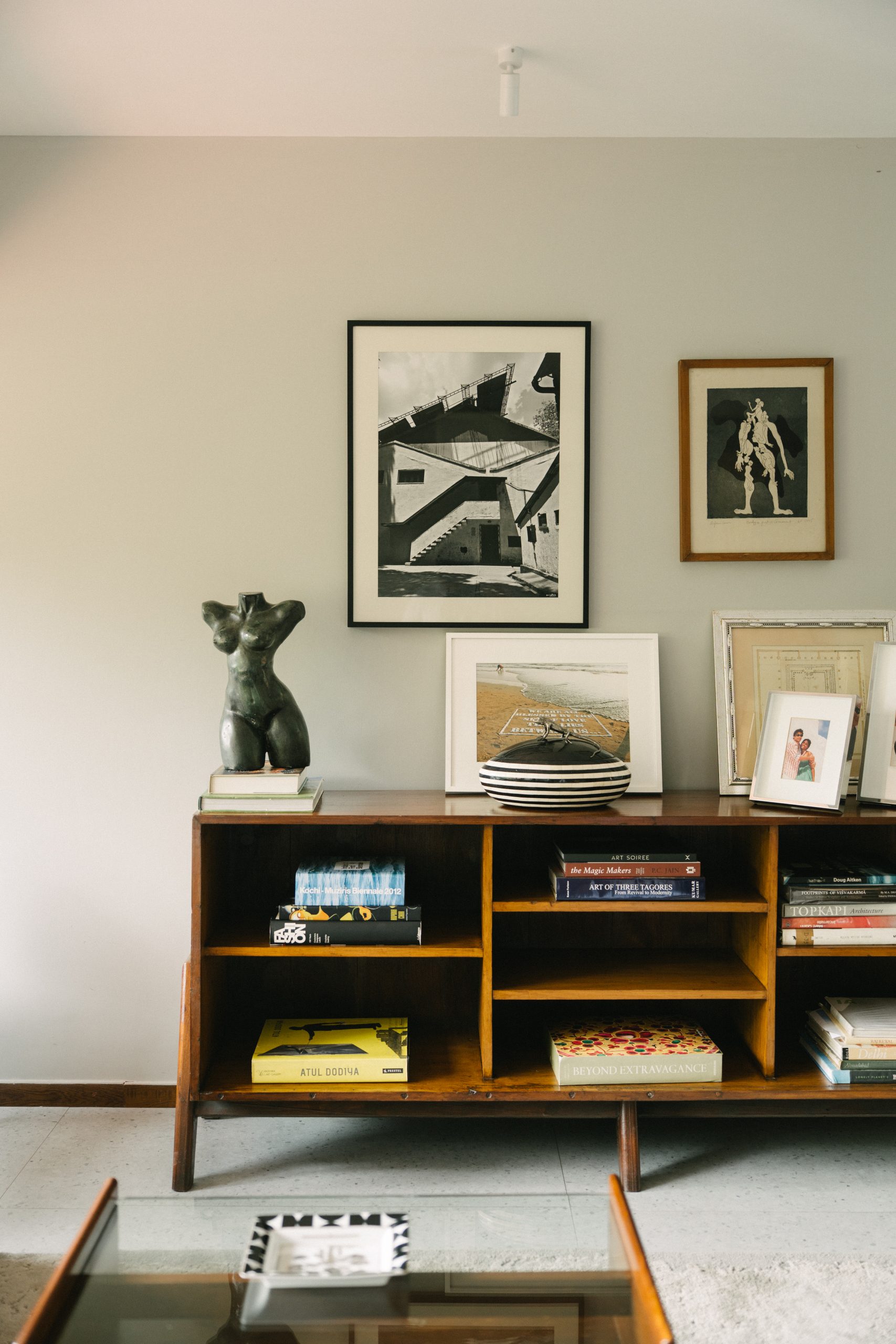
The interiors of the house are an accumulation of its patrons’ culturally rich lives, sprawling with Le Corbusier furniture and modern artworks
The present custodians carry forward Satish’s knack for collecting, with an astute eye for curation. Carefully selected objects and artworks reflect fragments of India’s artistic heritage, adopting both the old and the new. It’s an accumulation of the modernist’s life, whose legacy continues to reverberate through the art world. To that account, the house will continue to grow, as it opens itself up to a myriad of cultural events and gatherings. “The house was always envisaged as a living, breathing space,” Mohit remarks. He recalls the many periods of change as the home remained constantly in flux.
As a wealth of knowledge passed by the house, new materials came in, set-ups frequently shifted. This natural evolution is something that Mohit has embraced himself, leaving space for its next endeavours. For its present iteration, the architect stripped the residence to its original form, taking the red bricks out, and opening up the space to more light and air. “It honestly surprised me how different it [the house] looked empty!” he remarks.
First conceived as a museum for his father’s works, the cultural centre came to be after persuasion by his wife Feroze. Mohit points to the dearth of open, cultural spaces in the capital. The lack of inviting spaces is also representative of a lack of support, something that the couple’s initiative, the Gujral Foundation has worked towards tirelessly. The advocacy stems from an acute understanding of his own father’s struggles, who frequently captured the traumatic nature of his early life accident and the partition in his work. The answer respite always art — in the clear mirror it offered, and the connections it fostered.
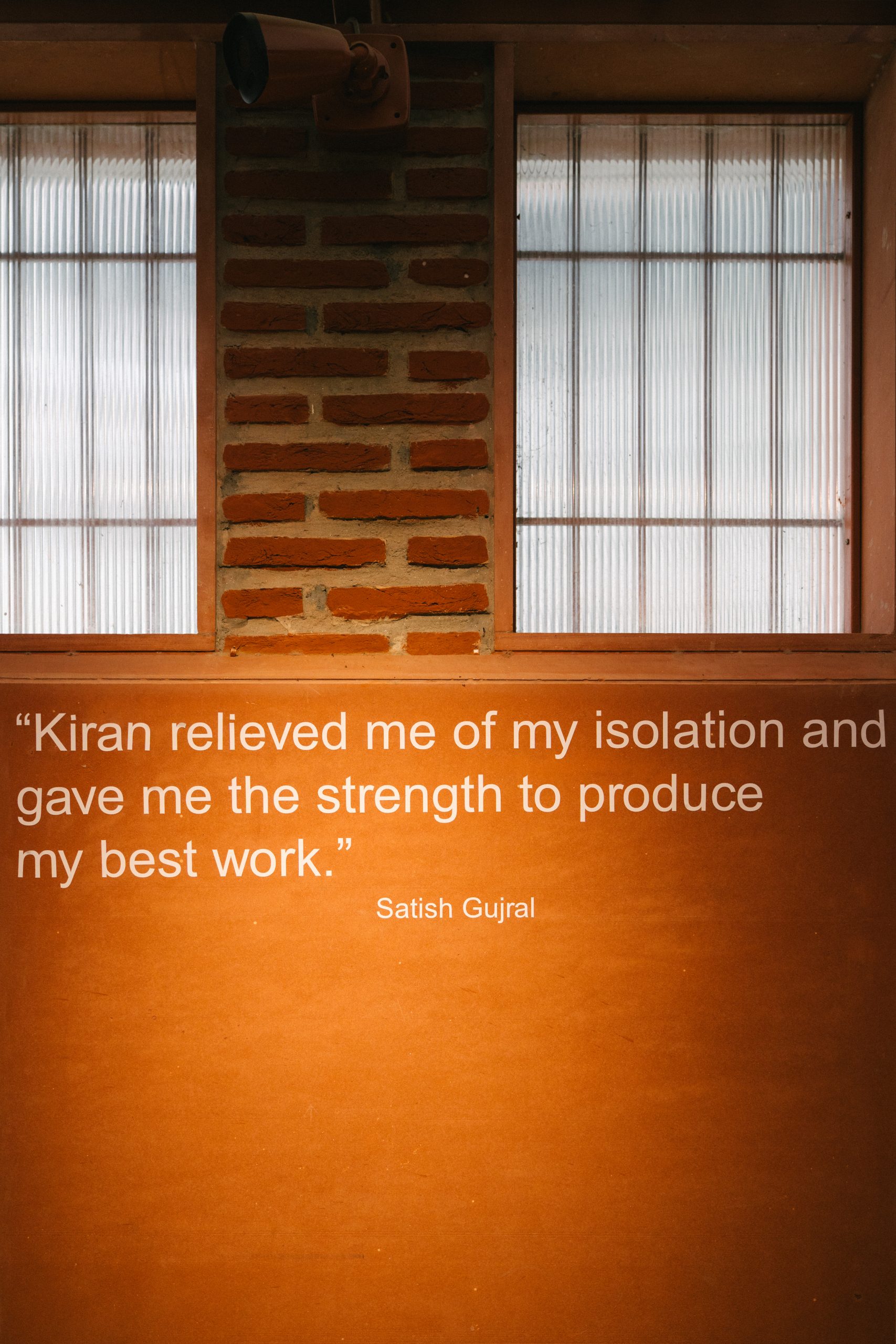
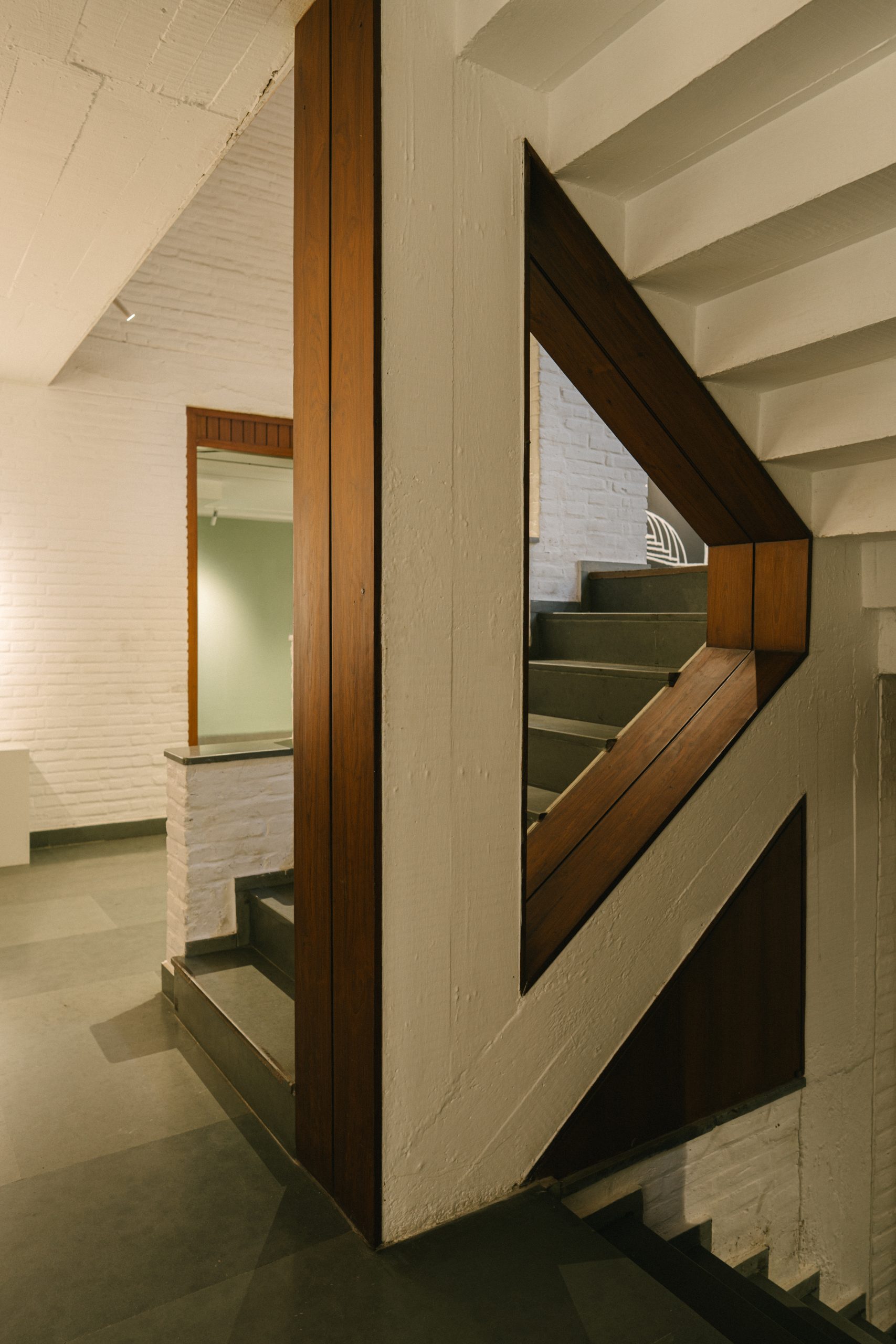
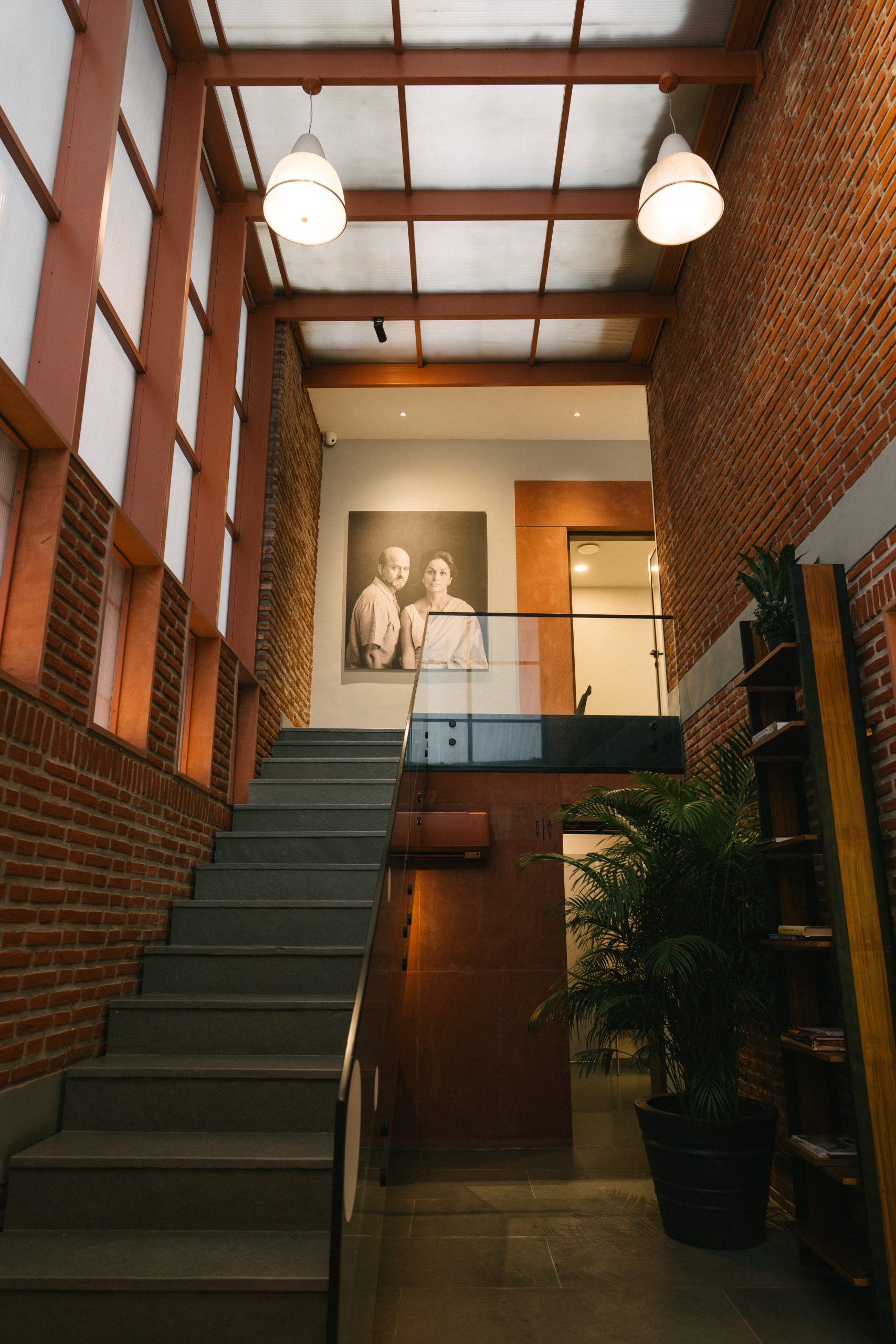
The renewed Gujral House serves as an attempt to build on the Gujral Foundation’s initiatives for nurturing artistic talent
There’s an active effort to replicate the scenes his parents conjured up as pioneers in the field. But there’s room provided for the space taking its own course. “I think we’ll end up being a space that is a confluence of contemporary art, and the Gujral [legacy], and the two parts will be speaking to each other,” Mohit imagines. “The audience will not be dead! They’ll interact [with each other] and evolve.”
Words by Tanya Syed
Photographs by Ashish Negi