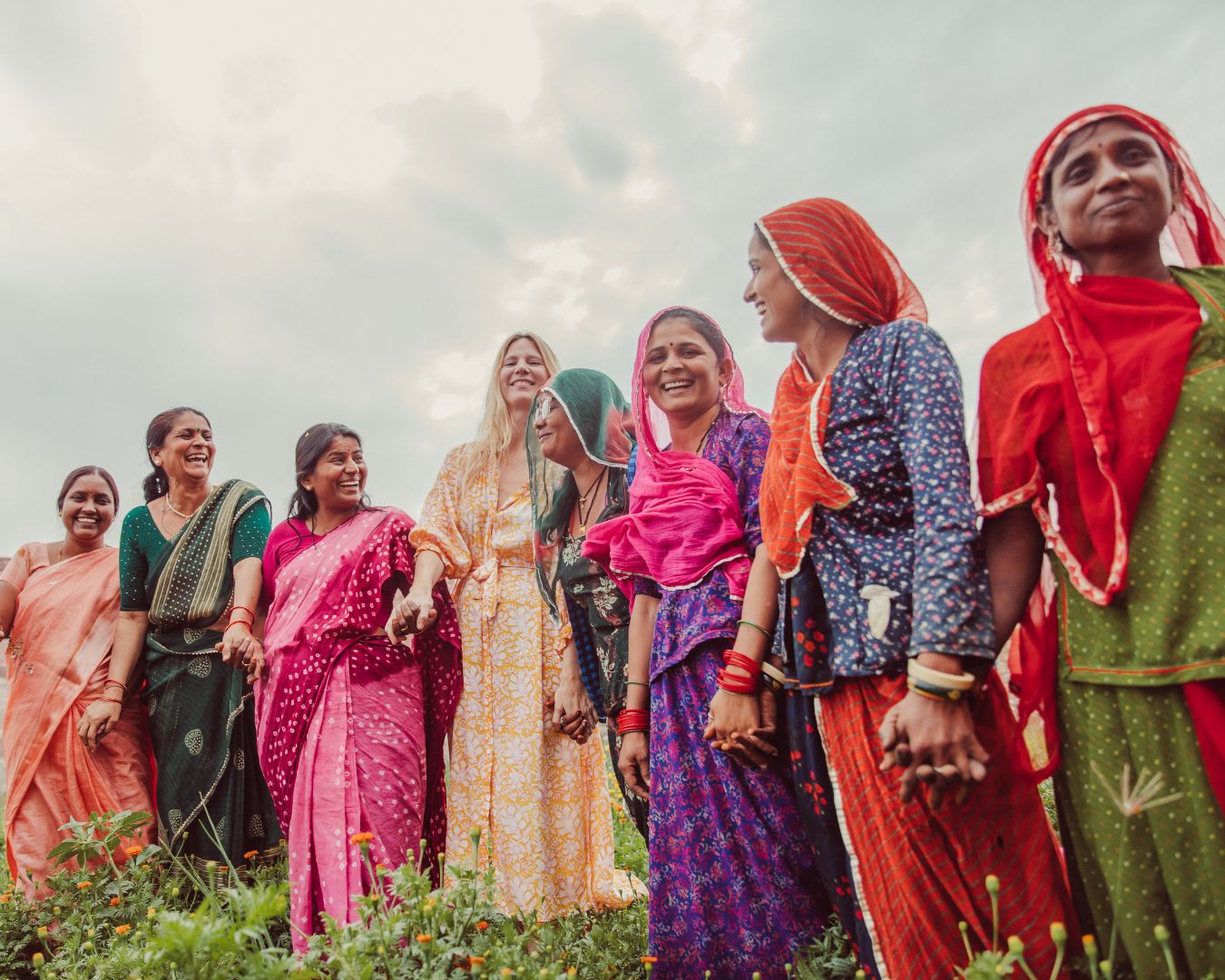
“Everything that is done by the hand, especially the female hand, is powerful.”
At Saheli Women, an all-female artisan collective, garment-making is an evolving art practice — one rooted in community and cultural continuity — where the act of making is treated not as labour, but as a form of authorship.
Too often, Indian craft remains positioned as heritage — something to be preserved, not progressed. Saheli Women pushes back against this framing. Their work proposes a future where Indian artisans are not service providers to global fashion, but contributors to design itself. The studio functions as a space for creative agency — where rural women engage with silhouette, construction, and form, not for export, but for dialogue. This shift from preservation to participation is critical. It places Bhikamkor — home to Saheli — within a wider design conversation, one that recognises skill not as nostalgia, but as contemporary capacity seen across collaborations with ethical fashion houses and designers worldwide, including the UK, USA, the Netherlands, Germany, and Australia.
It began with a wedding invitation to Bhikamkor — the kind of gathering that draws extended families from across rural Rajasthan. But for Madhu Vaishnav, who would later found Saheli Women, those few days revealed something more enduring. She found herself surrounded by women who carried themselves with a particular kind of strength — born of holding families together with threadbare resources and unshakeable will. When she returned later, it was with workshops and training programmes. The women she had met — homemakers, mothers, daughters — responded quickly. But without financial control or decision-making power, knowledge alone felt insufficient. Then a small detail offered a way in: nearly every household had a sewing machine. Skills, tools, and dormant capacity — all already present, and waiting.
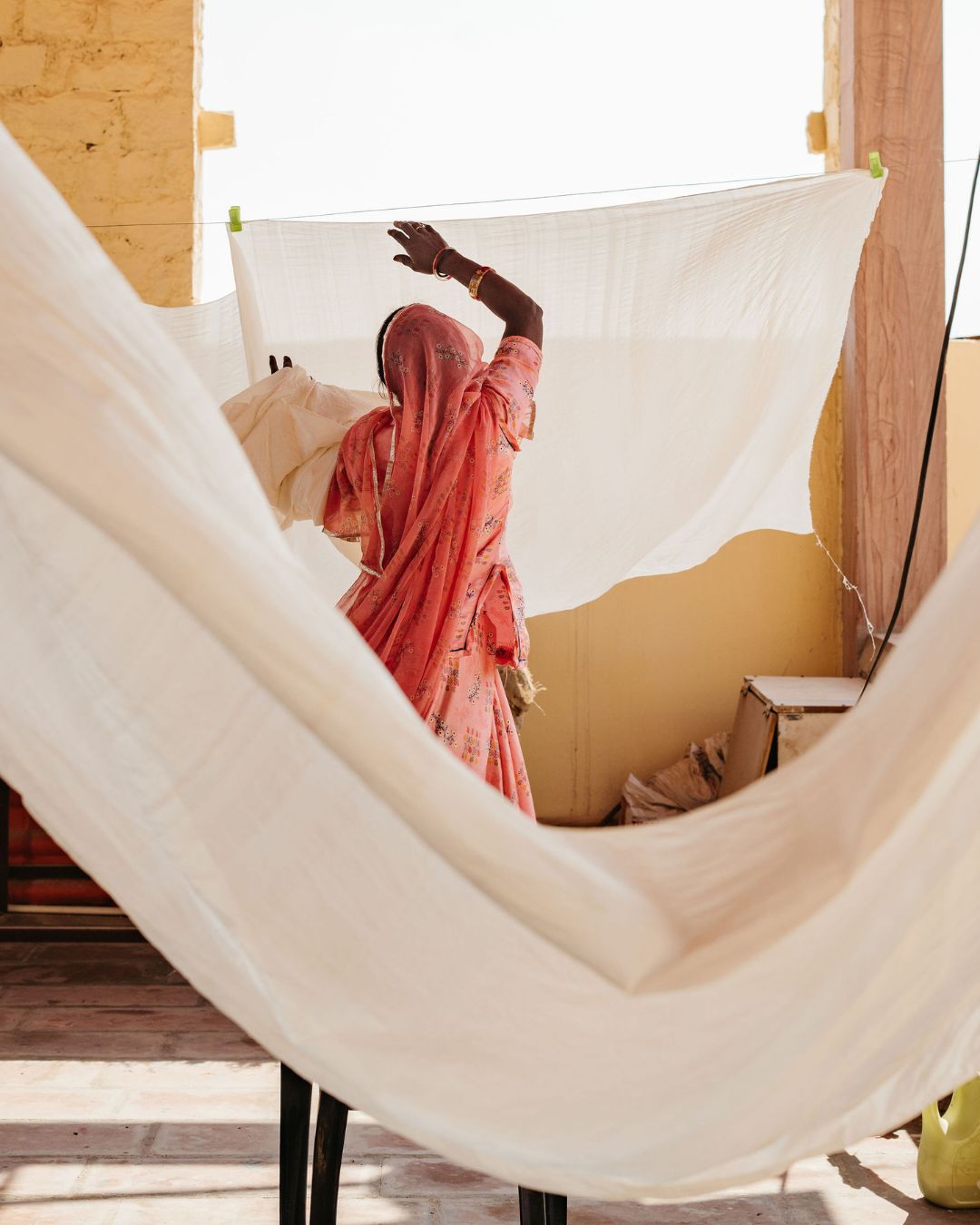
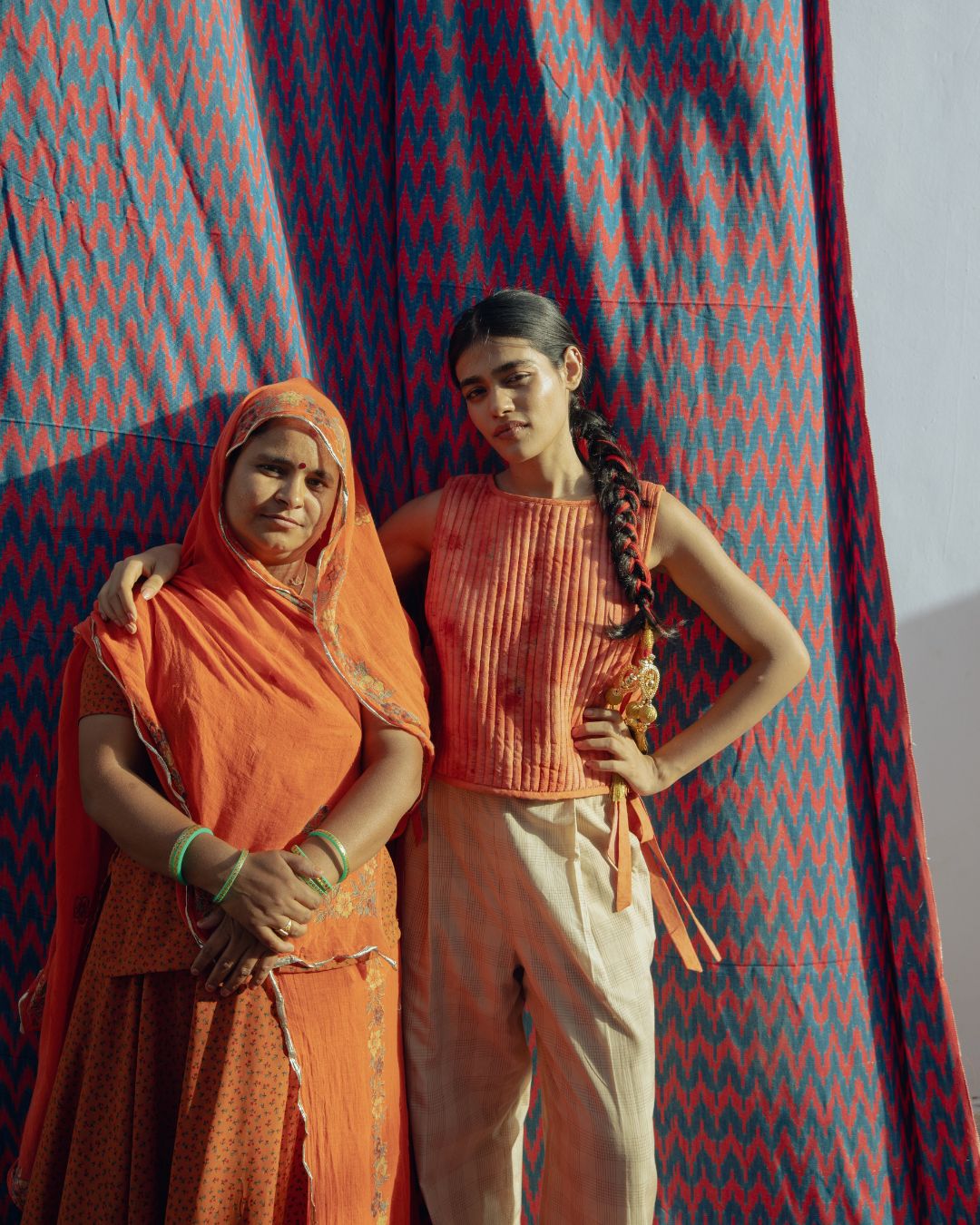
1: Artisans and their close bond with their work — the backbone of Saheli Women. Photographed by Coline Bachelier; 2: The artist and the art. Photographed by Palak Rungta Jain
With USD 100 and five women, Saheli Women was born. The collective would grow into a space where garment-making is both craft and livelihood — grounded in environmentally responsible processes and traditional textile knowledge. In 2015, those five women began working outside their homes — a quiet shift, but one that carried real weight in a village where roles were long established. A second studio in Kali Beri followed.
Madhu says, “Our work challenges the perception of artisans in the global market. Too often, they’re seen as labour, not creatives — despite the skill, dedication and artistry they bring.” In response, Saheli centres something else: named artisans, viable wages, and practices that evolve through use — not nostalgia.
“These crafts are art. It’s about connecting to the world and showing what we can do,” she says.
Their Dhora collection translates this journey into garments that speak to the world. Traditional silhouettes — the dhoti, katchli, kurti, lehenga, dupatta — are reimagined with contemporary intent. “Working together as sisters is how our designs for Dhora have come out so beautifully. By working collaboratively, we get to explore possibilities that one person wouldn’t have thought of alone.” The collection has found audiences through successful pop-ups in New York, London, Milan, Berlin, Amsterdam, and Melbourne — and has been part of collaborations with both independent designers and international brands.
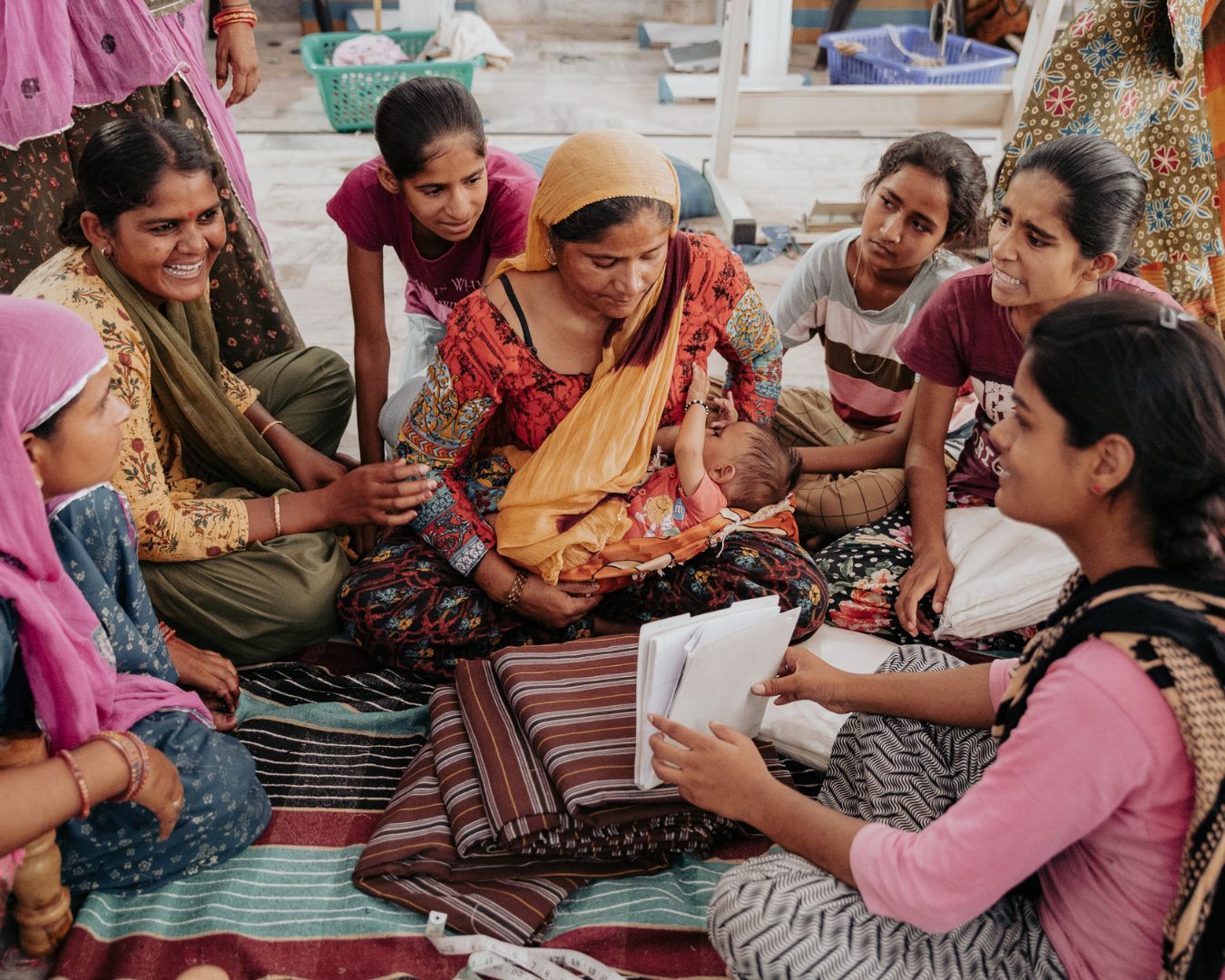
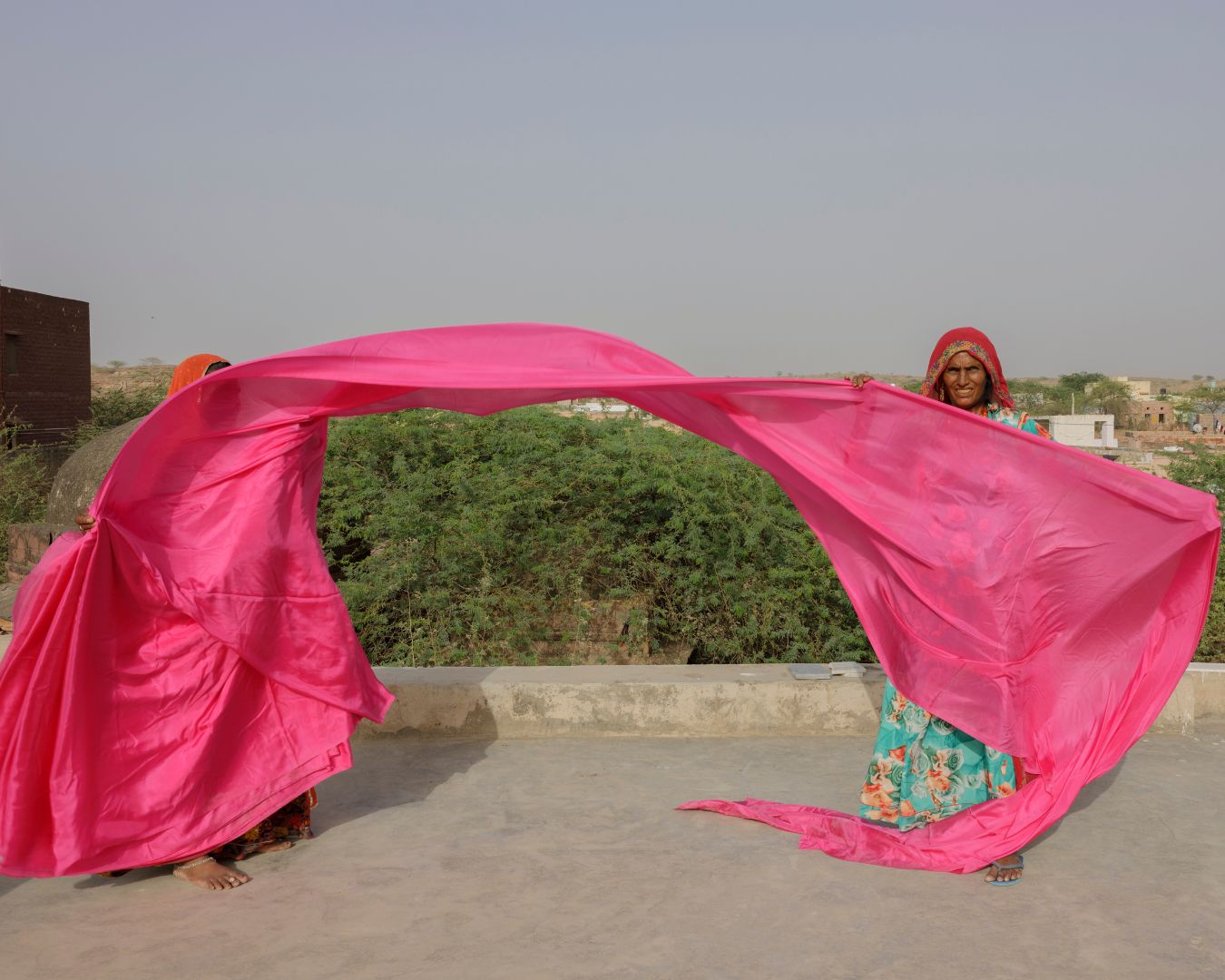
1: Collaboration and expertise come together to create wonders. Photographed by Robin Hooybergs; 2: Where sisterhood and knowledge manifests in craft. Photographed by Naveli Choyal
The Cotton Project takes this philosophy further. It begins not with fabric, but with farming — working directly with women who grow the cotton. In rural India, women account for 75% of the agricultural workforce, yet own less than 2% of land and remain excluded from both income and decision-making. The pilot began with five women, offering training, direct earnings, and agency over their output.
What if we slowed down? What if we paid fairly? What if we treated craft as art?
At its core, the collective is shaped by care — slow processes, deliberate decisions, and rooted relationships. From cultivating marigolds for dyeing to warping looms for hand-weaving, every step is sustained by attention. Without care, these techniques don’t survive. At Saheli, they are cultivated.
Even the act of documentation becomes part of this ethic. Madhu says, “Telling our story and sharing with our community — not only the finished garments, but the journey along the way — our wins, our struggles, our learning moments — all of it is for our community. This is how people begin to care. This is how they connect to what we do.”
Bhikamkor was once a handloom village — looms in every home. “It is the mission of Saheli Women that one day we will have a loom in every household in Bhikamkor again,” Madhu says.
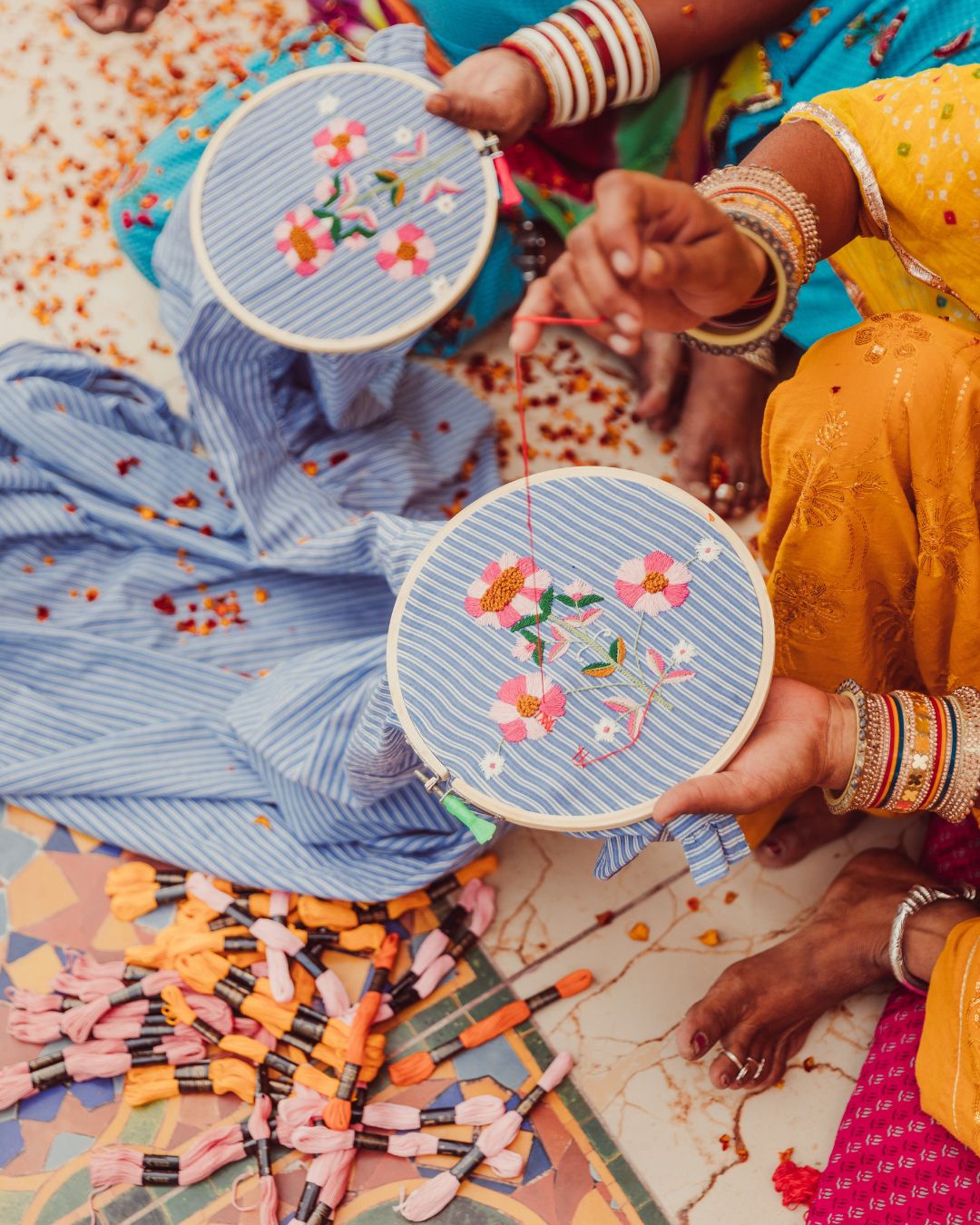
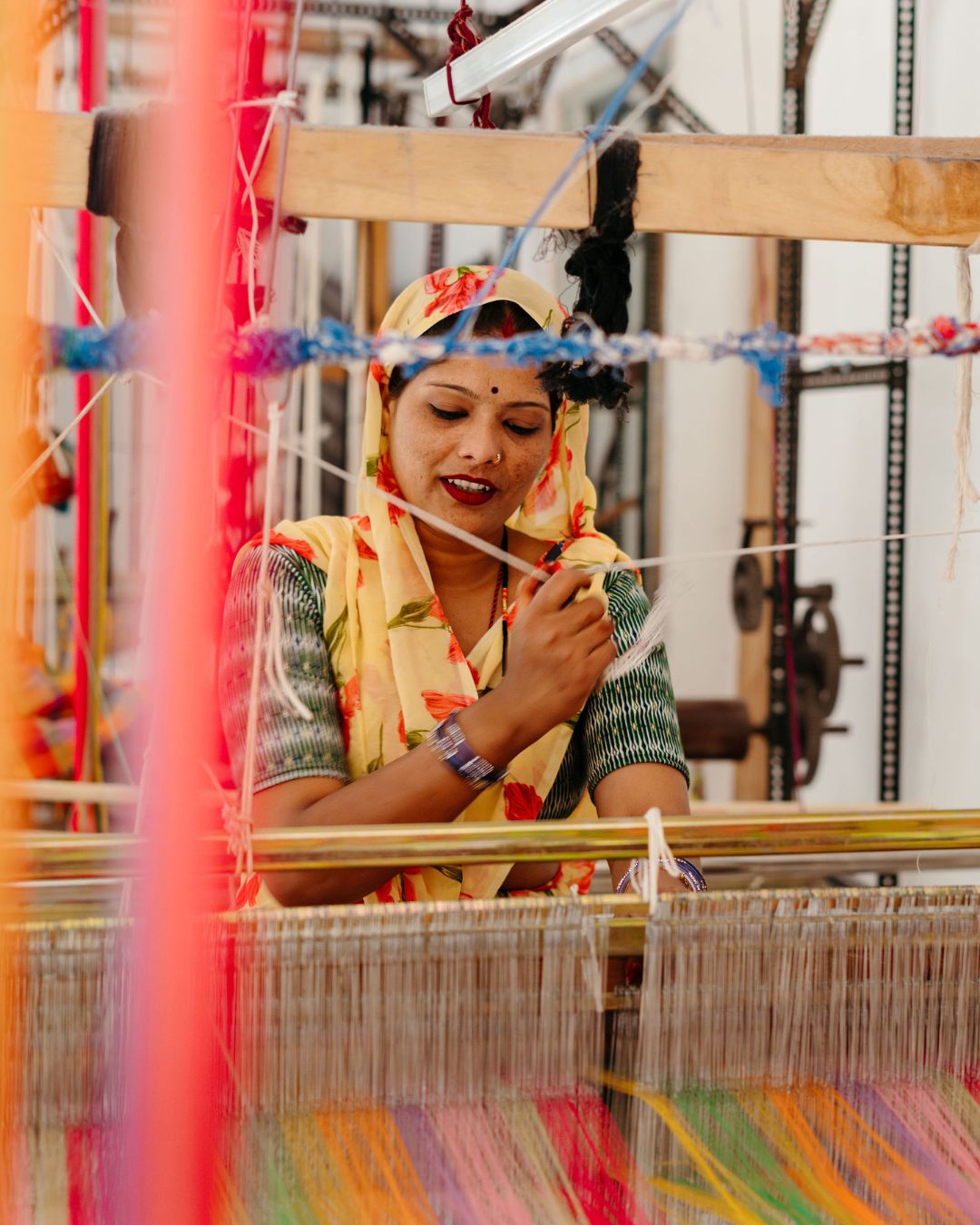
1: From fibre to product — the artisans own the process. Photographed by Coline Bachelier; 2: Saheli Women positions craft as contemporary capacity, uplifting creativity and agency. Photographed by Anastasia Young for Louise Misha x Saheli Women
“The answers to the global fashion crisis — from textile waste to toxic dyeing — lie in the hands of women who never lost touch with what matters. We knew them long ago. Saheli Women are bringing them to the world, shaping the future of slow fashion,” Madhu says. This is how change happens — in Bhikamkor, the act of making is inseparable from the act of remembering. Not as nostalgia, but as a daily choice to do better. To build differently.
Words by Shravni Sangamnerkar
Feature Image Madhu Vaishnav, founder, Saheli Women, and Marie Pidancet, founder, Louise
Misha, with the artisans at Saheli Women — hand-in-hand in art, progress, and
independence. Photographed by Anastasia Young