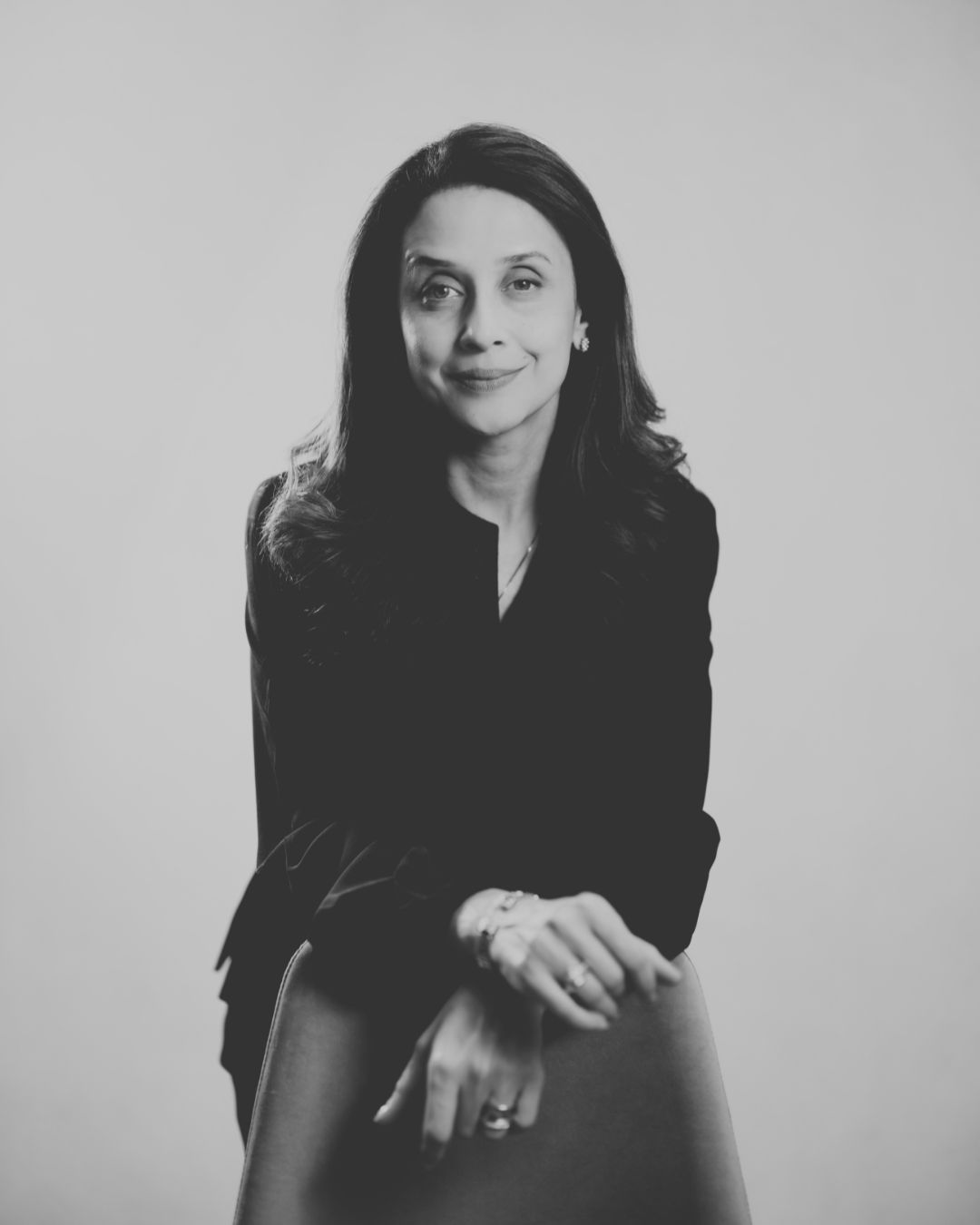
RMZ Foundation placed a Subodh Gupta artwork at Ecoworld in Bengaluru — and with it, made something unexpected part of the daily landscape for the thousands who pass through. Somewhere between a meeting and a coffee, art finds you. For Anu Menda, who chairs the Foundation, this is precisely where art does its most important work. “Art must do more than be seen — it must be felt, encountered, and lived with,” she says.
Under her leadership, RMZ Foundation has spent years embedding serious and ambitious contemporary art into the fabric of Indian cities — where it becomes as much a part of daily life as the spaces themselves. The premise is deliberate: a city communicates through what it chooses to place in its shared spaces, and those choices shape how a community understands itself. “Art stops being a destination and becomes a presence,” Menda explains, “and that’s when it truly transforms a city’s character.”
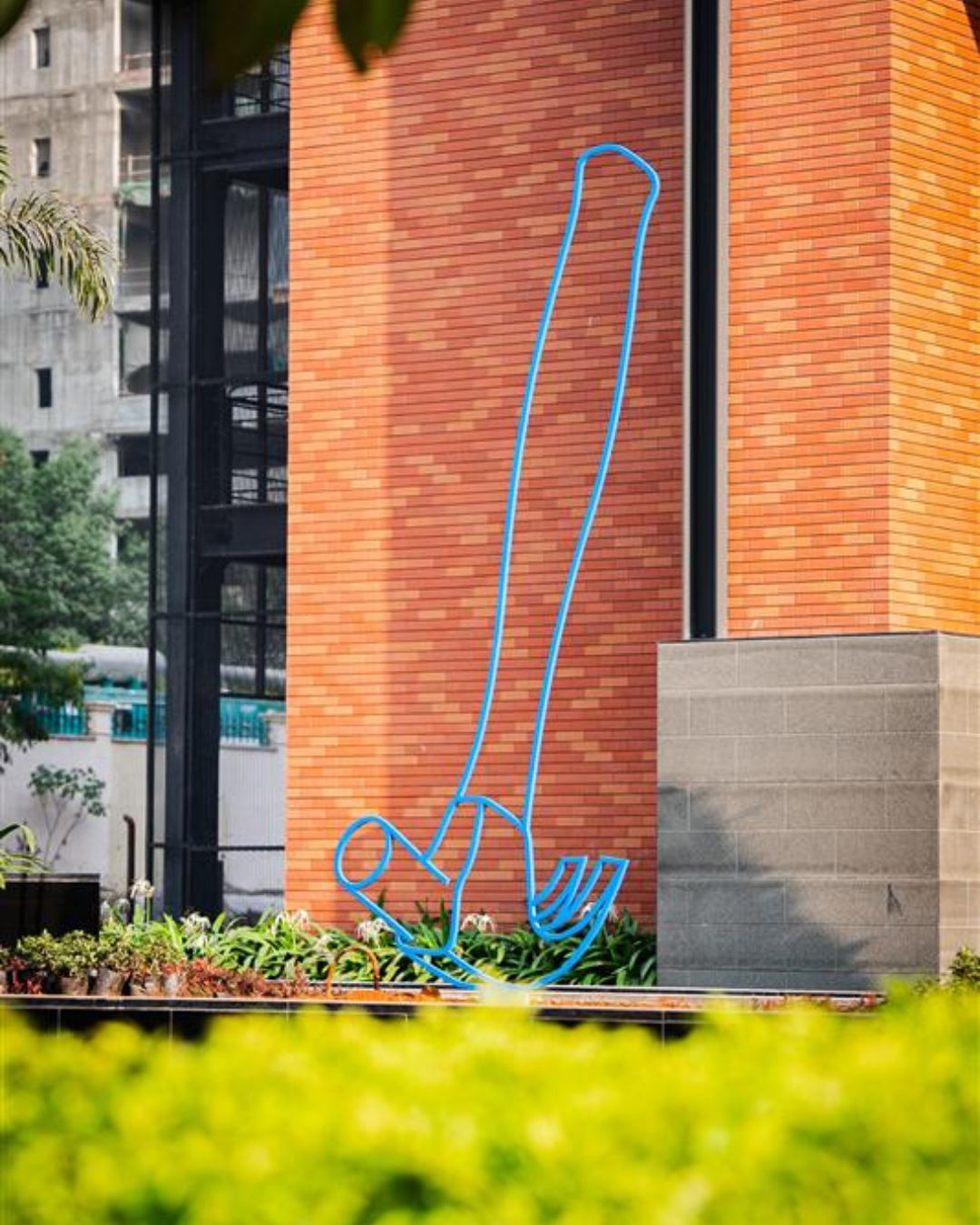
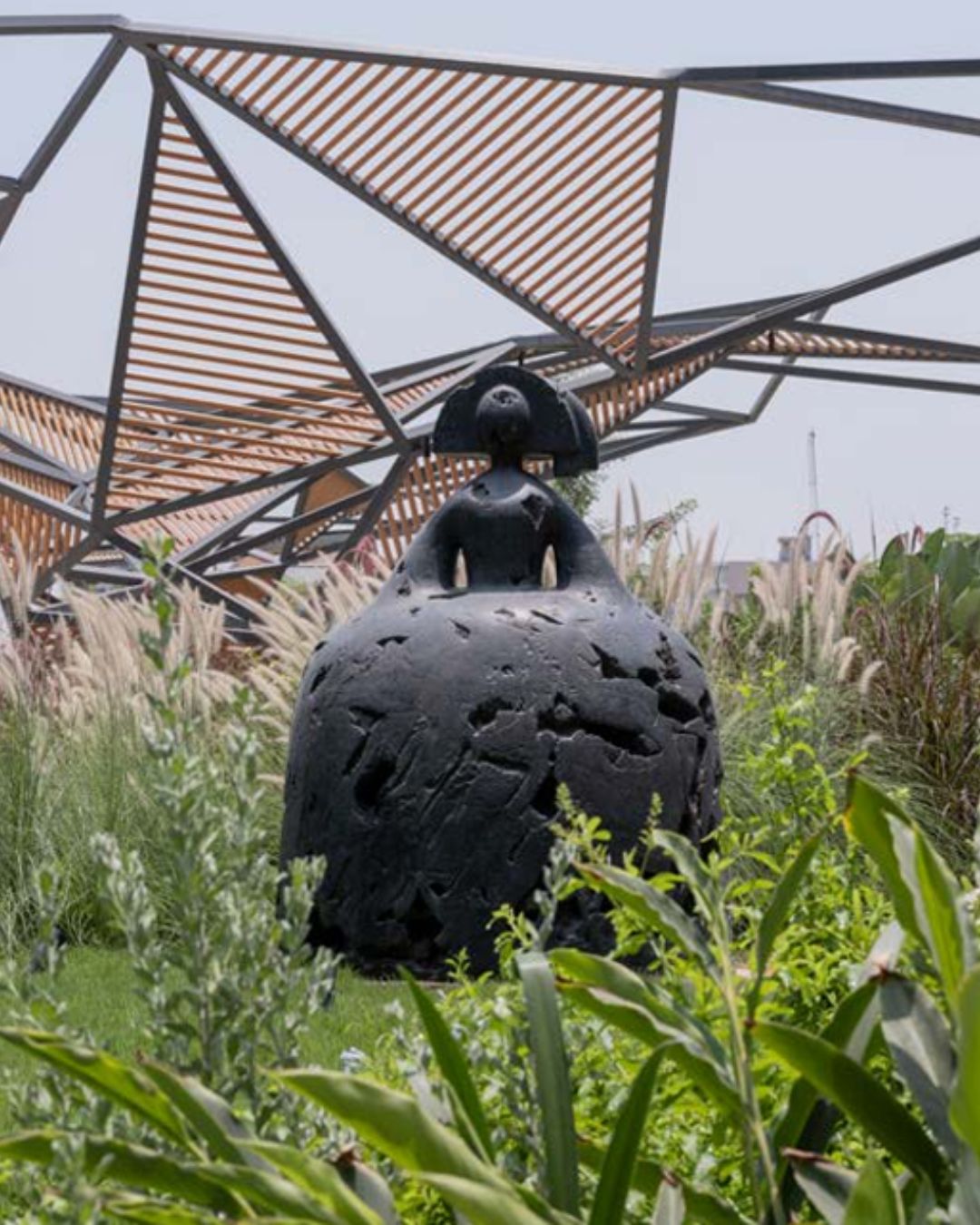
1: Hammer (Blue) by Micheal Craig-Martin; 2: Reina Mariana by Manolo Valdés
The works RMZ Foundation has placed across multiple cities make that case without apology. Vibha Galhotra’s Colony Collapse Disorder rises at a Hyderabad campus in stark response to the vanishing bee population. Himali Singh Soin and David Soin Tappeser’s Salt Lines, created under their collaborative name Hylozoic/Desires, excavates the colonial history of the salt tax at the Dr Bhau Daji Lad Museum in Mumbai. Ayesha Singh’s site-specific installation at a Jodhpur stepwell reclaims women’s forgotten architectural legacies. This is art as argument, placed in the heart of everyday life — and the setting is entirely intentional. “When you place a work that speaks to ecology, marginalised histories, or gender within a space where thousands of people move through daily, you are making a statement about who art is for… That these conversations belong to everyone,” she says.
What happens in that encounter is, by design, open. “When someone pauses in front of a large-scale sculpture on their way into work, something shifts,” Menda says. “They begin to ask questions — about the work, about its maker, about what it is saying. With curiosity comes conversation, and with conversation comes a cultural turn.”
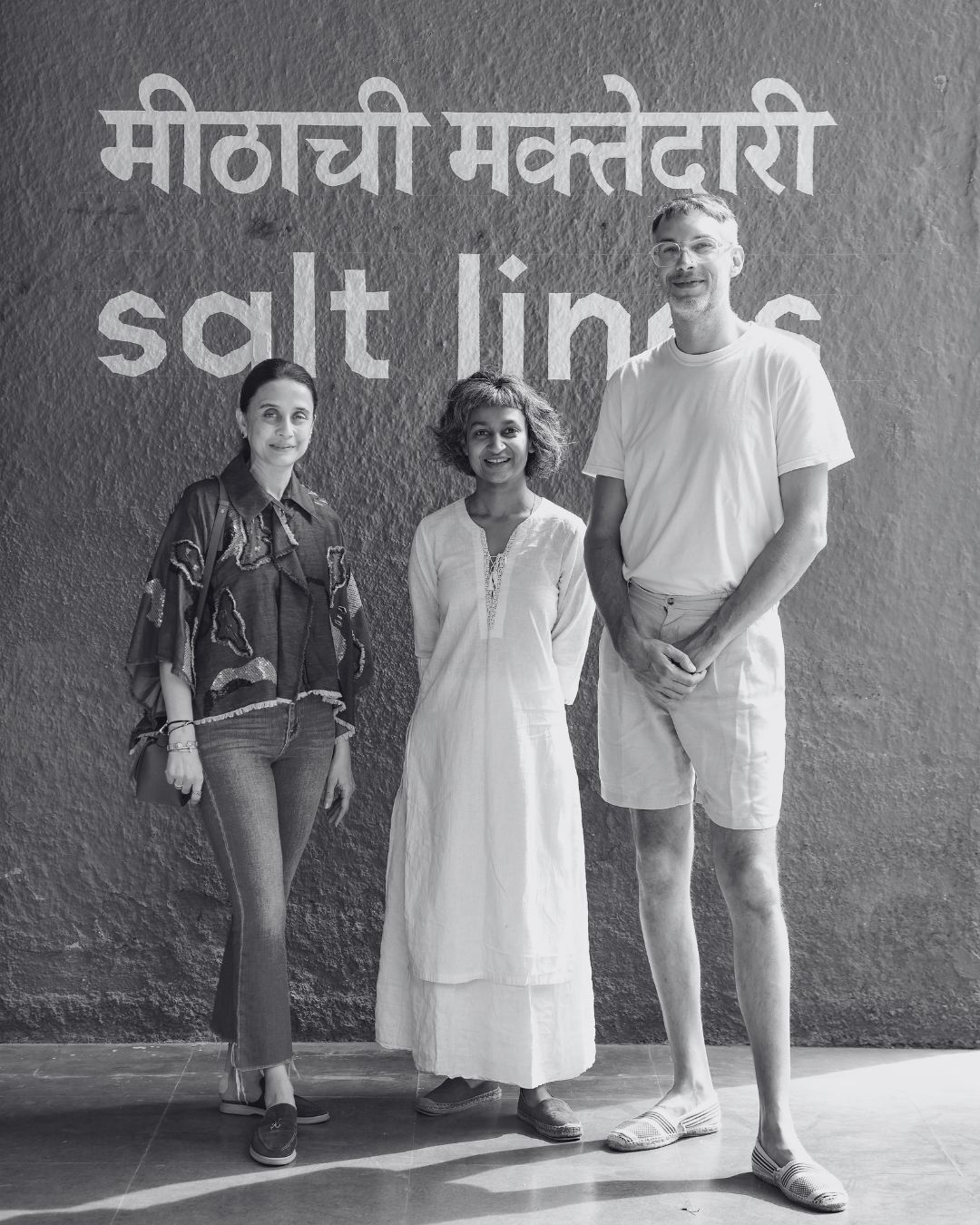
Anu Menda with artists Himali Singh Soin and David Soin Tappeser at Salt Lines, Dr.Bhau Daji Lad Museum, Mumbai
A facility manager and a CEO will bring entirely different experiences to the same sculpture, and both responses, Menda insists, are equally valid. “Art, when it is embedded in everyday environments, becomes the lifeblood of a space rather than an accessory to it,” she adds. Repeated exposure creates familiarity, and familiarity deepens into something far more enduring — the kind of cultural experience that only proximity and time can build.
Menda moves between worlds with ease. As a Global Council Member at the Delfina Foundation in London, an advisor to the Kochi Biennale Foundation, and a presence at Frieze and Yorkshire Sculpture Park, her engagement is never separate from her local commitment. In 2026, RMZ Foundation will support artists Himali Singh Soin and David Soin Tappeser at the Venice Biennale — taking that same conviction that places art in the forecourt of a Bengaluru campus onto one of the world’s most prominent cultural stages. “The goal is not visibility for its own sake but the building of a sustained, enduring cultural presence,” Menda says. It is a commitment that runs in both directions — outward to the world, and back to the cities and communities where the work begins. “India has extraordinary depth and a vital contemporary artistic voice. Our role is to ensure that voice is heard, consistently, intentionally, and with long-term commitment.”
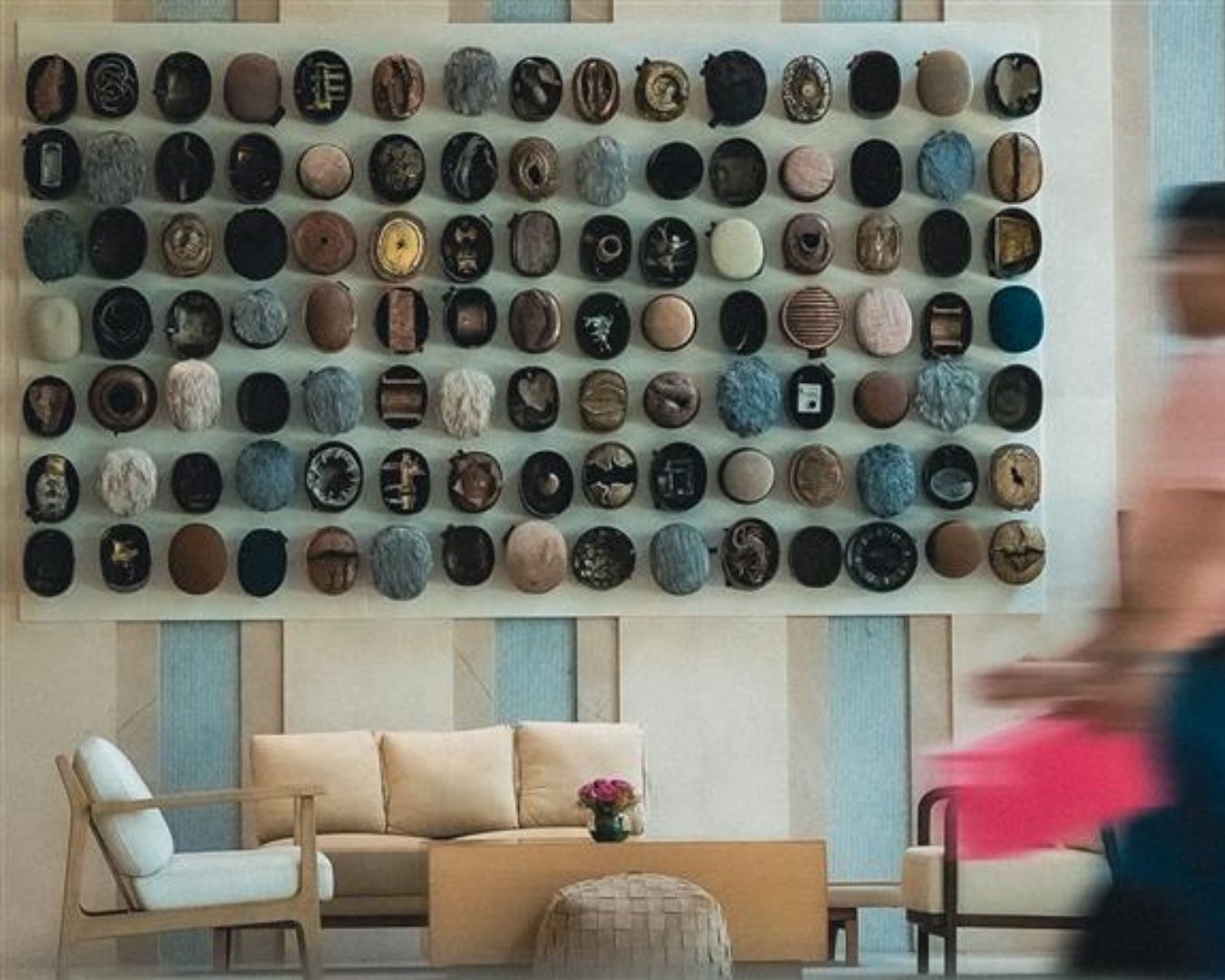
The work stays, the world moves through it — Masks by Narayan Singha
Indian cities, Menda observes, are at a turning point — urbanising rapidly, with public art finally beginning to keep pace. She is clear-eyed about what she would like to see next: intentionality, long-term cultural infrastructure, art embedded in where people work, live, and eat — present in the ordinary as much as the ceremonial. “City-led platforms are vital because they root art in lived civic experience,” she says. “They make the city itself the canvas.”
Everything RMZ Foundation does is guided by what Menda calls the four Cs — culture, community, commitment, and conversation. Art, in this framework, humanises complex issues, builds social cohesion, and opens space for the kind of empathy that few other forces can.
Art is how cities speak — and Anu Menda and RMZ Foundation are shaping what they have to say.
Words by Rhea Sinha
Image Courtesy RMZ Foundation