Luxury has long been packaged as something tangible: Something to acquire, display and possess. The must-have piece right off the runway, a cult beauty brand’s “must-have” IT powder cushion even before its market launch, a unique timepiece courtesy of the horological heritage of Audemars Piguet, checking into a hotel overlooking the sea. But as the luxury industry faces a significant reset, per a new report from consultancy firm Bain & Co., and consumer behaviour changes, a deeper question emerges: What if the next great luxury is not something we own, but something we experience?
On June 19th 2026, I got married in Copenhagen, Denmark. My husband and I are both slow travellers, and we planned a month-long trip around the day we would exchange our rings in Københavns Rådhus. I was 4,000 miles from home, making a big commitment without my family and friends, and given my tendency toward nervousness, my (now) husband knew all the tricks to keep me calm. So we walked around the city, quietly taking in its beauty and not thinking about the day. It was around Havneringen (The Harbour Circle) when I noticed two people sailing silently in an electric boat through the dazzling and clean waters. On the other side, a group of two to three people sat having unhurried conversations. I suddenly became too aware that it was a Wednesday. I was a tourist, and hence “deserved to saunter aimlessly”. What were these people doing, relaxing in the middle of a week in public spaces?
Who boats in the middle of such a busy city anyway?
I knew Scandinavian countries were consistently ranked among the happiest in the world. I knew they were among the wealthiest, too. But what was it about them that was calming my nervous system?
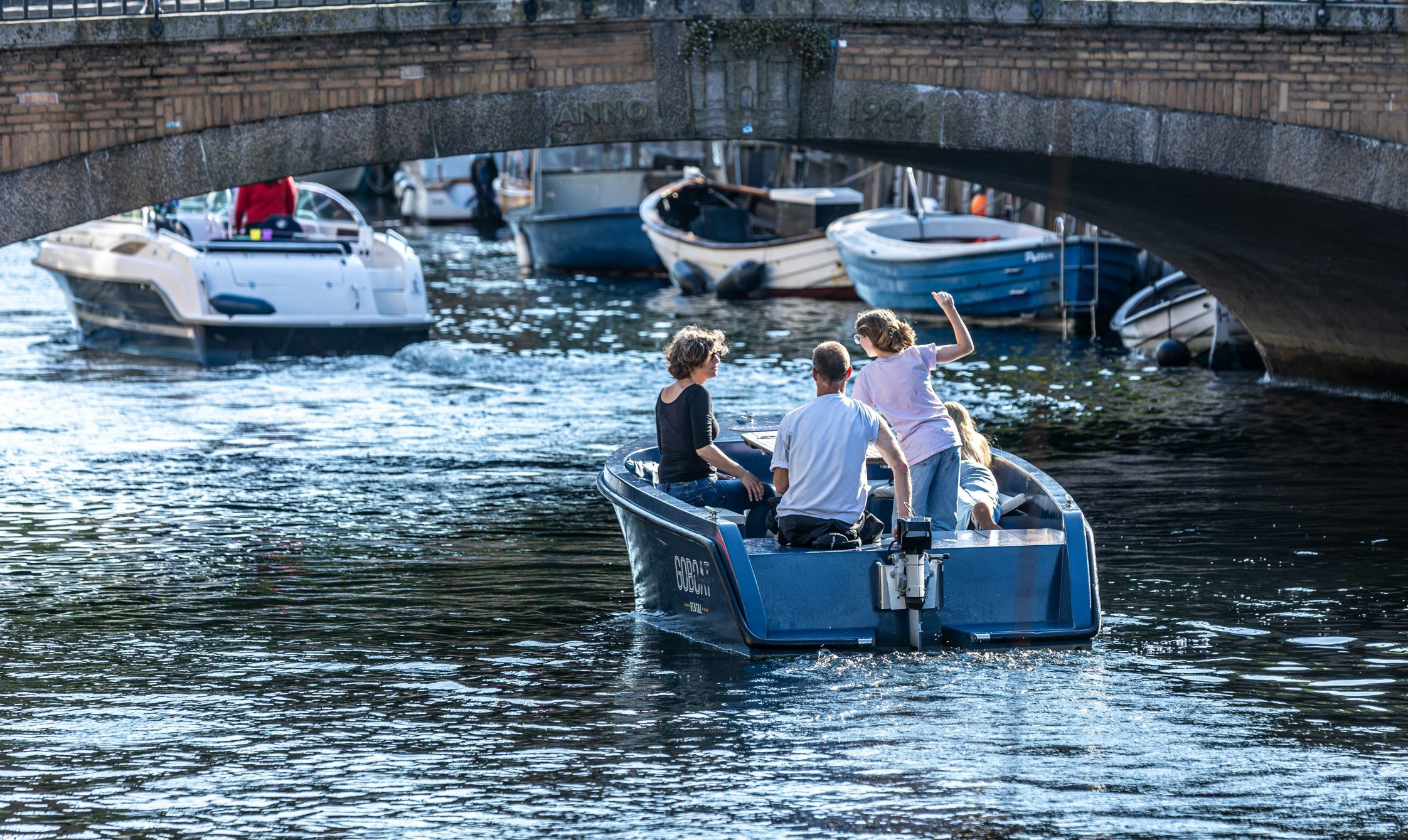
A quiet afternoon on Copenhagen’s waterways: Locals taking to the harbour for a leisurely boat ride
Over the next 20 days, while travelling across Denmark, Norway, and Germany, I started noticing more people — office workers spilling into public squares around 5.30 p.m. with no apparent agenda, families spending hours sunning, mothers, still in swimsuits after an afternoon at the public pool, chatting with friends while breastfeeding toddlers, elderly couples occupying the same bench for hours, watching the world pass by, Norwegians swimming casually in the Sørenga Seawater Pool (Sørenga sjøbad) and in the fjord.
All on a weekday.
I remember walking through Munich’s Englischer Garten one afternoon and being fascinated by the sheer audacity of it.
A 375-hectare park, right in the middle of a major European city. Wasn’t this prime real estate?
Instead, here were Biergärten where people had simply come to sit after work. I like observing people. It fascinates me that every person around us is living a life that is as complicated, if not more complicated, than mine. That afternoon, there were people in suits and high heels. Perhaps senior executives. Perhaps lawyers. Perhaps government officials. There were students taking a break between lectures. There were people who had clearly come straight from work for a beer. I knew nothing about their professions, ambitions or bank balances. But I remember thinking: These people were rich.
And while I was still taking in the oddness and glory of all the “mid-week relaxation shenanigan”, we walked to the Eisbach. At the southern edge of the Englischer Garten, the Eisbach River creates a standing wave where people surf! Right in the middle of Munich.
Yes, surfing in the middle of a city.
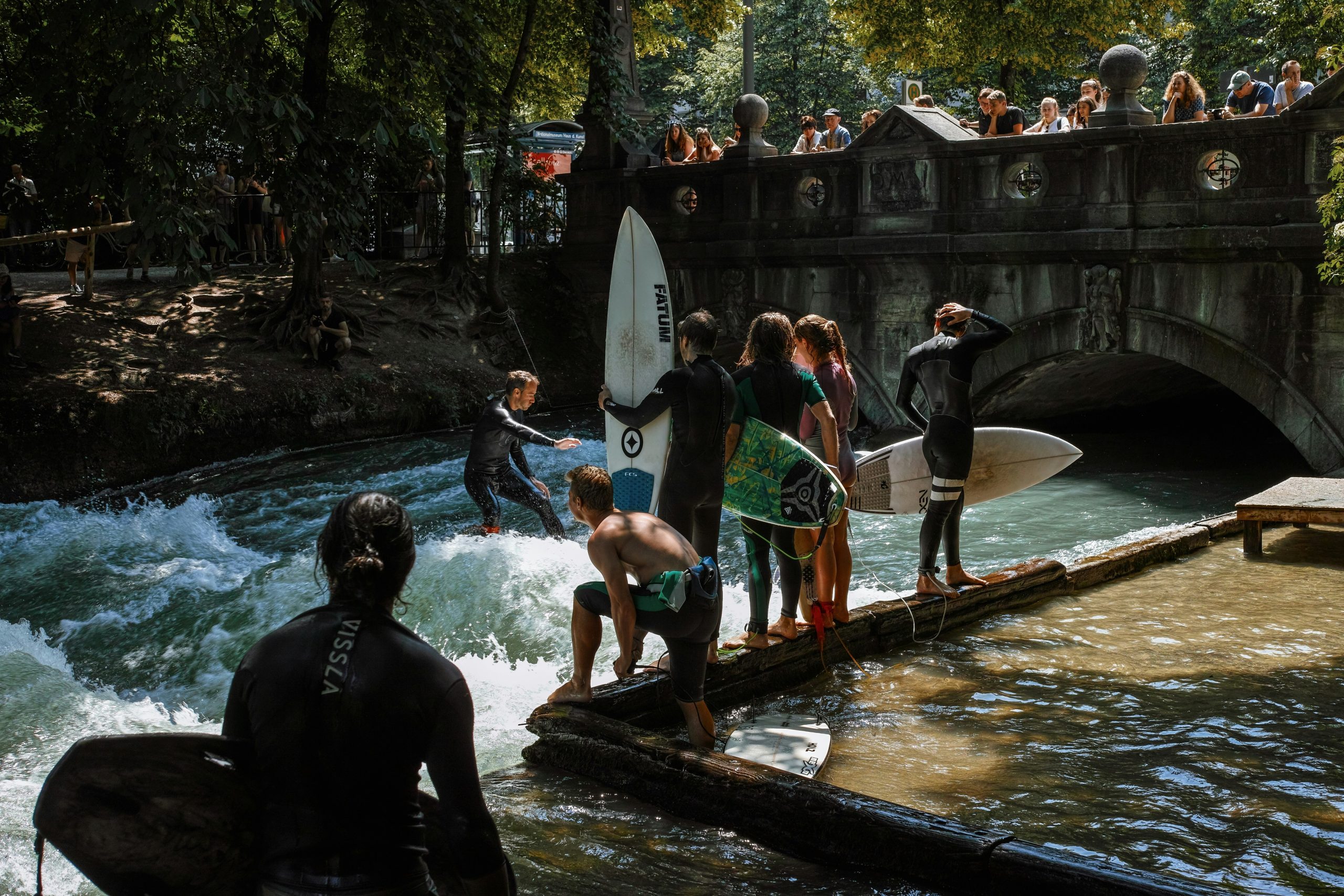
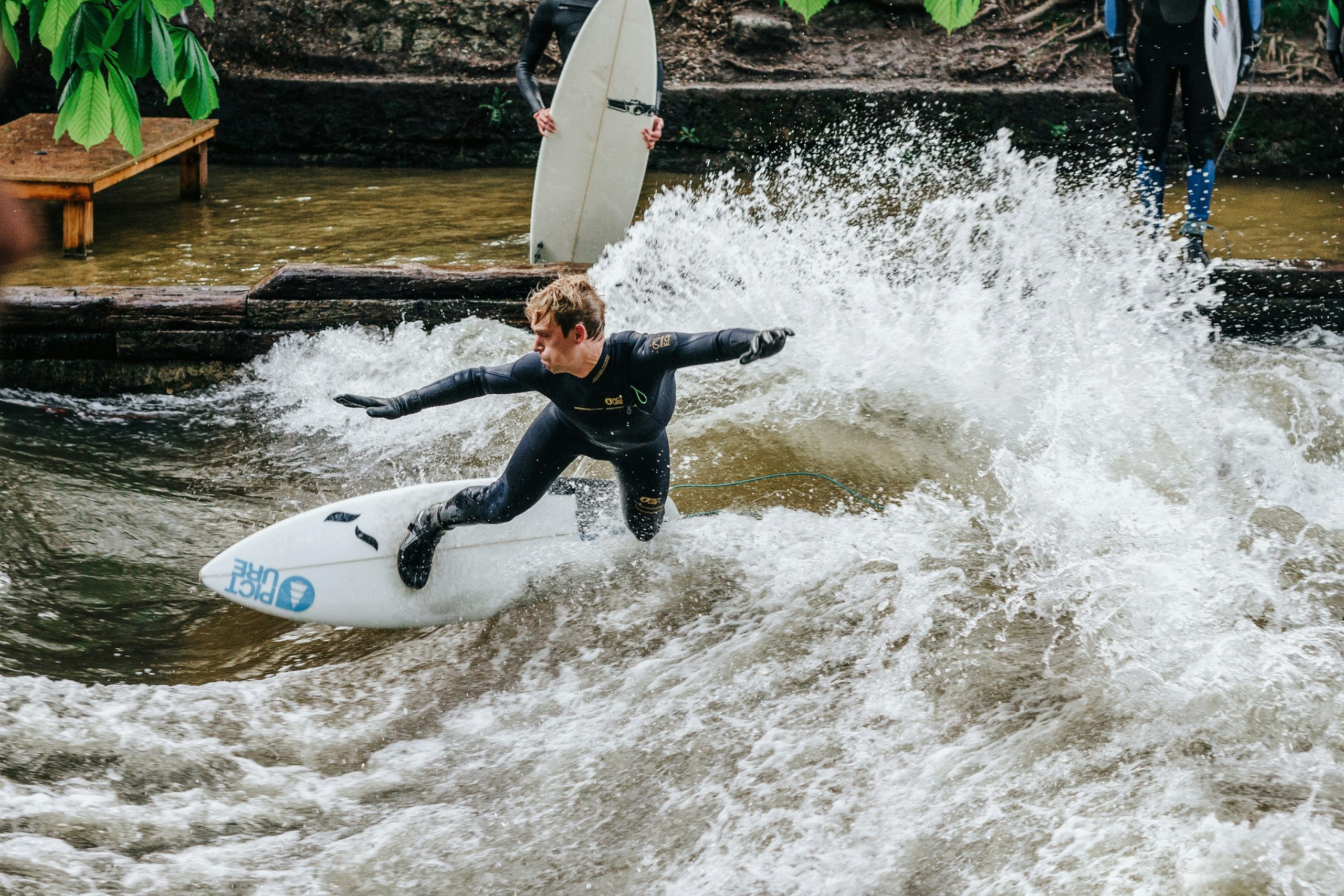
Munich’s Eisbach turns an ordinary stretch of the city into an unlikely meeting point for surfers and spectators
The Eisbachwelle has become one of Munich’s most recognisable attractions, drawing surfers and spectators (including me) from around the world.
There was something almost absurdly beautiful about this.
A city that could have monetised every square metre of this land decided to keep a 375-hectare expanse of green in the heart of the city, with meadows, waterways, beer gardens, walking and cycling paths, and even a place where people can surf.
That’s when a question hit me: Was leisure the new luxury? Was Friluftsliv (open-air living) the new rich? I became fascinated by how people in these countries were spending their ordinary time. The remarkable thing was not what they were doing. It was what they were not doing. They were not optimising it, documenting it, converting it into productivity or consuming something to justify their presence. They were simply inhabiting time.
Welcome to the era of non-optimised leisure, perhaps the rarest luxury of all. A time when leisure is no longer a reward for having an ideal life, but the foundation for one. Perhaps that is what leisure looks like when a city and its people understand that not everything valuable has to produce something.
None of these societies is perfect, of course. But as I saw three Norwegians sunning on a floating Sauna boat, as one prepared to grill some lunch on the stove on top of the boat, I couldn’t help wondering, while we were busy meeting deadlines that would help us buy “commodity luxuries”, if some people had figured out that “leisure” was the real luxury.
I’m back from my travels. But I still think about the Danes sitting by a canal and the Norwegians grilling on a boat, or how the Münchner must be surfing at 10 a.m., while I am trying to squeeze in another meeting, and maybe a workout. And then on mornings when I can finish a cup of coffee slowly, without feeling guilty for simply being, I do feel rich.
Words by Misha Paul
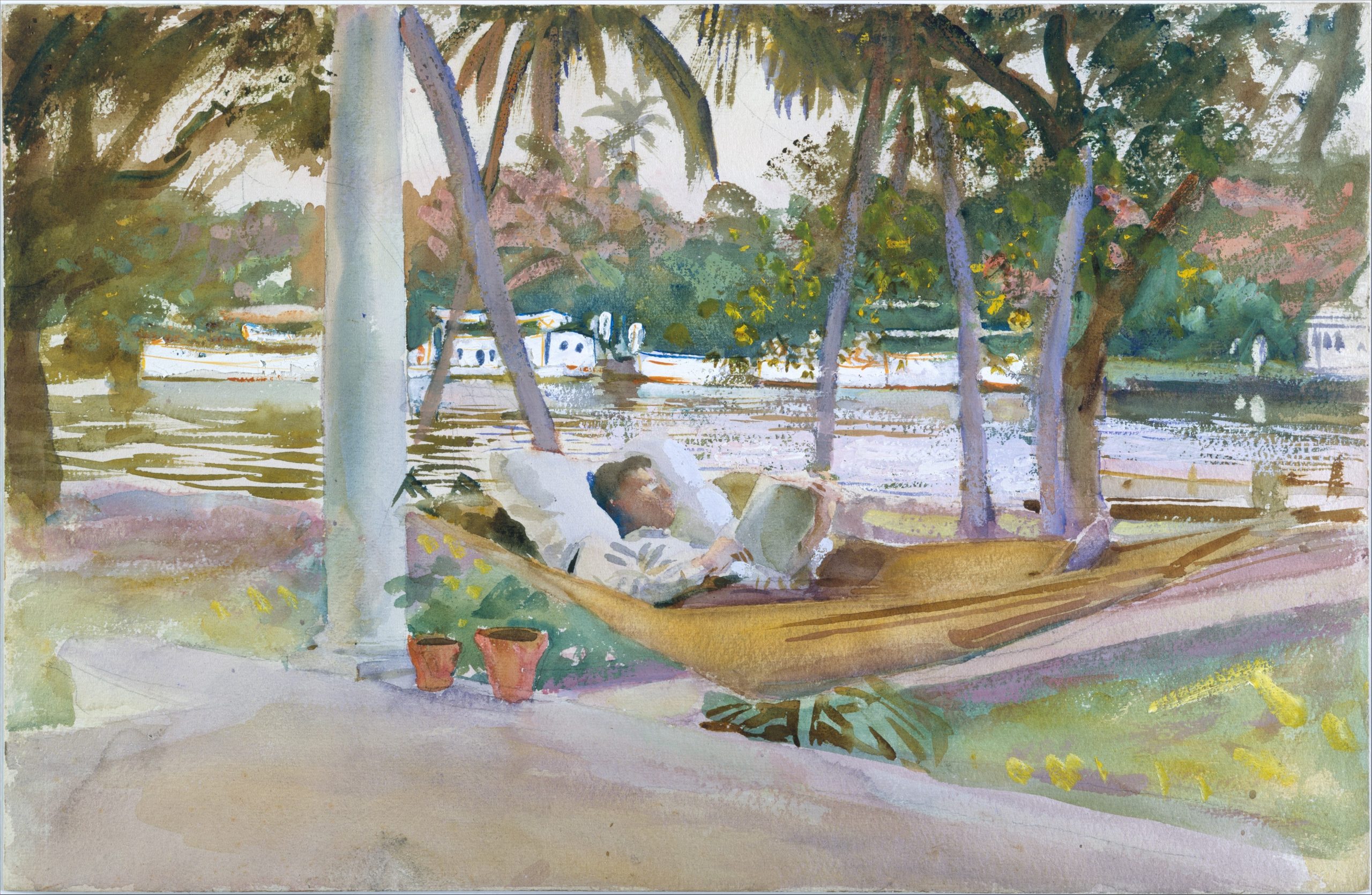
Featured Image: Figure in Hammock, Florida by John Singer Sargent (1917)