Bombay, as a metropolis, relentlessly reaches for the sky; an unlikely city of dreams grasping at the heavens. It’s defined by the harsh concrete set against gathering smoke and the metal facades that grip the island — all to reserve a view of the sea’s neverending expanse. It’s a city that is unmistakenly tethered to water. But it’s also a city that has forgotten its kinship with it. Before it belonged to the industrialists and the merchants, the Bombay archipelagos belonged to the Kolis, an indigenous community whose ties to the land precede foreign interventions by centuries.
It’s a history remembered in parts. Parag Tandel spends his days piecing it together.
The vast universe of the visual artist’s work is made up of memories and rituals picked up from his home in the Chendani Koliwada, Thane. Through a confluence of research and creative experimentation, Tandel presents a layered knowledge system of a culture most vulnerable to Mumbai’s ambitions. Fittingly, he fashions himself an autoethnographer. What he creates is not just art, but legitimate, personal research work that rejects empirical processes opted by colonial structures.
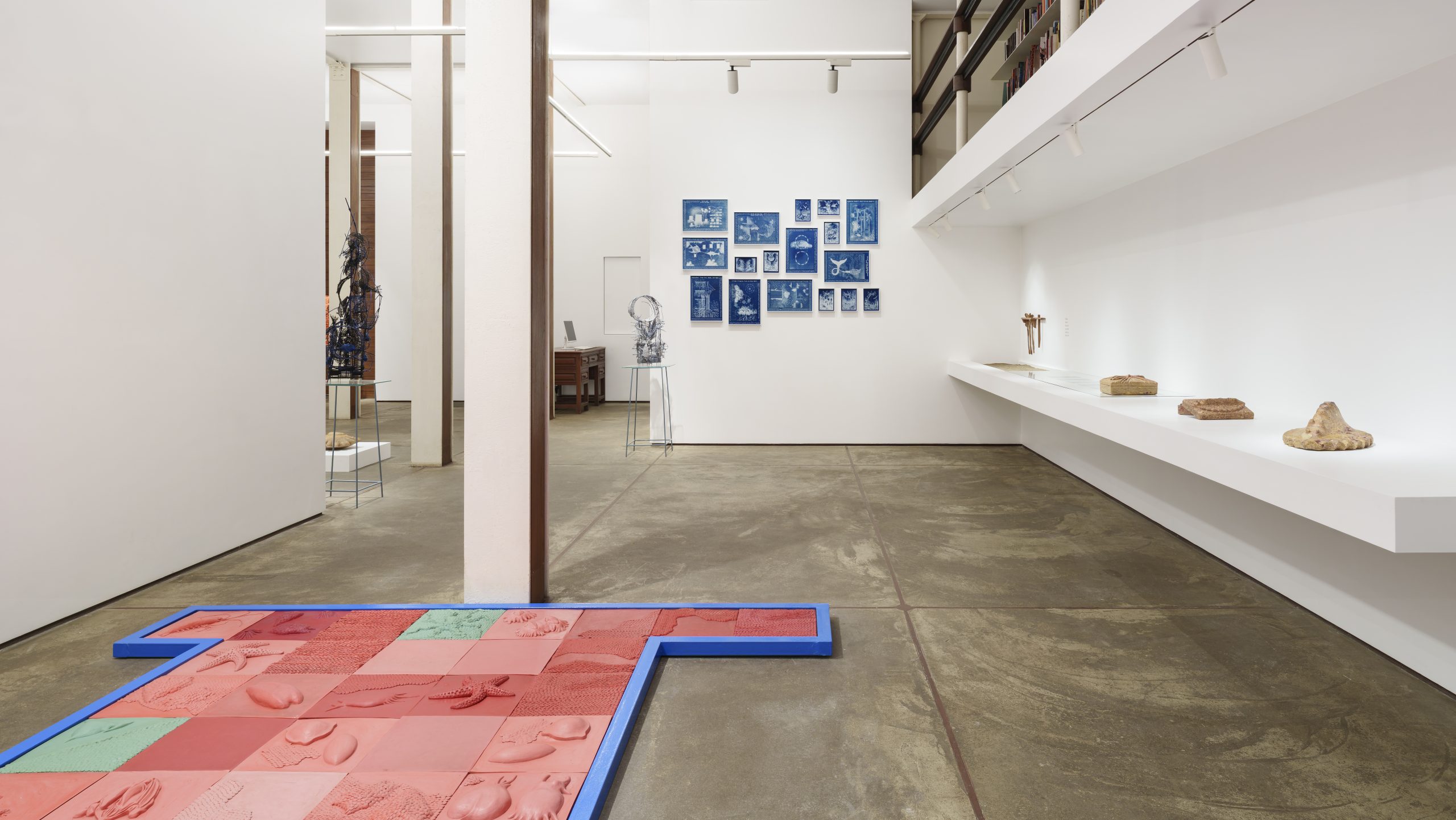
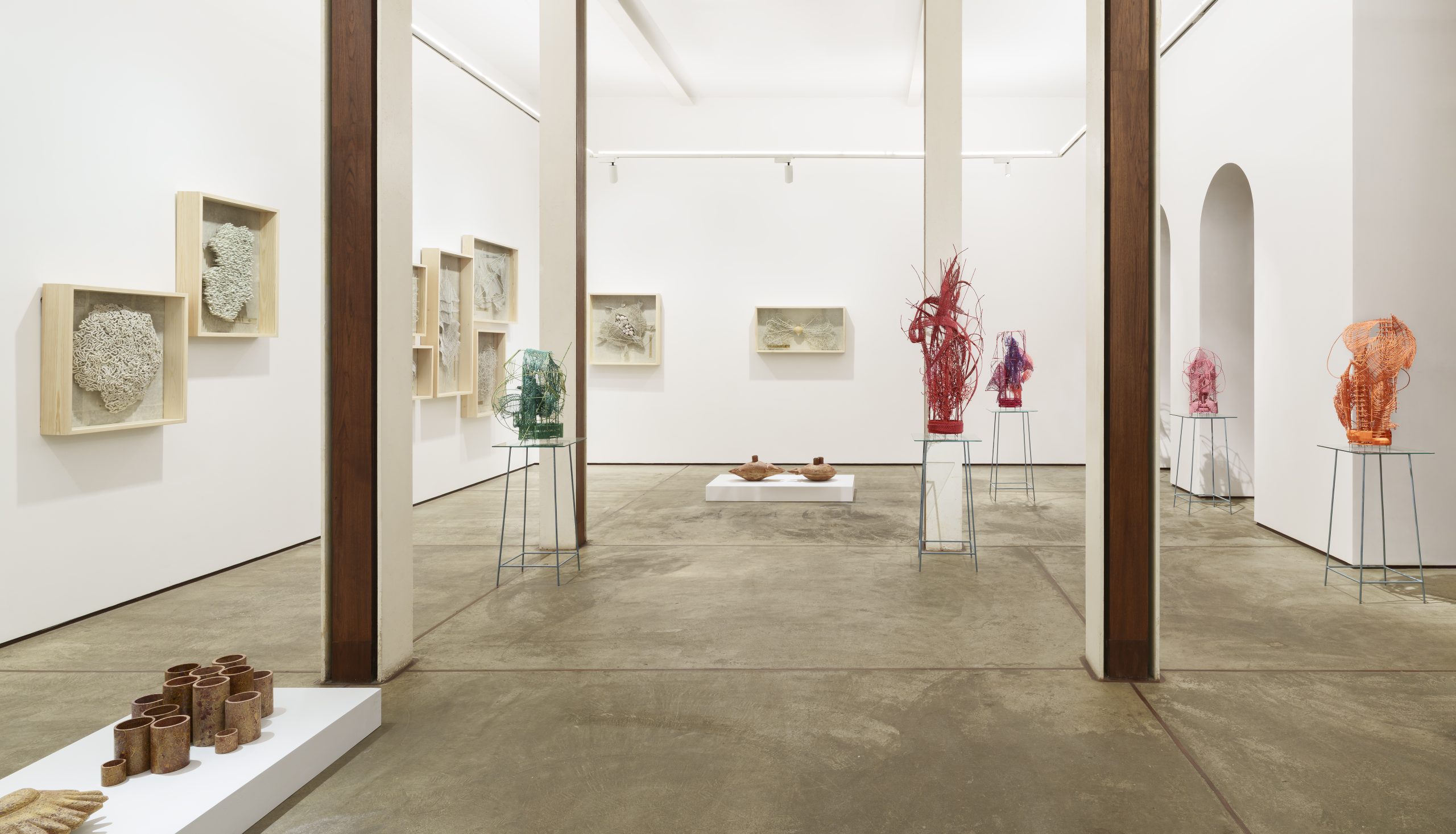
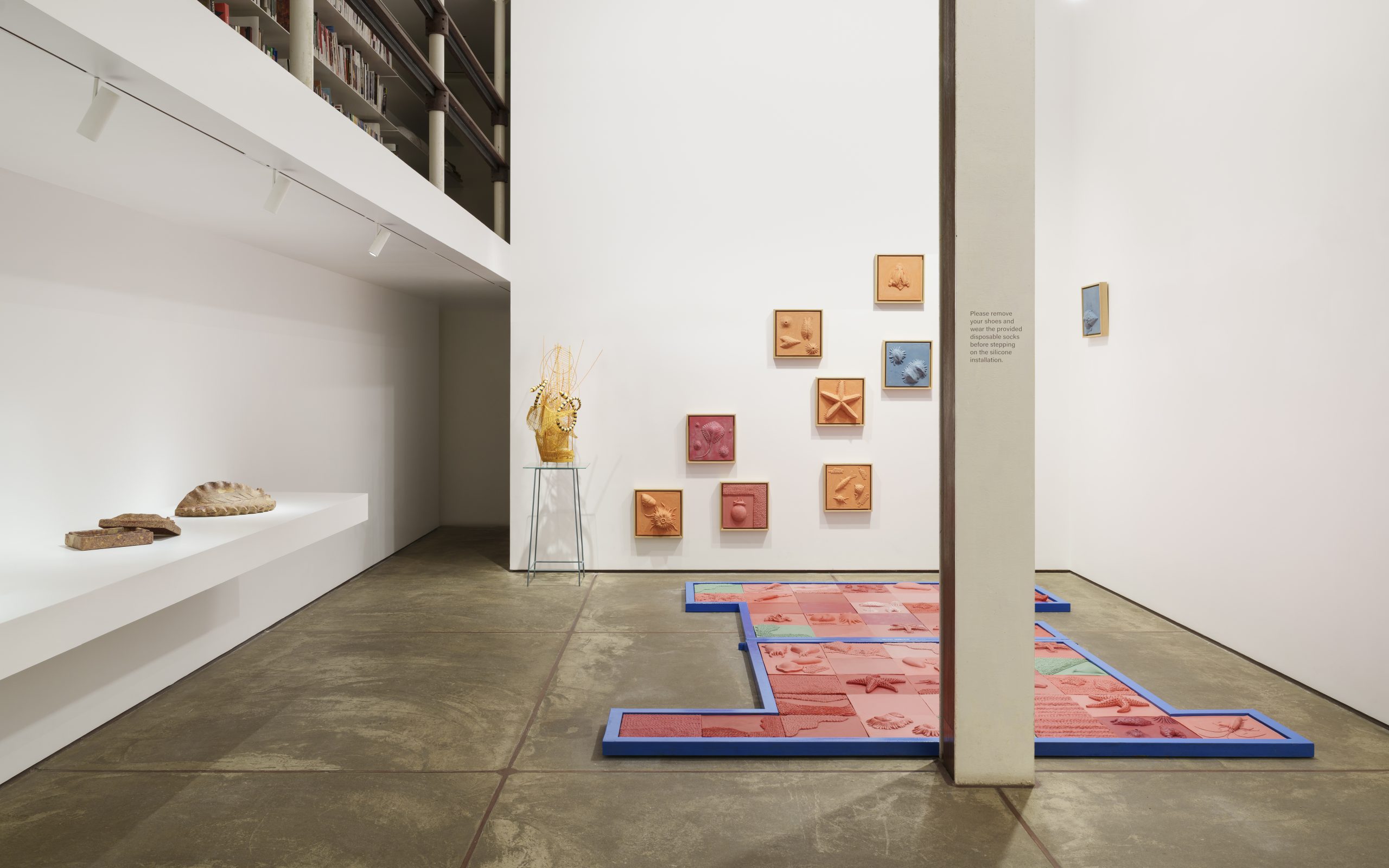
Installation views of Parag Tandel’s recent solo exhibition at TARQ titled खारी गाबोली | Salted Caviar
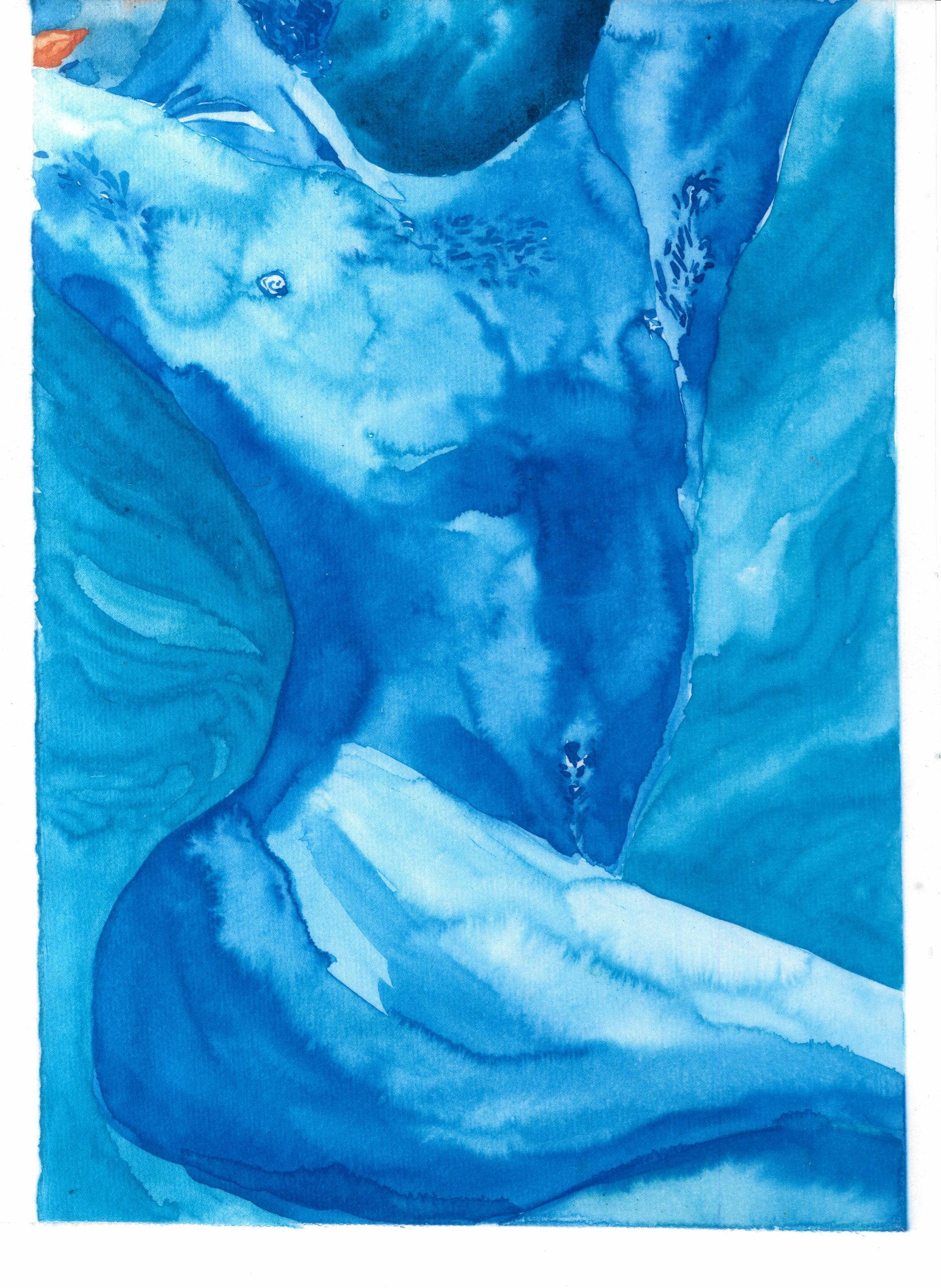
“The Kolis have been subject to colonisation by the Marathas, the Portuguese, and the British,” establishes Tandel. His work, then, begins with a simple assertion: What we encounter is an account of loss, repair, and persistence. His most recent exhibition, खारी गाबोली | Salted Caviar, opens up with the same thought. The series SALT SHRINES, encapsulate elements of Koli votive traditions, marine ecology, and nature worship that define Bharali Puja ceremonies held at the full moon at October end. The sculptures signify cycles of cultural assimilation that the Kolis have gone through. The colour red symbolises the red tika now commonly worn by the community — an unexpected adoption of Hindu traditions.
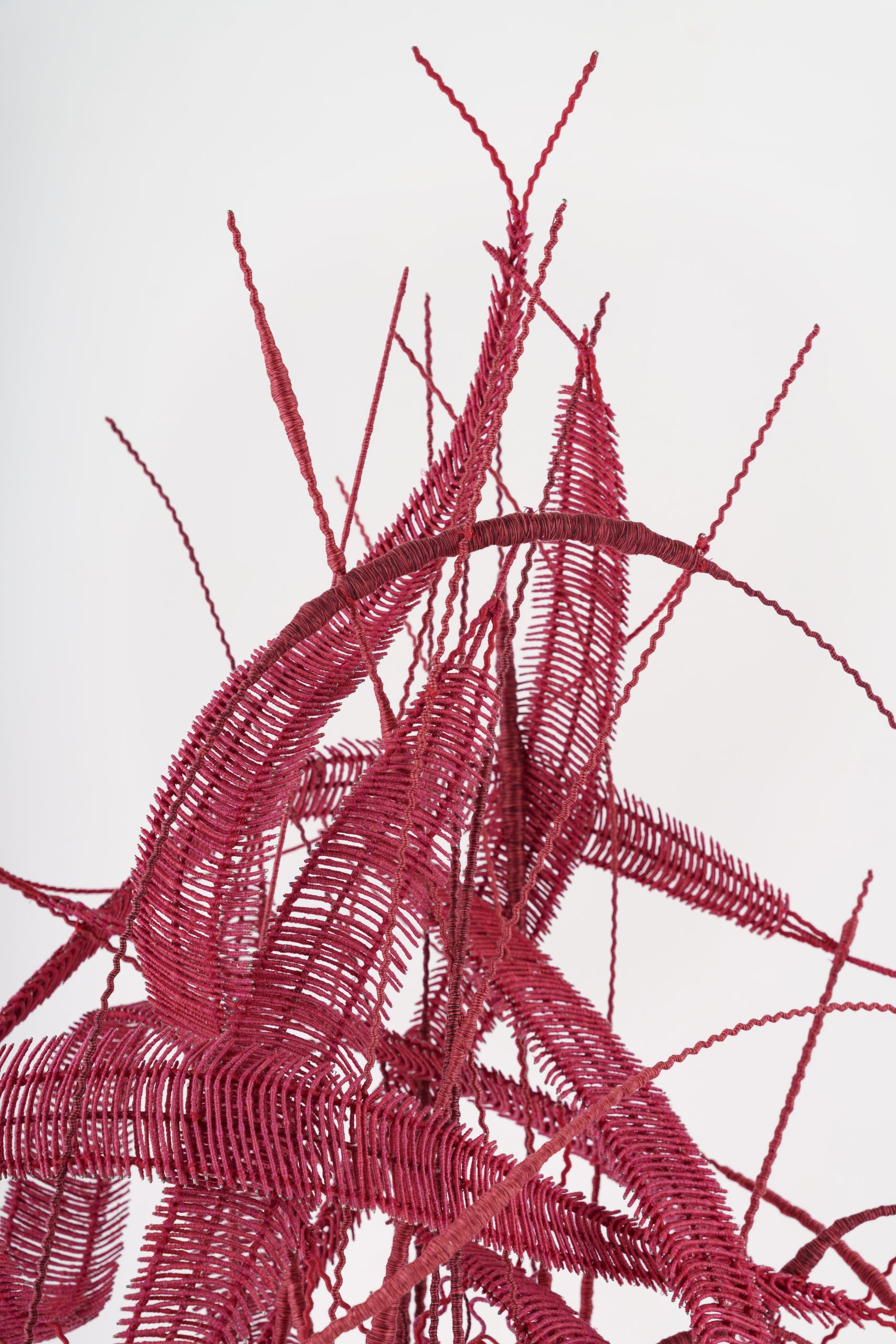
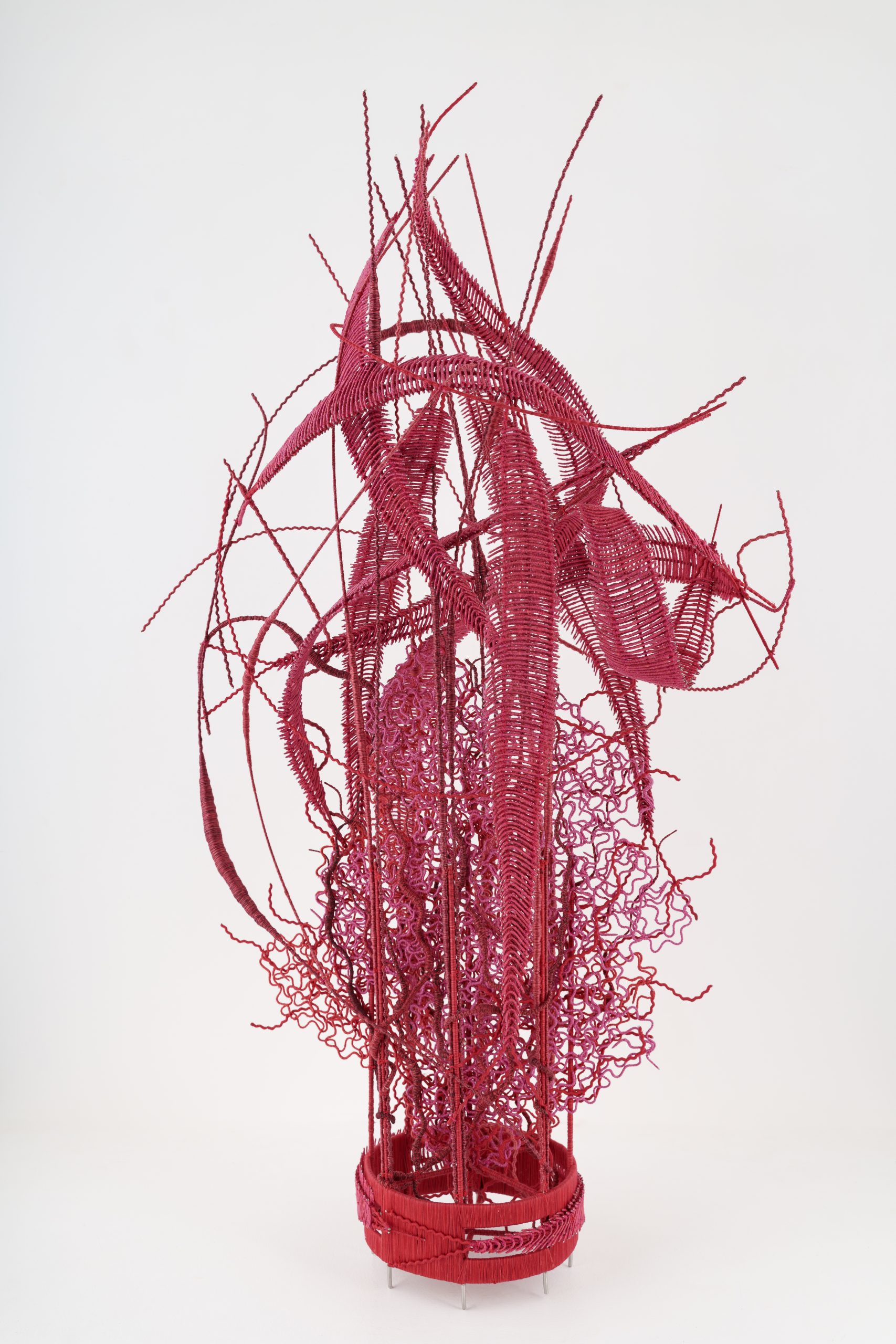
SALT SHRINES: Colour Blind/ वर्णान्ध series (6), stainless steel wire and polyester and cotton thread, 45 x 26 inches, base diameter, 8 inches, 2026
Strikingly, Tandel’s practice is exploratory. It does not define, it investigates. In the early stages of his artistic career, Tandel often contemplated what can be considered art. Perhaps that is exactly why his work edges into discovery. Seeking the ordinary aspect of Koli life is often supplemented with developing fresh context.
In 2023, he experimented with Bastar’s Dokhra wax-casting technique, placing Chota Nagpur Plateau’s exploitation as a parallel concern for indigenous communities across the country. More recently, he has drawn a connection between the human-led degradation of Koli land to the naturally shifted landscape of Jaisalmer, which used to be a seabed. In the series Ancestors, he molds the earth gathered from the city to materialise his contemplations on what fate time will deal the Koliwada, and how much of it can even be considered natural.
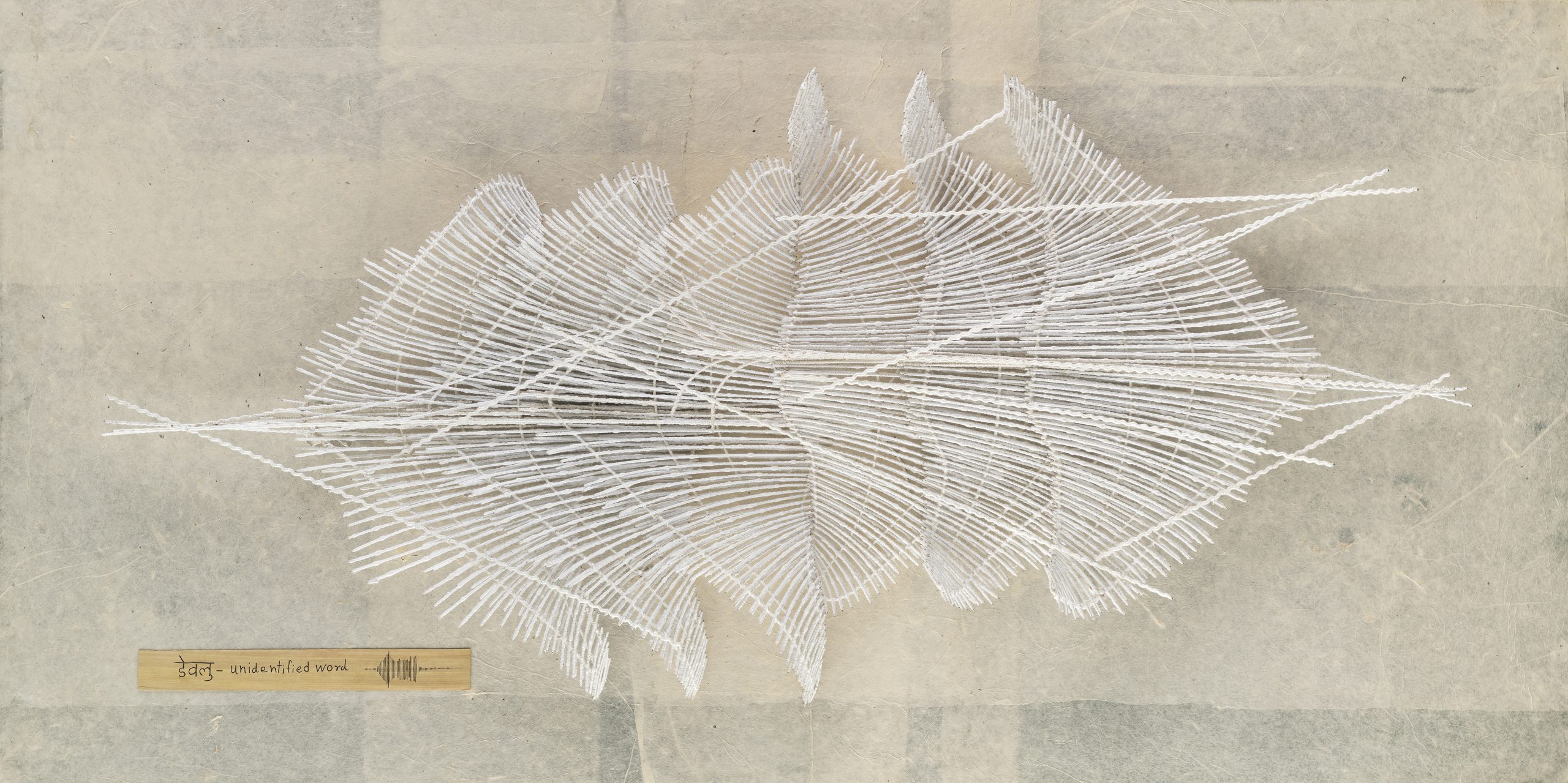
Estuaries of Waning Sounds: Koli Dictionary Project 8, cotton polyester thread, stainless steel wire and rice paper on MDF board, 48 x 24 x 3.5 inches, framed size: 49.4 x 25.3 x 5.8 inches, 2026
The structural collapse of the Koli’s social identity is something Tandel examines extensively with his moving museum project, The Tandel Fund of Archives, operated alongside cultural anthropologist and visual artist Kadambari Koli-Tandel — his partner. As a socially engaged public art initiative, the archive has put together interactive sessions, informed discussions, and audio-visual installations with stakeholders like Goethe-Institut, Indian Museum in Kolkata, and Asiatic Society of Mumbai. The couple’s work comments and interacts with the disappearance of linguistic traditions, musical heritage, and even culinary practices. The archive invites audiences to engage with the community’s vocabulary — the first one to define Bombay.
Salted Caviar imbibes this essence, being an exhibition that emphasised interactiveness. “I wanted to bridge the gap between museums and galleries,” Tandel says. The floor-bound installation, Sea of Reflections allows visitors to step onto his sculptural work depicting marine ecology and the vitality of a life bound by the sea. One is free to probe the outlined life forms. There is an undeniable element of child-like wonder in his new work, where Tandel wants people to be at play. An exciting addition to the exhibition proved to be a sandpit, included so that visitors may also step into a mundane but sprightly activity of drawing shapes in the sand.
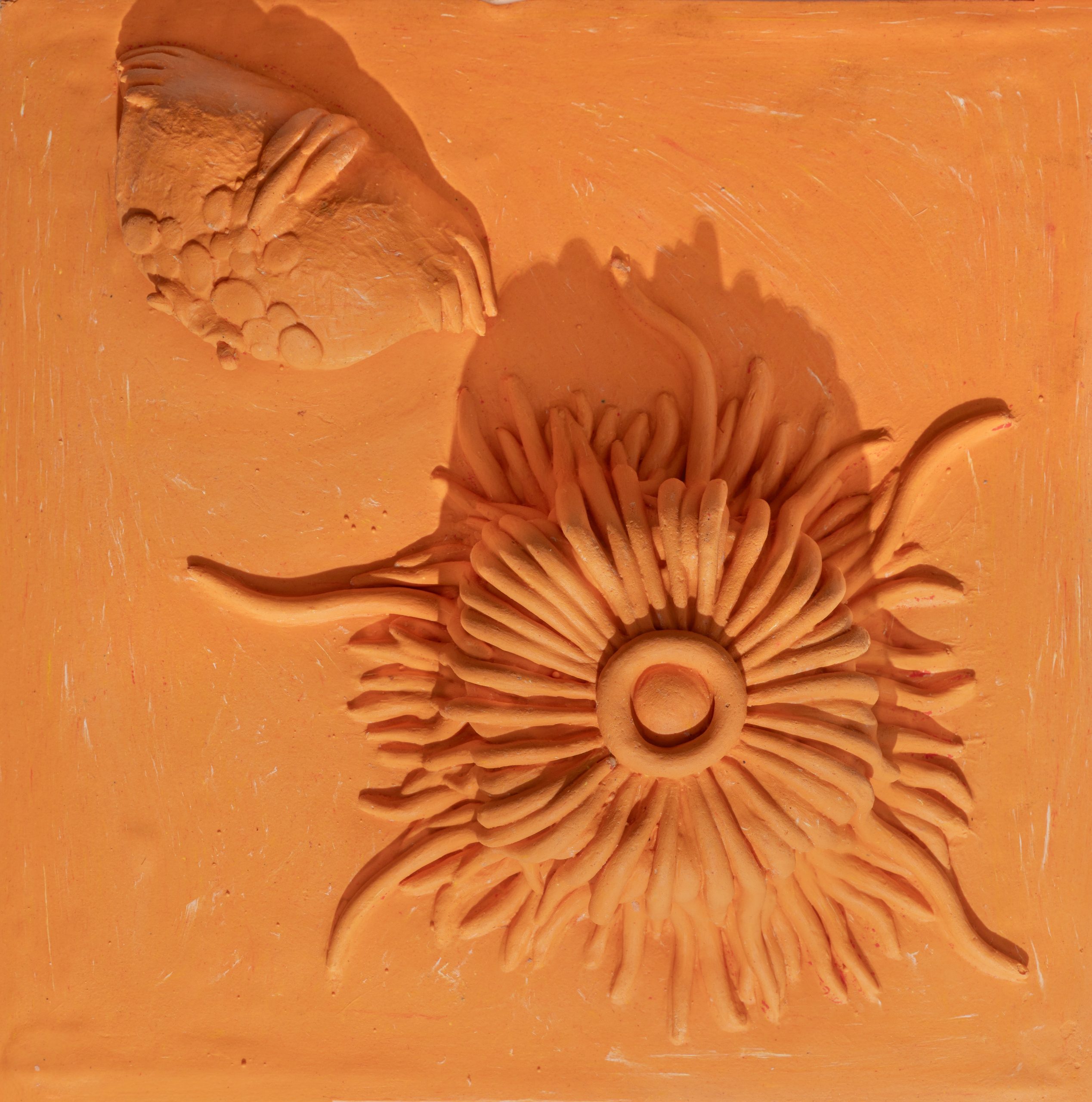
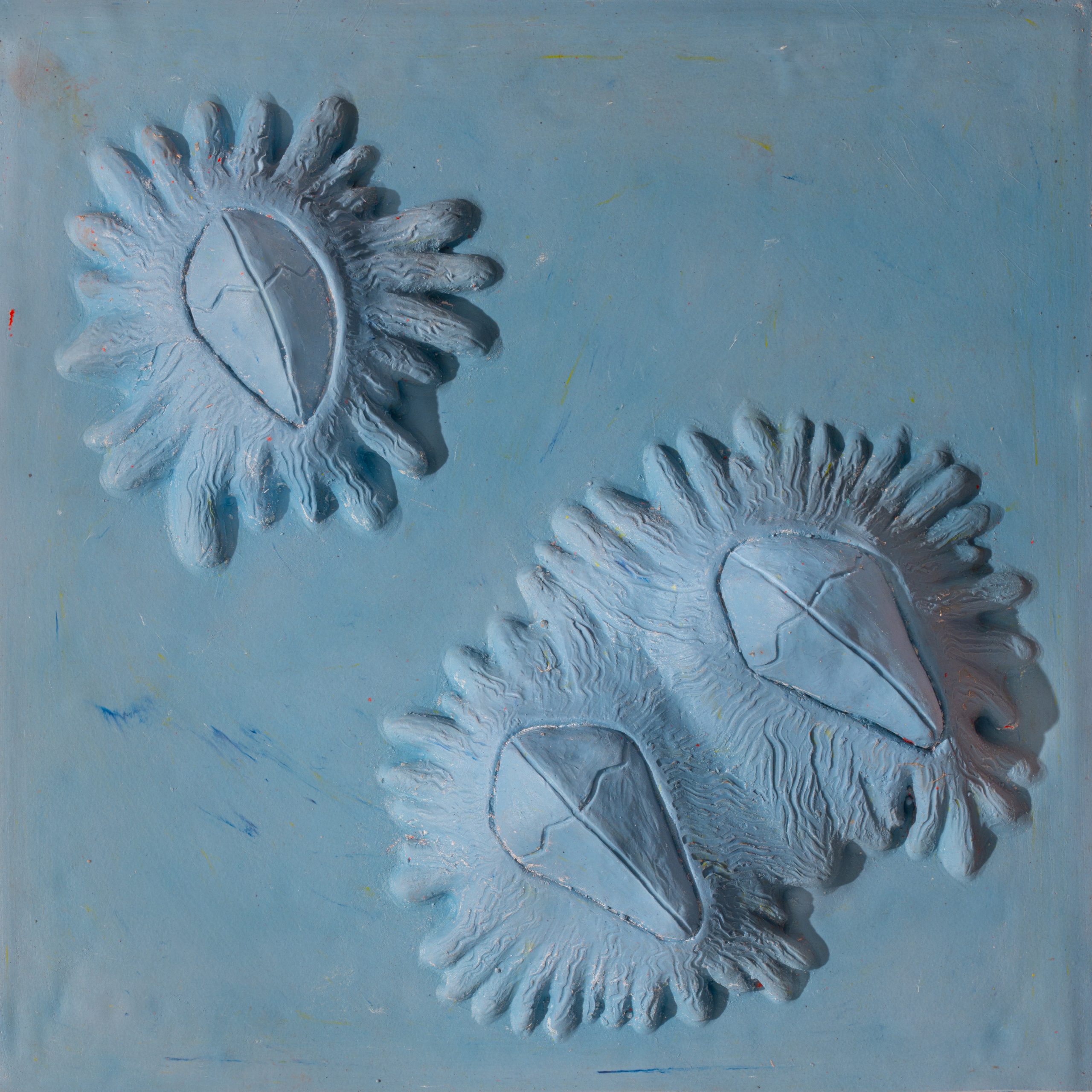
(L-R) Sea of Relation – 2, silicone rubber reinforced on marine plywood, cotton fabric, 11.9 x 11.9 inches x 2.9 inches, 2026; Sea of Relation – 3, silicone rubber reinforced on marine plywood, cotton fabric, 11.9 x 11.9 inches x 2.4 inches, 2026
As Tandel goes forth and strips the anthropological narrative, we return to a question he posed early on in his career. What even is art? That elementary questioning is the undercurrent of everything he’s since done. From seeking to decolonise the rigid structure of his visual arts education, to rejecting the traditions imposed on him and his people, Tandel holds onto an inquisitiveness. “Not all questions need to be answered in words,” he simply offers.
Words by Tanya Syed
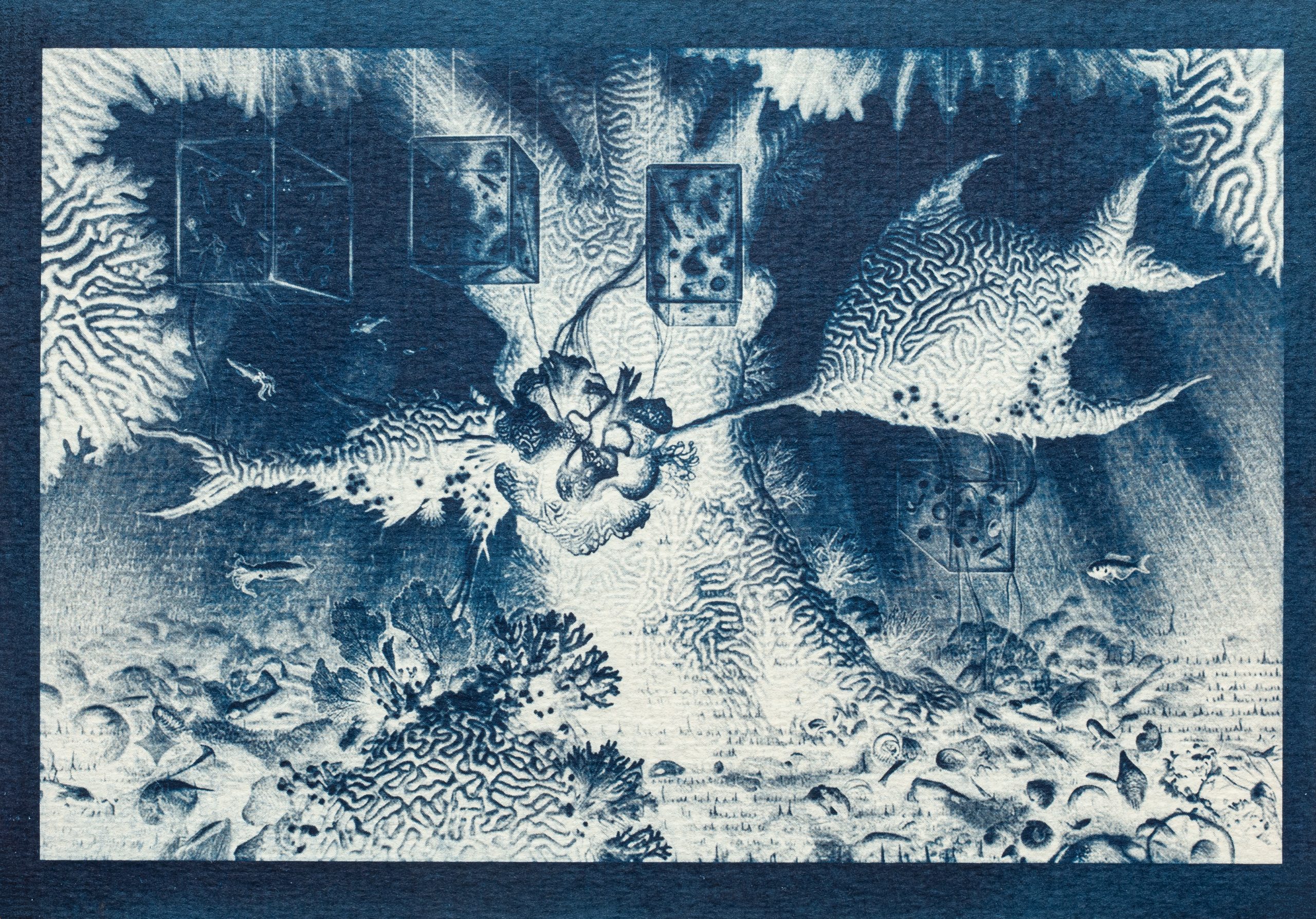
Featured image: Parag Tandel, Vitamin Sea Archives: Sediments of Intelligence – 5, cyanotype on archival watercolor paper, washed in local seawater and freshwater, 5.9 x 8.3 inches, 2026. Courtesy of the artist and TARQ