With Chambal Gin’s new launch, Founder Pervez Bapuna delves into the process of crafting the liquor, unexplored Indian ingredients, and the next frontier of premium spirits
Chambal Gin has a strong sense of place. At what point did you decide you didn’t want to make “just another Indian gin”?
From the very beginning, we didn’t want to create a premium gin that simply happened to be made in India. We wanted to create one that could only come from India, more specifically, from Madhya Pradesh. Gwalior is home, and for us it has always been a place with an untold story. While much of the conversation around Indian gin naturally gravitates towards the coast or Goa, we believed the heart of India deserved a place on the map too. Chambal became our way of celebrating the landscape, history and character of the region rather than following an existing category narrative.
What does the name Chambal represent to you beyond the geography?
For me, Chambal represents layers. Beyond the headlines and folklore lies a place of extraordinary history, resilience and natural beauty. We wanted the gin to reflect those layers. Every element from the botanicals to the bottle design draws inspiration from the region because the strongest brands are built on places that genuinely mean something to them.
If someone tasted Chambal without seeing the label, what do you hope they’d remember?
I hope they walk away thinking, “That’s just a really good gin.” Smooth, genuinely dry styles, and balanced enough to enjoy even on its own. We spent months refining the recipe through 42 trials with multiple botanical combinations — every ingredient had to earn its place. Beyond the drink itself, I hope they remember tasting something that felt unmistakably Indian without relying on the obvious.
The Banjara Trail series feels more like storytelling than seasonal releases. How do you choose the journeys worth bottling?
That’s exactly how we see it. The Banjara Trail was never conceived as a series of limited editions — it was conceived as a journey across India. Every Traveller’s Edition begins with a place that has a distinct botanical identity, a rich cultural context, and a story worth exploring. If we believe we can translate the essence of that region into a balanced gin while staying true to Chambal’s philosophy, it becomes part of the trail.
Why did the Western Ghats inspire a lighter, floral expression instead of something overtly tropical?
When people think of the Western Ghats, they often imagine lush greenery and tropical abundance. We wanted to look a little deeper. With Nagpur being home to the Bapuna Group, the region has always felt familiar to us, making it a natural next stop on the Trail. Orange, hibiscus, and kokum allowed us to express the freshness and vibrancy of the landscape without making the gin feel heavy or overly sweet. The goal was elegance rather than obviousness.
Could this become a collection that maps India’s diverse landscapes through flavour?
Absolutely. That’s the long-term vision behind the Banjara Trail. India is incredibly diverse and every landscape has its own botanicals, flavours, and stories waiting to be discovered. We see this as an ongoing journey rather than a fixed collection. With every Traveller’s Edition exploring a new region and bringing a different part of India to the bottle.
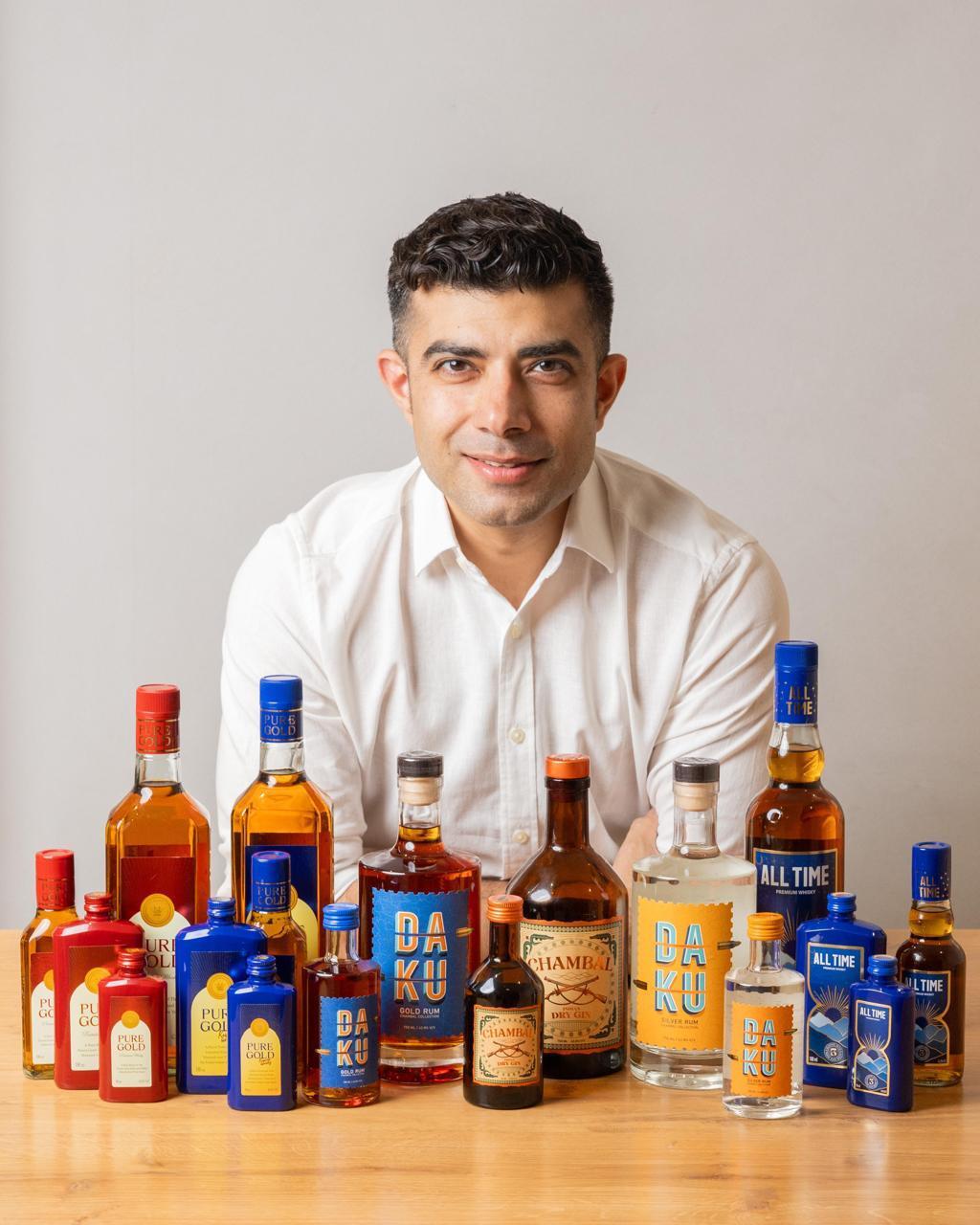
Pervez Bapuna with the Bapuna Alcobrew liquor range
Indian craft spirits have evolved rapidly over the last decade. What’s the next frontier?
I think the next frontier is moving beyond the idea that premium has to look or feel international. Consumers today are looking for heritage, craftsmanship, and products with a genuine point of view. Indian spirits have reached a point where we no longer need to borrow cues from elsewhere. The real opportunity is to create brands that are unapologetically Indian and respected globally because of it.
Are we at risk of becoming too trend-driven, with every brand chasing the next unusual botanical?
Innovation is important, but novelty alone doesn’t build lasting brands. A botanical should enhance the spirit because it belongs in the story, not because it’s unusual. Consumers eventually recognise the difference between meaningful innovation and marketing.
Which Indian ingredient do you think remains completely underexplored?
I think there are still countless regional botanicals that remain to be tried and with our Banjara traveller series that is exactly what we wish to do — to explore the unexplored. Prior to our Western Ghats edition, Kokum would not be thought to be an ingredient within a gin and we changed that. We look forward to exploring more such botanicals that would express the identity of a particular geographical region.
On the business
Coming from a family with deep roots in the alcohol industry, what legacy did you want to preserve, and what did you feel compelled to change?
My grandfather, my father and uncles built our distillery on two cornerstones: Quality and integrity. For decades, we had earned the trust of some of the biggest names in the industry as distillers, craftsmen, and bottlers. This is our legacy, and I strive to maintain those exact standards of function and character. What we wish to build on is to bring our expertise into building consumer brands that reflect our own vision and craftsmanship. Translating our deep heritage into memorable consumer brands under the Bapuna banner.
Premium spirits require patience. How do you balance creativity with commercial realities?
I’ve always believed that creativity without execution is just an idea. Our manufacturing background keeps us grounded. It allows us to dream big while making sure every product can be crafted consistently, bottle after bottle. That’s what gives us the confidence to keep pushing boundaries.
Is export a priority, or is your first ambition to build a stronger premium spirits culture within India?
Exports are definitely part of our long-term vision, but our first ambition is to earn that recognition at home. If Indian consumers embrace and take pride in brands like Chambal, international recognition becomes far more meaningful. We’d rather build a brand that’s loved in India before it’s discovered by the rest of the world.
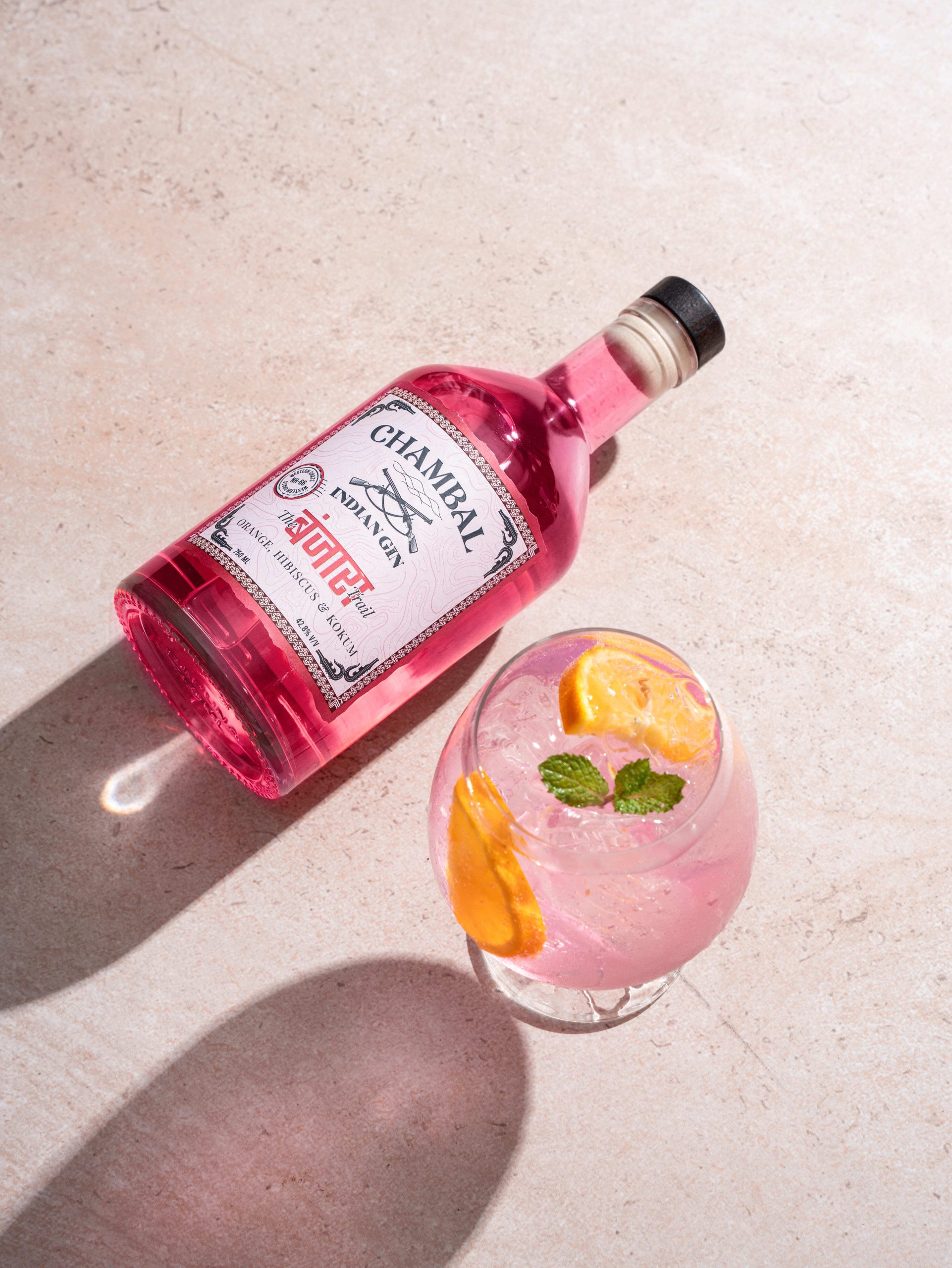
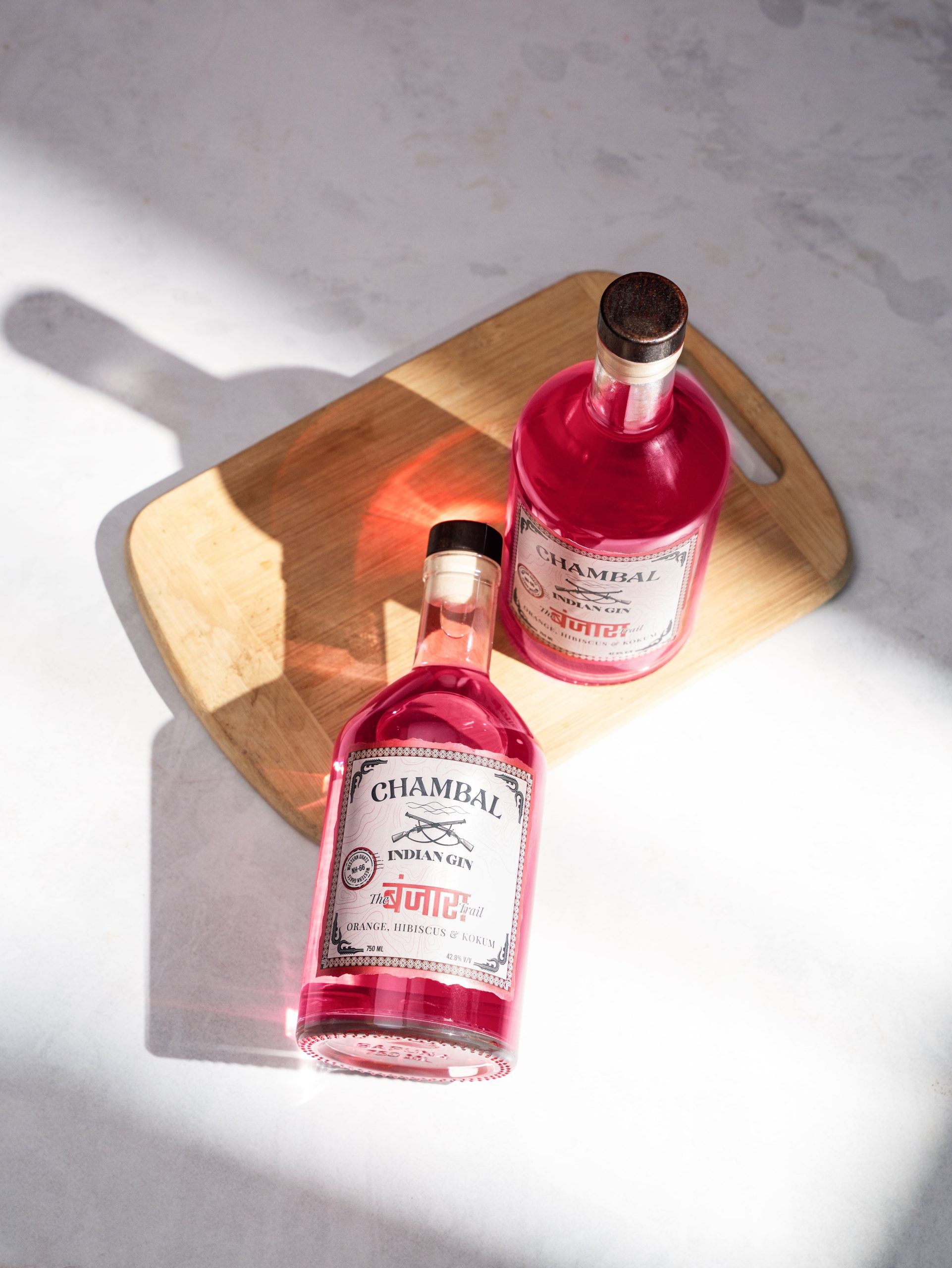
Chambal Gin’s latest offering, The Banjara Trail carries notes of orange, hibiscus, and kokum — a calling to the Western Ghats, and Bapuna Group’s home, Nagpur
What surprises you most about today’s Indian gin drinker?
Their curiosity. Consumers today want to know where the ingredients come from, how the spirit is made and why certain botanicals were chosen. That shift is incredibly encouraging because it means people are engaging with the craft behind the bottle and not just what’s on the label.
If you could change one misconception people have about gin, what would it be?
A common misconception is that a G&T is the best way to experience gin. While tonic is a classic pairing — and works very well — I always encourage people to have their gin in the manner they personally prefer. You can swap out your tonic for soda, add a splash of water, pour it over ice, or enjoy it in your cocktail. The best way to enjoy your gin is in the way you do!
Have Indian consumers become more adventurous, or simply more informed?
I think they’ve become both. Exposure to global spirits has made consumers more adventurous, while access to information has made them more discerning. Today, consumers are willing to try something new, but they expect every bottle to justify why it deserves a place on their shelf.
Is there an ingredient you’ve experimented with that never made it into a bottle?
Quite a few, actually. During product development, we explored many botanical combinations before arriving at the final expressions. Some ingredients were exciting on their own but disrupted the balance we were looking for. One of the biggest lessons in distilling is that restraint is often the more difficult creative decision.
Do you think AI or data will ever influence spirit creation, or will blending always remain instinctive?
Data can certainly help us understand consumer preferences and identify trends. But creating a spirit is still a sensory craft. Blending depends on experience, intuition and countless subtle decisions that can’t be fully replaced by technology. I see AI as a useful tool, not a substitute for craftsmanship. After all AI can’t taste your gin. Not yet at least.
What’s the last drink that genuinely surprised you?
I tried Banjara gin with a combination of sparkling wine and soda, a Banjara Spritz if you please. I really enjoyed this.
Is there a place in India you haven’t bottled yet but know you eventually will?
With Banjara we have no limits, we are keen to explore what our beautiful country has to offer and bottle flavours that truly represents each region distinctly.
If you could share a drink with any historical traveller, explorer, or storyteller, who would it be and why?
I would have loved to sit down and share a Chambal with Anthony Bourdain.
A closing question that often yields memorable answers is:
Five years from now, when people talk about Indian gin globally, what do you hope they’ll say Chambal changed?
Five years from now, I hope people say Chambal proved that a culture-forward Indian gin can easily compete with the world’s best international spirits. With our Banjara expression, the goal is to continue actively showcasing the vast diversity of Indian flavour profiles. Ultimately, we want Chambal to be remembered for taking something authentically Indian and turning it into a global benchmark.
Words by Jackie Pinto
Featured image courtesy of Chambal Gin