It is perhaps wise to consider that time does not follow an arrow’s path. For many cultures in the east, time always followed a circular rhythm. History does not move forward, it simply builds on itself. It is the nature of this earth to inadvertently, and permanently alter its surroundings. It is also a strange, yet hopeful discovery that no life leaves without a trace.
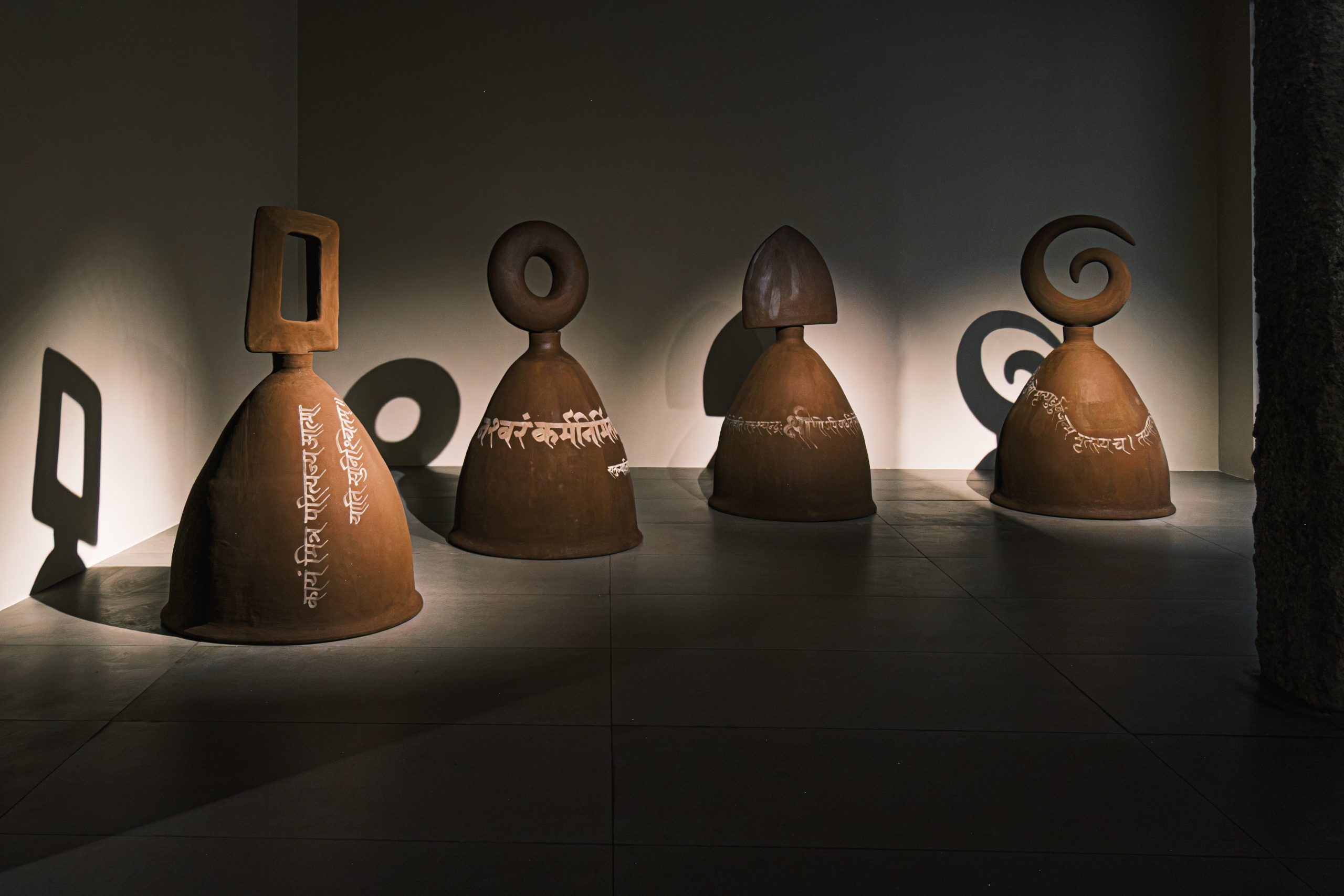
If you are alive, your presence will also be noted — that is the thematic focus of curator and ceramic artist Rahul Kumar’s new exhibition, Marking Time at Exhibit 320. A new chapter in the multihyphenate’s expansive career, where he places the fresh body of work in a contemplative context. The exhibition centers his enduring preoccupation with the cyclic nature of life and death, extending that question to the notions around rebirth.
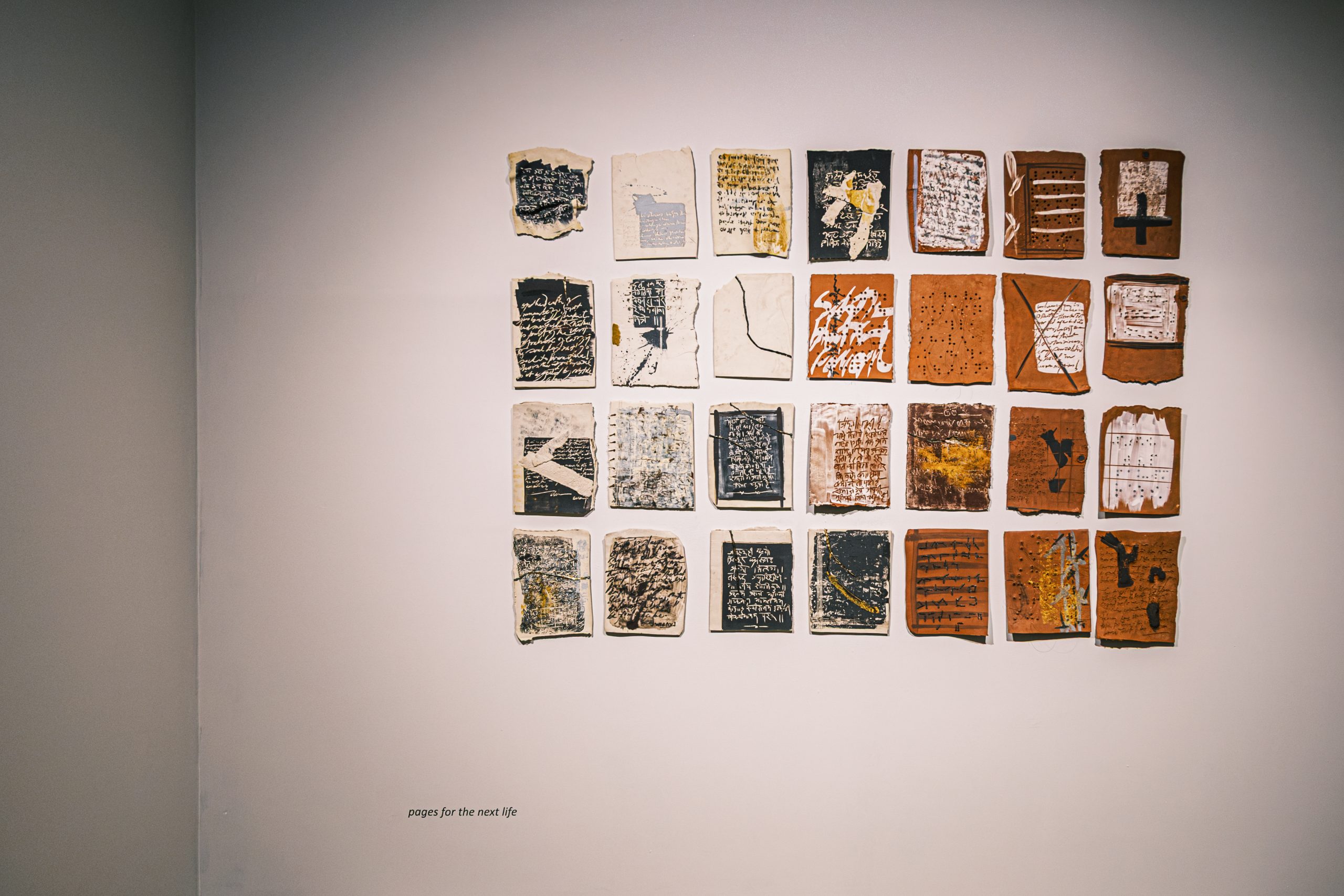
Pages For the Next Life, glazed stoneware and earthenware clay, 12 x 9 x 0.5 inches (each), 2026
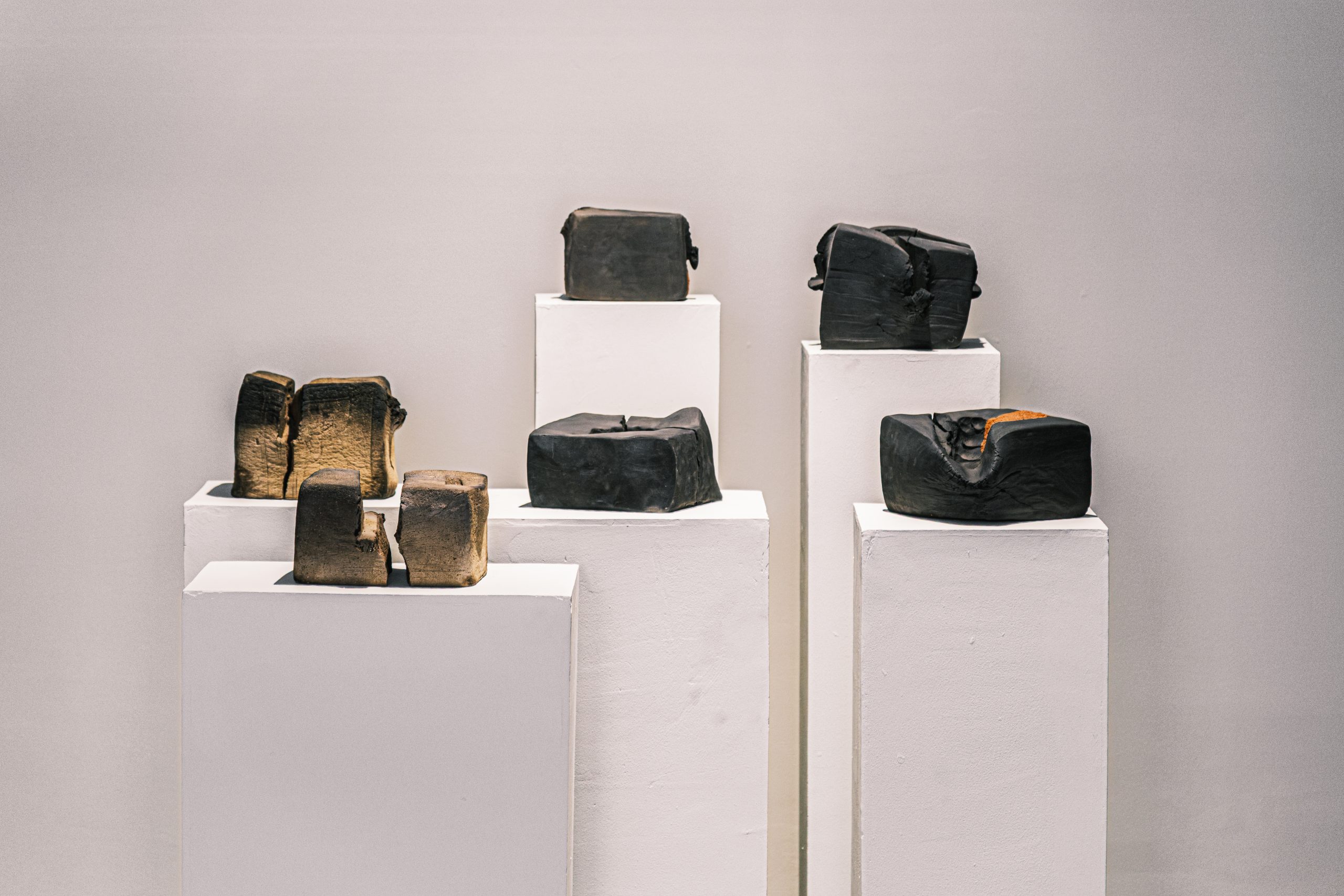
What does it mean to have lived? The surprising answers lay in clay, as the artist sought to uncover an understanding of the concept on both a personal and universal level. This dichotomy is reflected in how the installation unfolds. The first movement, Atman, deals with the personal. Neatly displayed are the chaotic artworks that materialize Kumar’s life. The terracotta clay and stoneware sculpture, The Fourth Dimension, brings together various tablets, each representing a month the artist has lived so far. Time Pressed captures his years. Each makes deciphering personal meaning impossible, alluding to the fact that while a person’s memory may be preserved, it can never be understood with the right context.
Leaving a mark is never an individual act. The second movement, Brahman, carries that understanding. It is through these artworks does it become glaringly clear how many of our structures are intended for the purpose of remembrance. The individual and the collective meet at Pages For the Next Life, a series of ceramic tablets that embrace the role of language — deciphered and undeciphered — and what they meant for human legacy. Resembling fragments recovered from ancient civilizations, the artwork brings forth a new possibility: The language we use is not simply connecting our contemporaries, but our future.
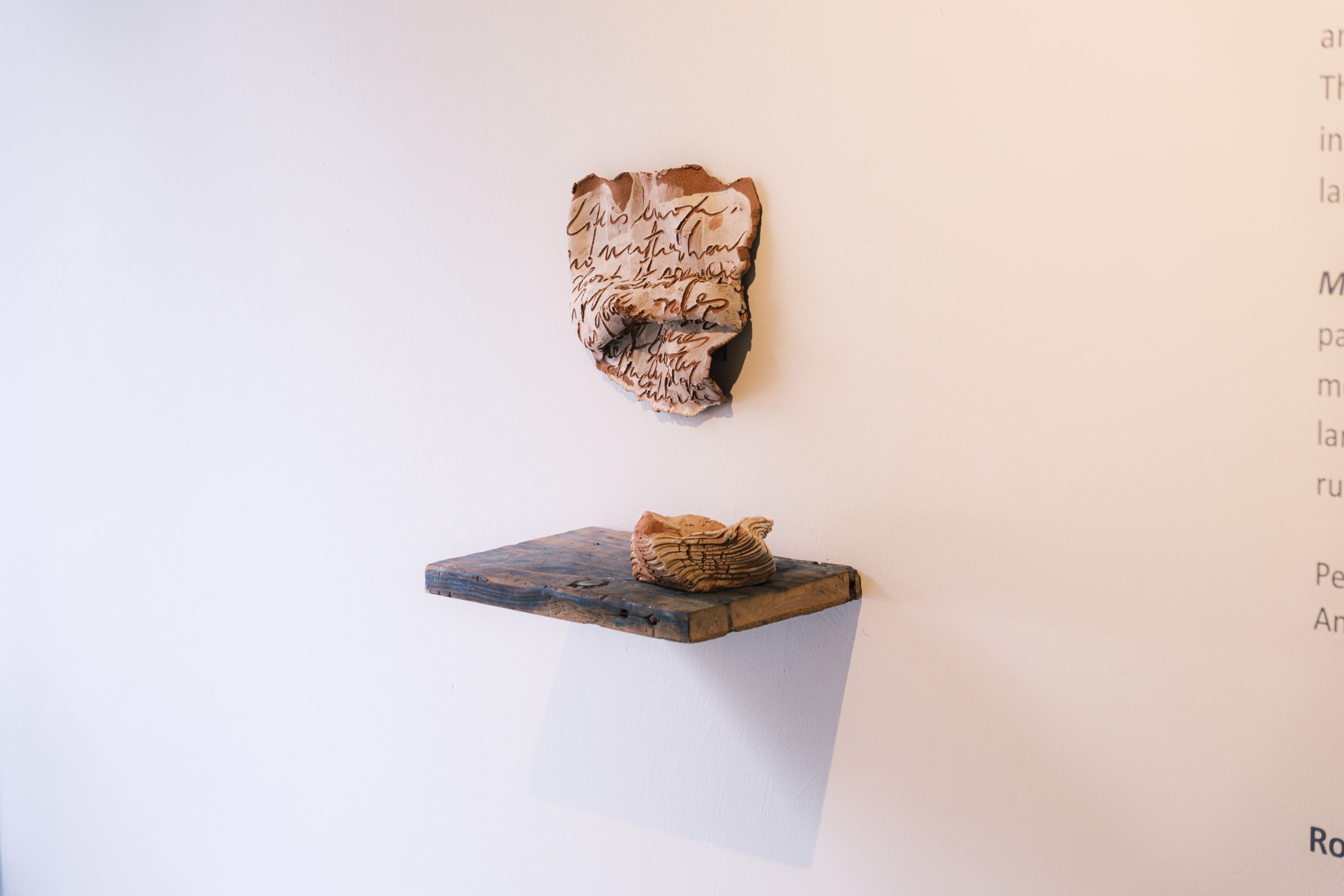
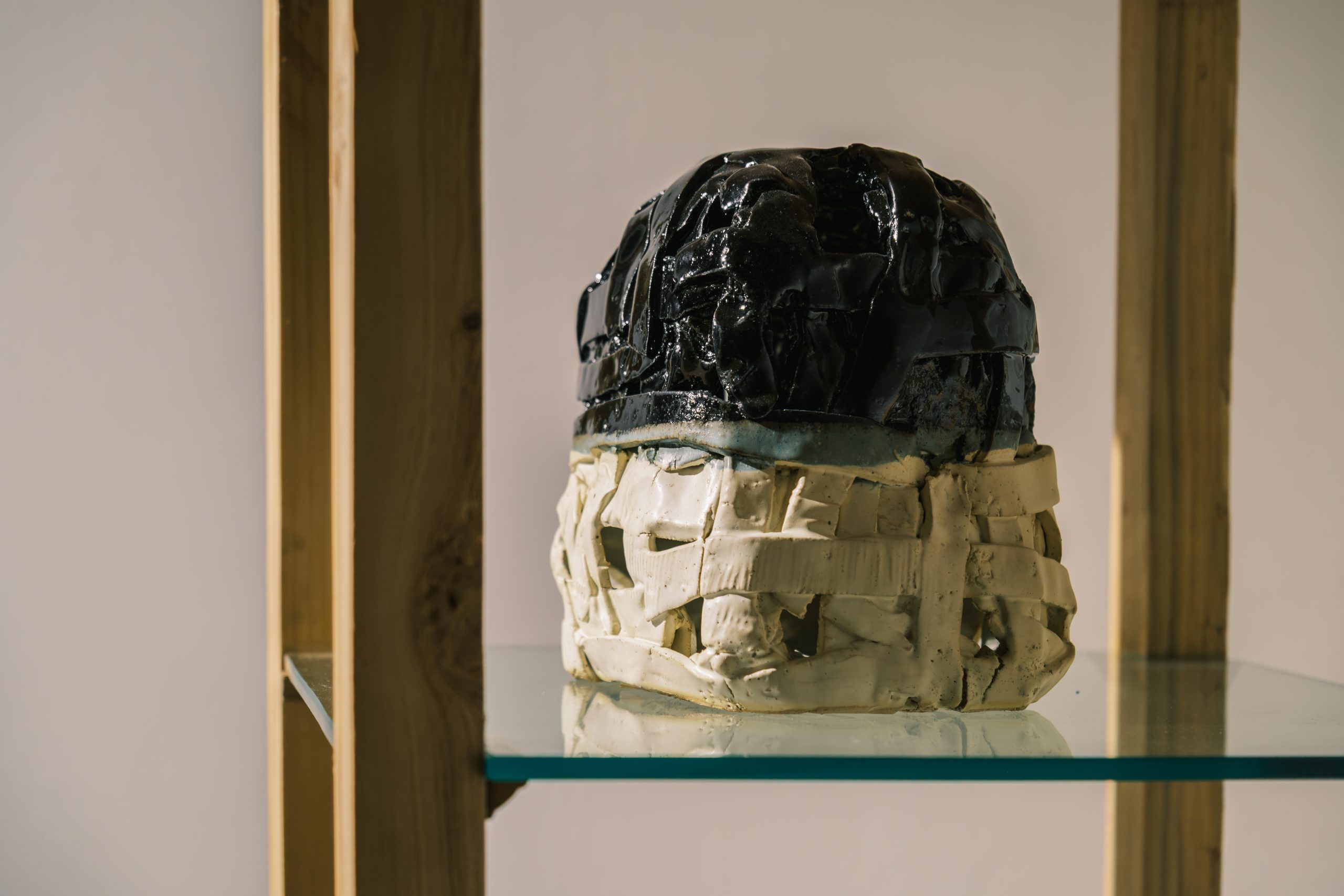
(L-R) Untitled, terracotta clay, 2026; The Shape of Absence, glazed stoneware, 2026
Within language, there is hierarchy. Decisions on what should be remembered in time, and scraped out of history is a friction that Kumar does not ignore. “You can communicate, document, and preserve because of language. But there’s always a lot that is unsaid,” he says.
Central to these investigations remains the artist’s relationship with clay — a medium that offers its physicality duly to the questions at hand. Clay is made of earth, forged by fire, and shaped by air. It is a medium that holds the impressions of its maker, carries cracks and errors. For Kumar, it is the epitome of material memory. “For this exhibition, I have broken the rules of working with clay,” he asserts. In a way, it is a tangible defiance of the strict stories set in stone. “Clay brings a lot of that history and association of the medium,” Kumar adds.
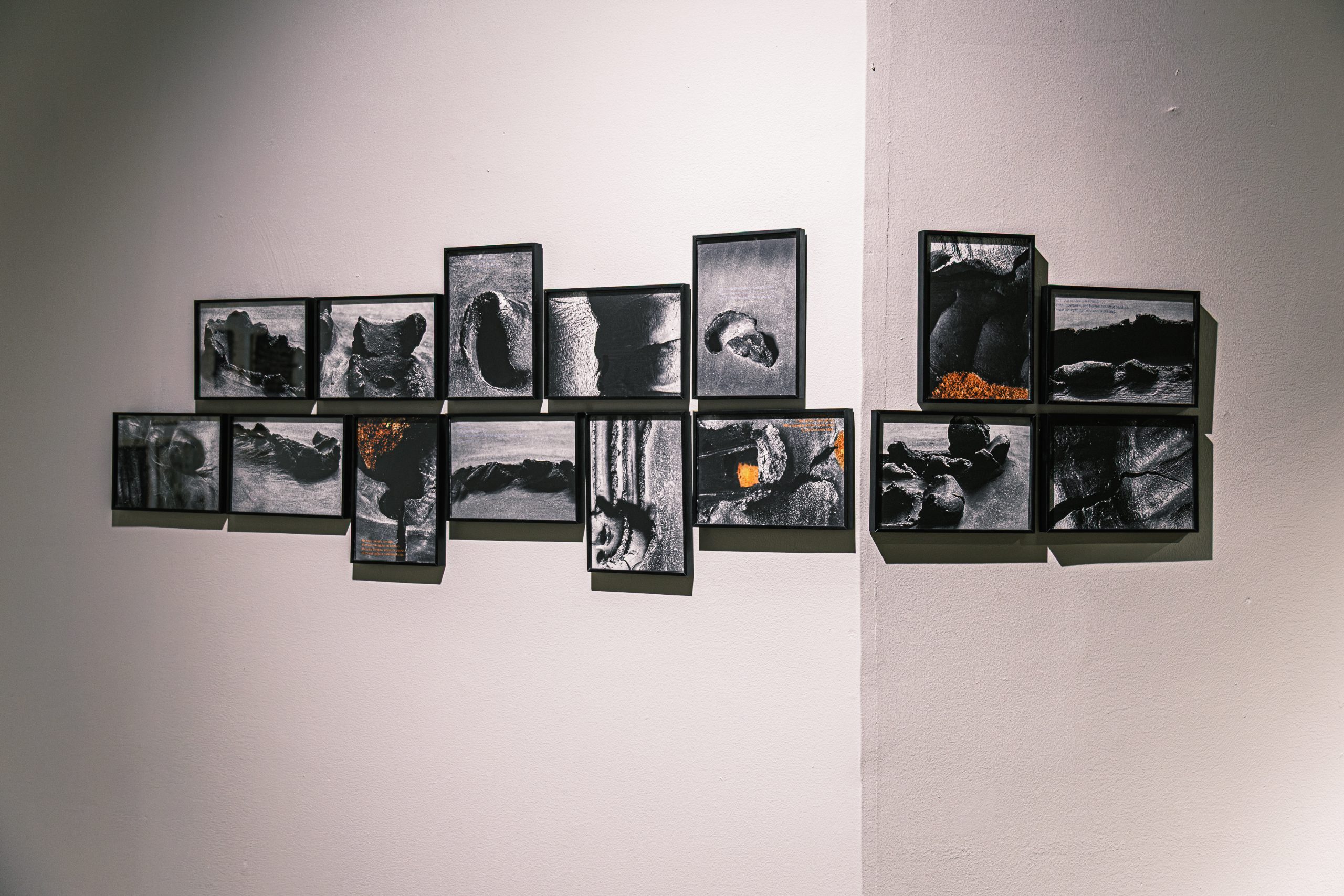
(L-R) Untitled, archival print on paper, 5.5 x 7 inches, 2026; Traces of Presence series, terracotta clay and brick dust, 2026
Working with clay also nudges forward an unexpected idea of agency. “Perhaps the act of making is not solely the imposition of form upon idea, but equally an act of relinquishing control,” the artist writes in his statement. One wonders if it is the medium that was then forged to submit to the artist’s questions, but Kumar explains clay cannot be bent to someone’s will. Experimentation and accidents are central to this process, and that was built the spaces of atman and brahman. In a way, the exhibit can be termed as an extensive introspection. A series of experiments with thought and craft that ultimately culminated in a commentary on existence, history, and collective memory.
Words by Tanya Syed
Featured image courtesy of the artist and Exhibit 320