The history of Chikankari remains a mystery. We don’t exactly know how it tiptoed into our lives and became one with our bodies. While popular accounts credit Nur Jahan for introducing the craft in Mughal courts, others argue that its origin goes deeper in time; nevertheless, its presence in our wardrobes is undeniable. It is worn by men on Eid mornings, observes the daily lives of our mothers, and has found its way into the daily modern wardrobe.
On crisp white cotton, it spills like poetry, a subtle art of the thread that brings the Indian cotton to life. Unlike Banarsis and Zardozis, which are pulled out during festivals and weddings, the art of Chikan is synonymous with our everyday lives in India, where in the tropical heat, it flirts with our skin — it travels around our neck, circles our shoulders and arms, makes its way to the hem, and on special days, kisses the back of our neck.
In the late ’80s and early ’90s, designers Abu Jani and Sandeep Khosla made their way to Lucknow and spent years reviving the royal craft of Awadh that once signified the rich textile history of the subcontinent. Over time, it has been labelled as lakhnavi kurta, reflecting its important geographical relationship with the city of Lucknow.
But beyond the complicated history and fashion revival, lies the question of the future. In an Indian market saturated with various versions of Chikan meant to be adorned on our bodies, the consumption of the traditional, refined embroidery has somewhat been lost in the crowd. While the kurtas and the sarees are here to stay, how can we truly think of adapting Chikan and taking it beyond conventional Indian wear?
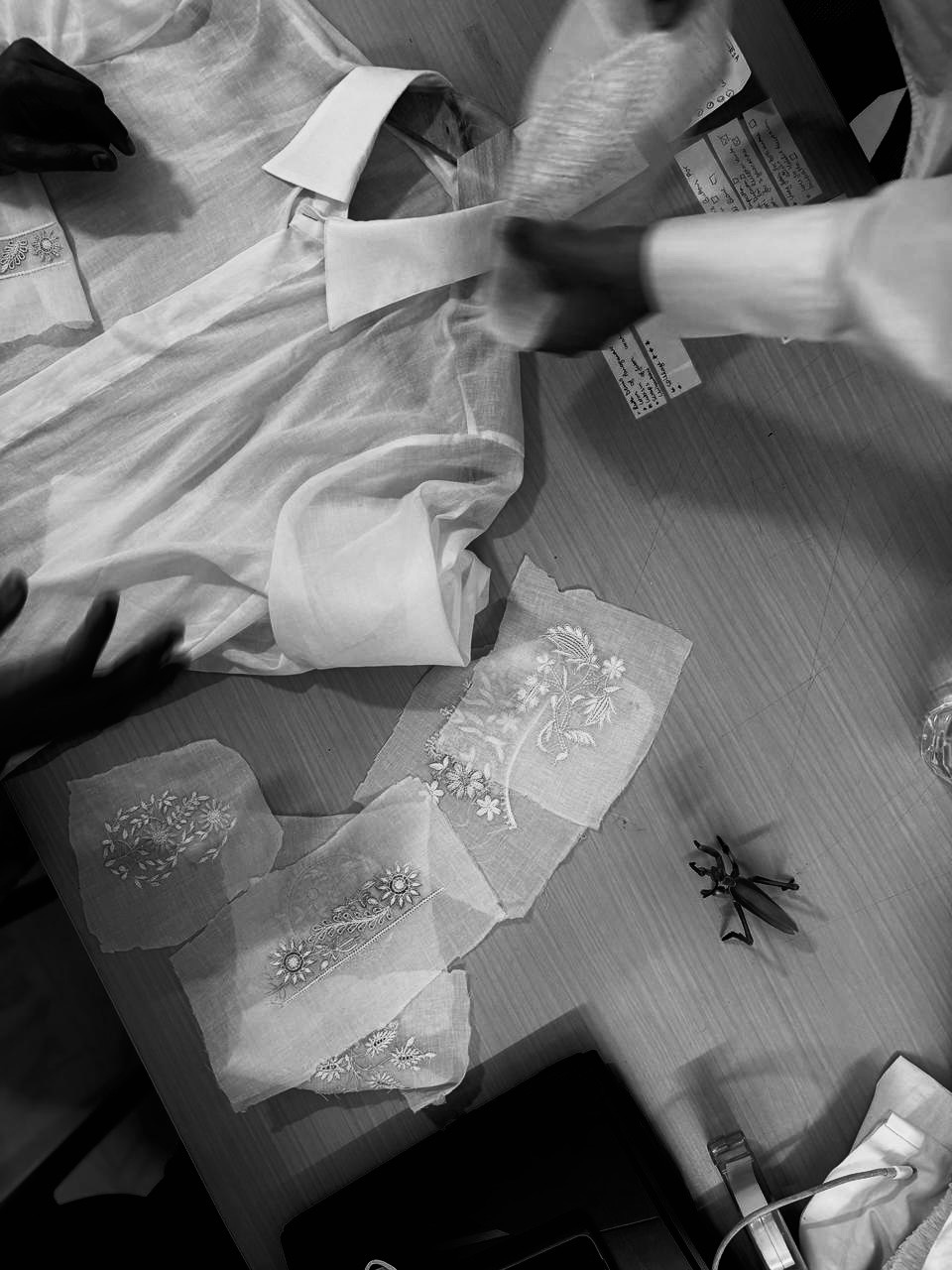
White on White, as a label, reimagines the age-old craft of Chikankari in the form of western and formal cuts
Virja Shah, the founder of label White on White, finds inspiration in Chikan’s simplicity and its ability to adapt. “The possibility of reinterpreting it with sensitivity attracted it to me the most,” she shares. With White on White, Shah attempts to reinterpret the craft through silhouettes that feel modern and functional, pieces that can travel, and can be layered, and dressed up or down, existing on the intersections of eastern craft and western style. Here, it is a craft as well as a design vocabulary with a universality that holds power to inspire artists, architects, and creatives beyond fashion. “While fashion may be the most visible expression today, the future isn’t limited to clothing alone,” she adds. Continuing with the sensibility of playing around with the craft, her standout pieces include white shirts with Chikan motifs that translate the age-old craft into formal and western cuts. Virja is currently experimenting with Chikankari with French lace, a combination that extends the ethos of her brand and looks forward to creating summer dresses. “I see Chikan becoming lighter and more global in its appeal. There is a hope of it becoming a part of our wardrobes beyond Indian wear.”
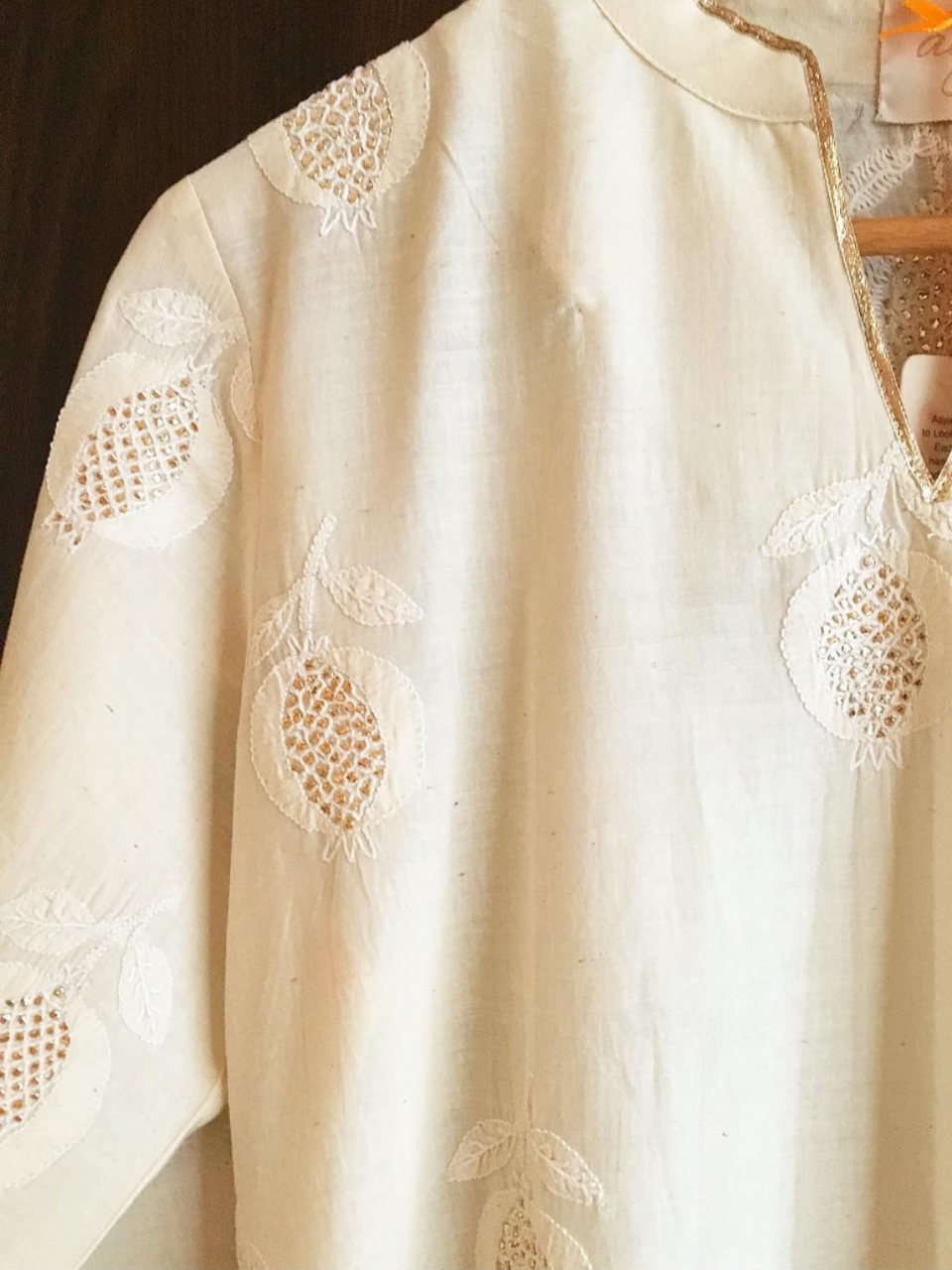
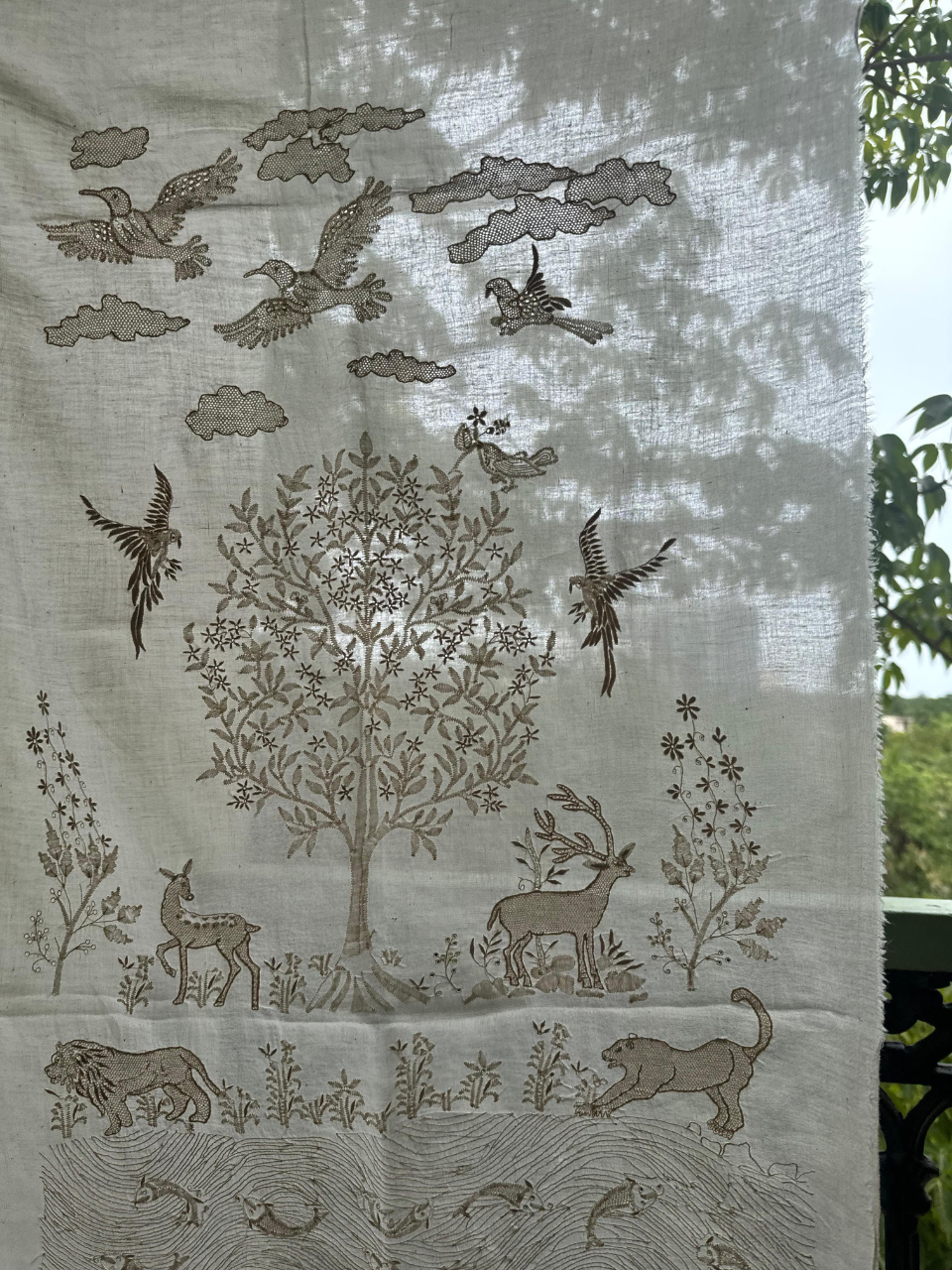
Ambika Nehru’s label, Asya, experiments with Chikan by incorporating varied motifs, like pomegranates, and even the Kashmiri chinar
Ambika Nehru, the founder of label Asya, has taken up her love for Chikankari to a more experimental territory. Ambika’s version of Chikan is different — she tries to incorporate the classic designs with something new. There are scattered pomegranates, peacocks dancing, fishing boats on the shore of Bombay, the wildlife of Ranthambore, and chinar leaves of Kashmir. Picking up these different motifs paved the way for experimentation with fabrics and taking Chikankari beyond clothing.
“We started with Chikankari patches on t-shirts, created animals and zodiac designs that received a lot of love. There is a demand for traditional designs, but people also appreciate innovation,” Ambika says. Beyond the kurtas and shirts, a significant moment in her journey with Chikankari was when she designed a white wedding dress with a six-metre-long trail for an international client. In addition, she collaborated with The Sole Sisters for sandals with Chikankari embroidery, created table linens and home furnishings. This choice of using the embroidery outside conventional fashion reflects the global design language of the craft and how it can go beyond South Asia. “The future of Chikankari is bright, and the time for it to shine is here,” she says.
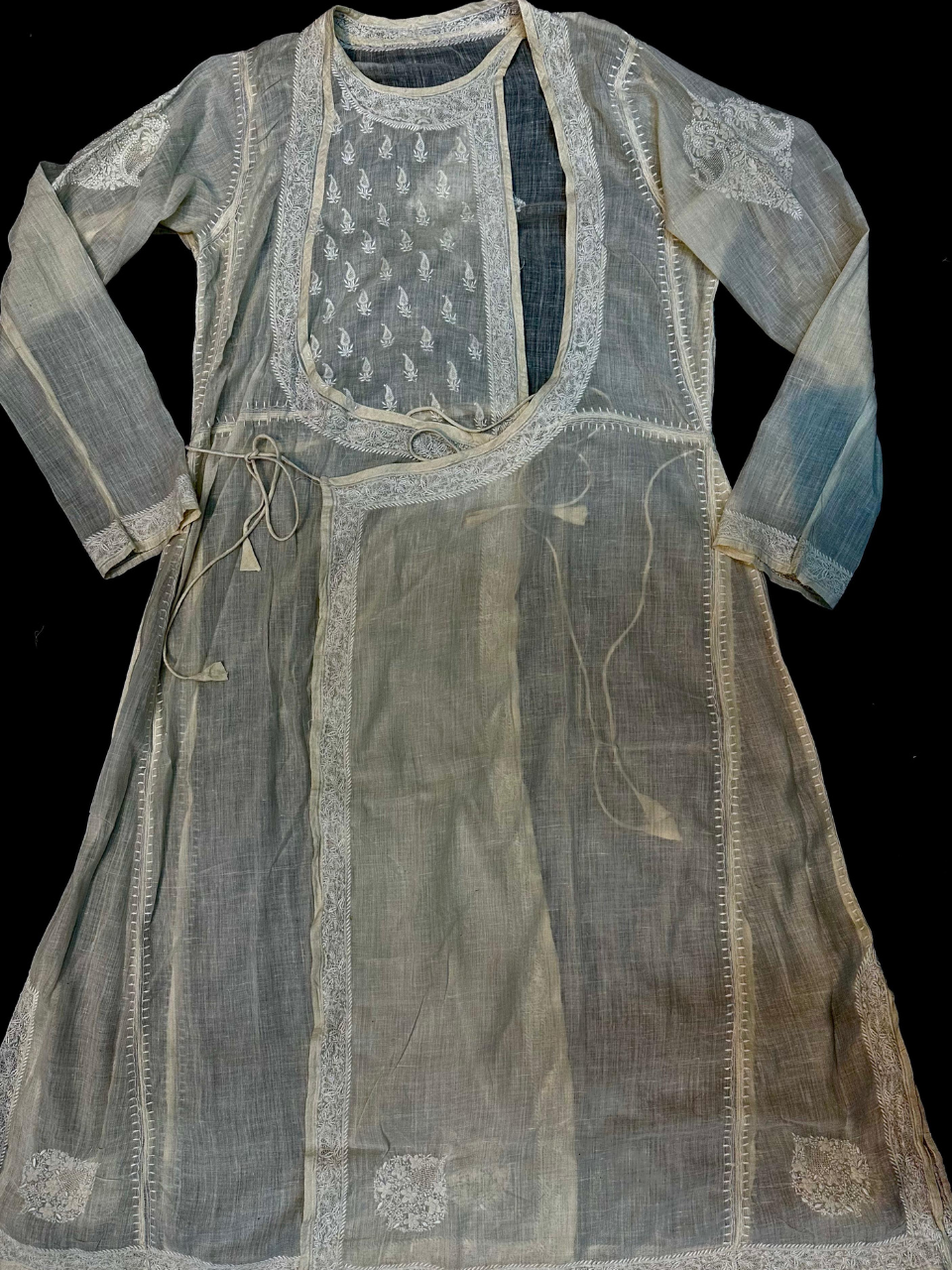
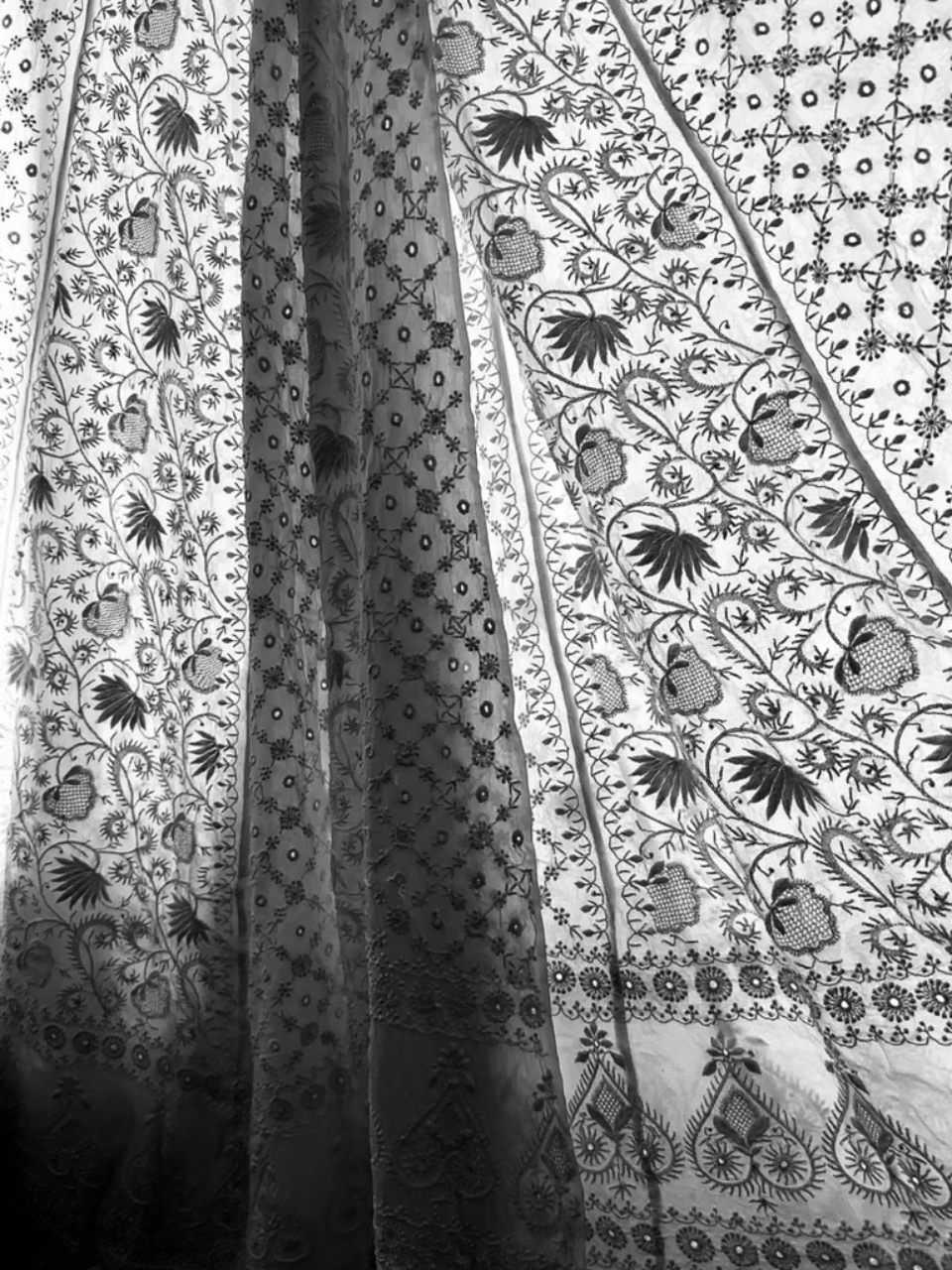
(L-R) Tapas Lucknow retains Chikankari’s historical position as wearable art, focusing on its intricacies; The men’s angrakha, reimagined for contemporary dressing
While Virja and Ambika experiment and see how Chikankari adapts to the future in a newer and more contemporary fashion, Ragini Lodhi of Tapas Lucknow finds herself going back in time and turning Chikan into collectable, wearable art rather than just everyday clothes. At its core, Tapas reimagines the historical role of Chikankari in our past, and questions the ways in which we can reinterpret it in a world where fashion is more minimal and functional. The shift in consumer interest in the deeper intricacies and work of Chikankari has resulted in a better understanding of craft as luxury. Some people are interested in investing in the finest Chikan without shying away from paying the price for it. “It shows that people are seeking heritage and a connection to something that has a lasting value,” says Ragini.
Amongst the multiple products that stand out in terms of heavy kaarigari, Ragini’s universe of Chikankari goes from traditional embroidered cholis to curtains and to chiffon sarees. The men’s angrakha stands out as a piece that has come alive from a painting lost in time. Made of the finest mulmul with the highest thread counts, it is one of the most delicate pieces of clothing in their collection. “We study vintage garments closely and see how we can make them today with the resources we have,” Ragini says. She considers Paola Manfredi’s book on Chikankari as a massive influence on her work and her love for old garments, monuments, and history in general, as her creative vision. “We never impose deadlines on our craftsmen since the best craftsmanship cannot be rushed,” she shares.
Chikankari continues to evolve while being held by the body, intrinsically connected to us through the softest mulmuls and a shared history of the subcontinent. Now more than ever, the legacy of the Mughal courts continue to breathe through the streets of India, where Chikankari has become a household name. The times ahead don’t look grim for the craft anymore. While the post-revival challenges of machine-made techniques and questions on authenticity continue, the future also holds the hope of its reinterpretation through textile arts, home furnishings, and more — from the body and from the margins as a silent spectator.
Words by Harsh Aditya.
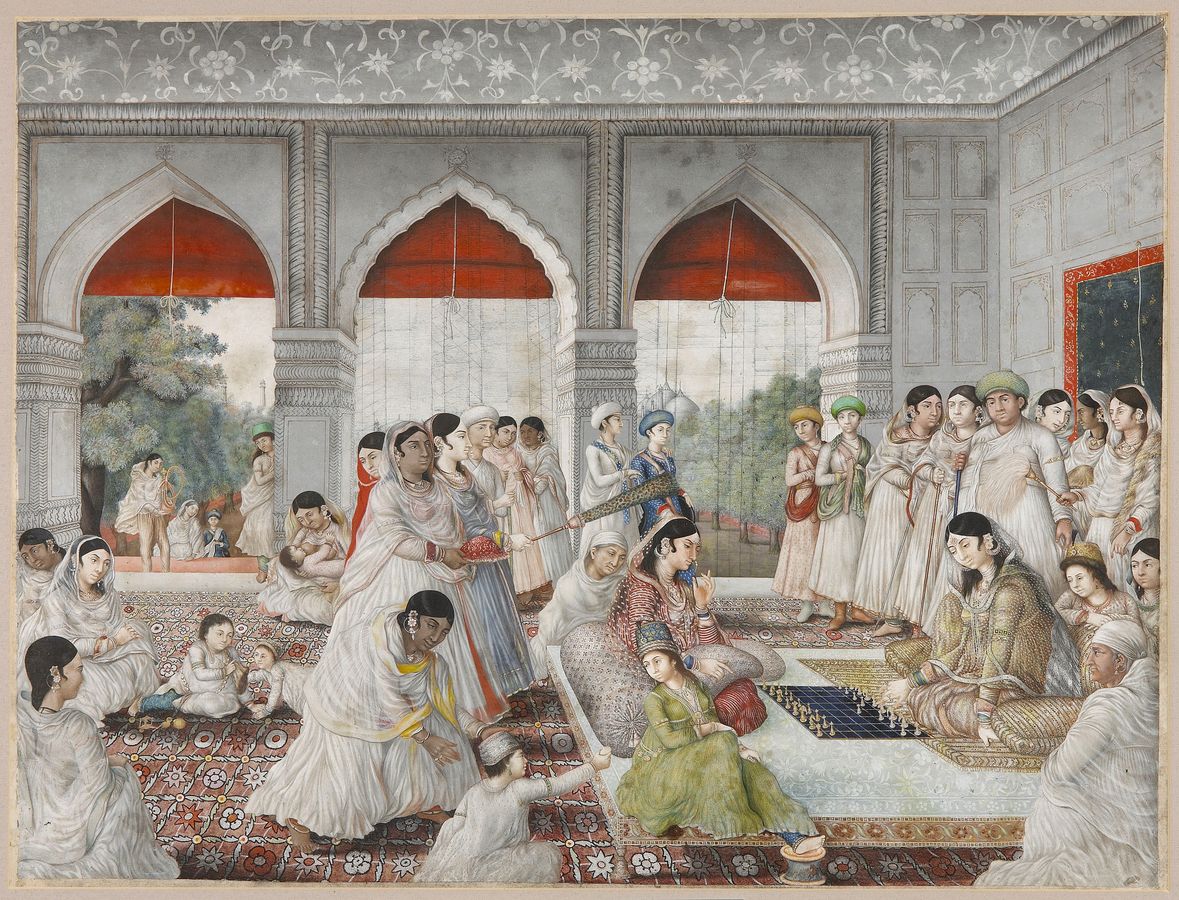
Featured image: Noblewomen playing chess in the zenana at the Oudh Court. Attributed to Nevasi Lal, Lucknow, c. 1790-1800