In Delhi’s National Museum resides the Dancing Girl of Mohenjo-daro — a four-thousand-year-old bronze statue of a bejewelled naked woman. She rests her left arm on her waist, stacked with bangles up to her shoulder. A choker rests on her throat; her right arm is clasped with an armlet and two bracelets. This ten-centimetre statue of a jewelled woman represents not just one of the earliest signs of our civilisation, but also the inherent human desire for ornamentation, our wonder at nature and attempts to be one with history.
As we move ahead with time, our relationship with ornaments evolve significantly. In the 21st century, the dancing girl would shed some of her bangles and would cover her body with muslin. She would significantly reduce her jewellery but would refuse to lose it. This instinct for jewellery and our relationship with it is what makes us similar to her. An heirloom piece passes through many hands, silently witnessing the world change. But in today’s time, how are we exploring our relationship with precious metals, and what jewellery will be passed down to the youth? The Dancing Girl asks that larger question — will the jewellery we buy today outlive us?
Anjali Gupta, the founder of Begum Sitaara, reflects on this idea with her pieces in silver. For Anjali, an heirloom is more of a feeling than an object. “The pieces I make today will, hopefully, be inherited by people who are born long after I’m gone or maybe whilst I am still here. They should be able to look at them and understand what jewellery from this era looked and felt like. My pieces become small records of their time”, she shares. Gupta maps her own roots back to Bihar, where buying jewellery was intentional, an act that slowed down life and made people think through the choices they made through the ornaments they picked — from the metal to the gemstone, each piece was a testament to something bigger than our existence.

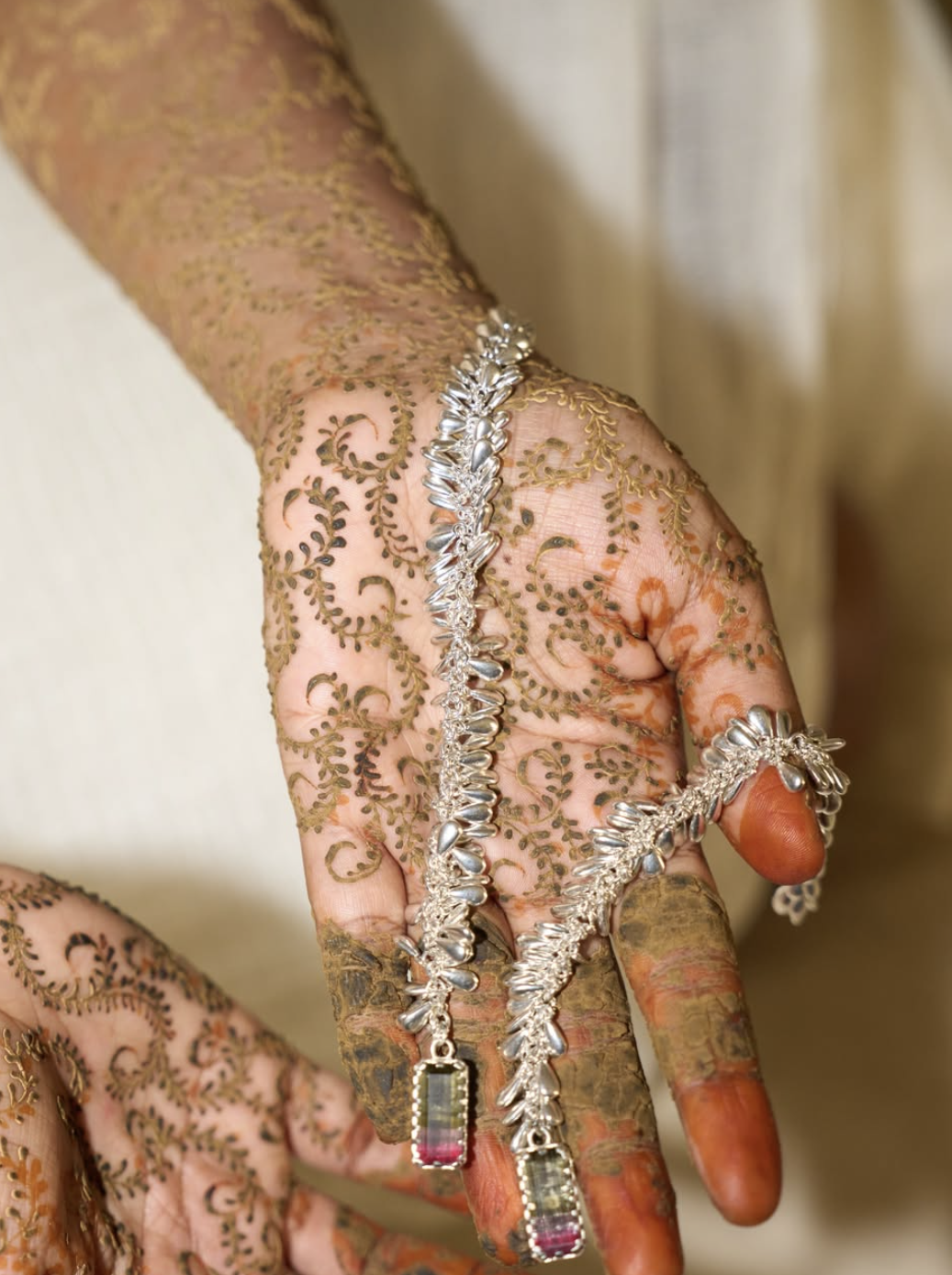
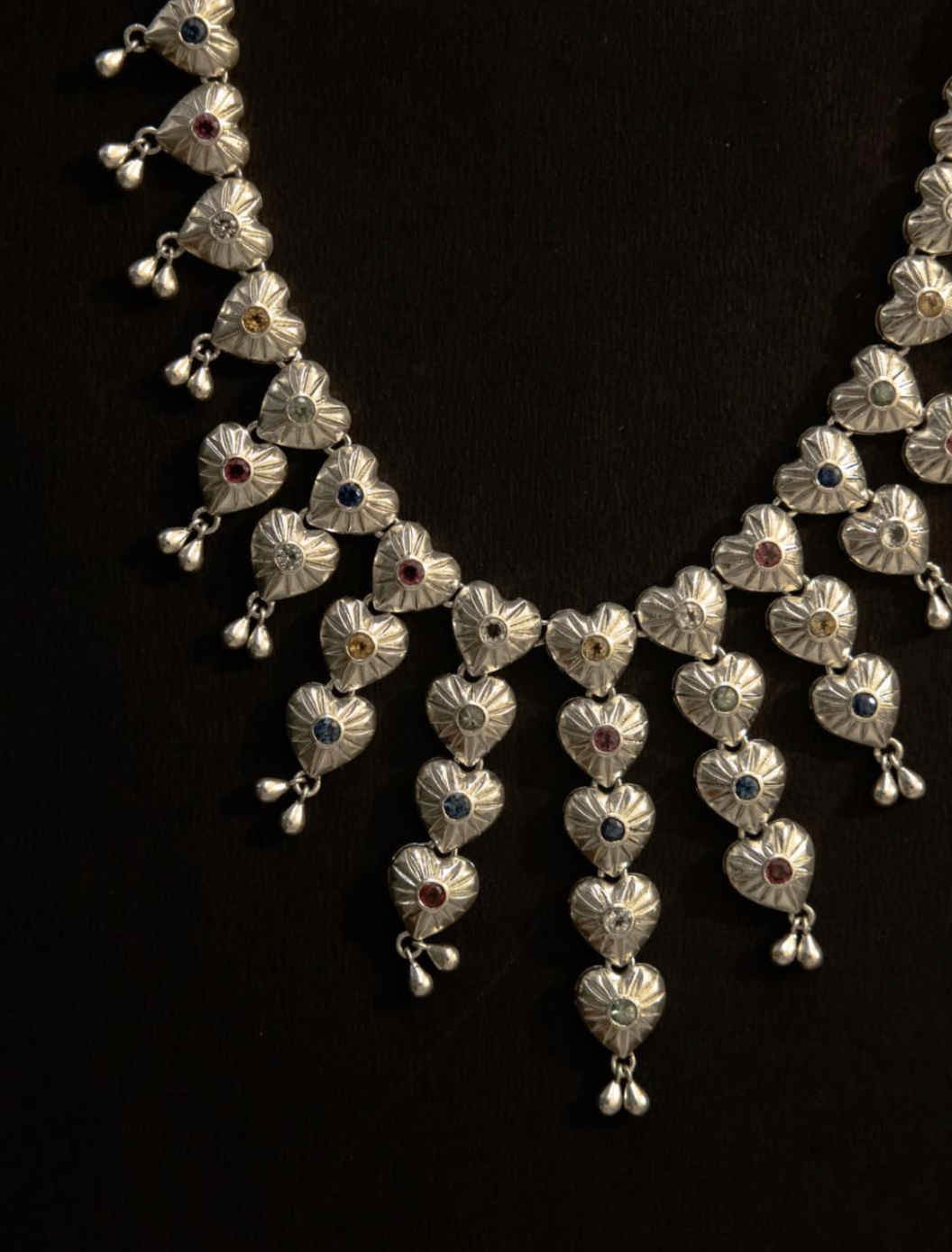
Keepsakes of their time: Begum Sitaara’s attempt to preserve a part of history. Image courtesy, Tarun Kalyani
But jewellery in today’s time cannot exist in a vacuum. Consumers today look beyond the design or the metal; what is also important is the philosophy behind it. Radhika Sharma and Jitesh Gupta of Jobner find themselves scratching and exploring these ideas. Since the inception of the brand, Jobner has been on a mission to create jewellery that interprets culture and realises experiences through objects. “The object becomes a medium through which we understand and propel expressions. Jewellery has been one of the earliest forms that has accompanied the body, and a companion of memories, while also being an anchor associated with material wealth. However, it has always been an integral part of cultural routine, symbolising immediate geographies and their rituals,” Radhika shares. At Jobner, jewellery goes beyond just being a piece of decoration and pulls the world together into something that hangs on our body.
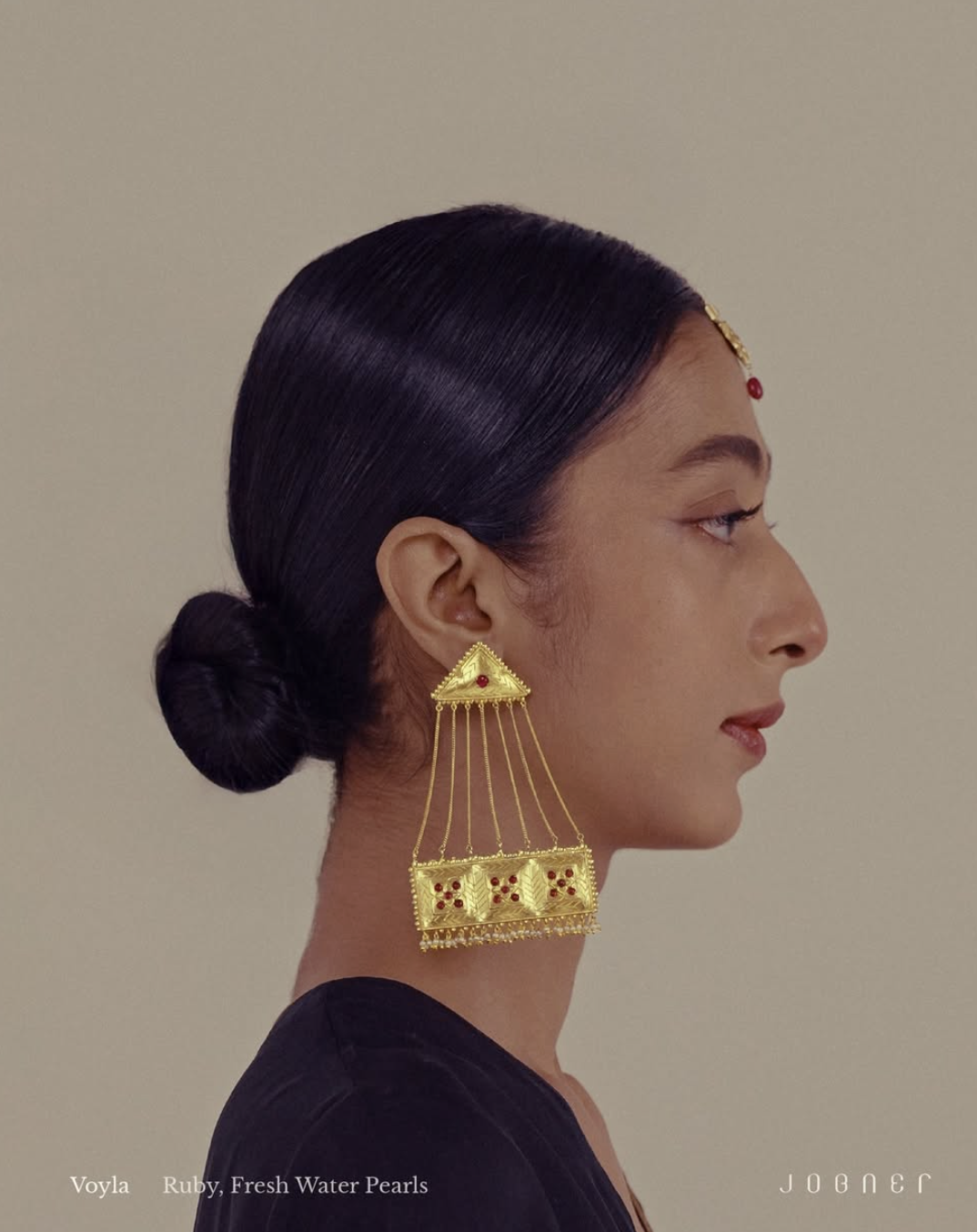
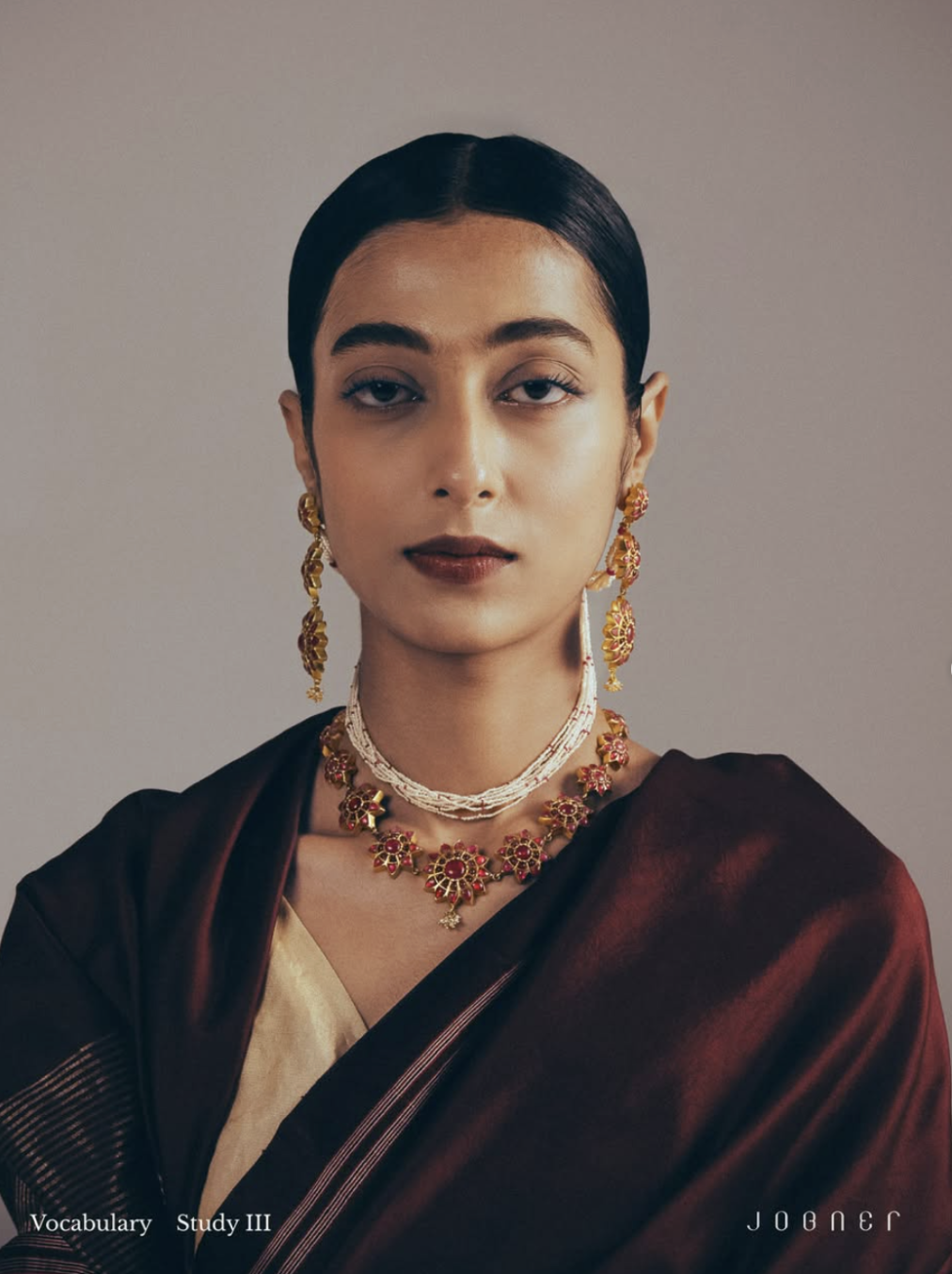
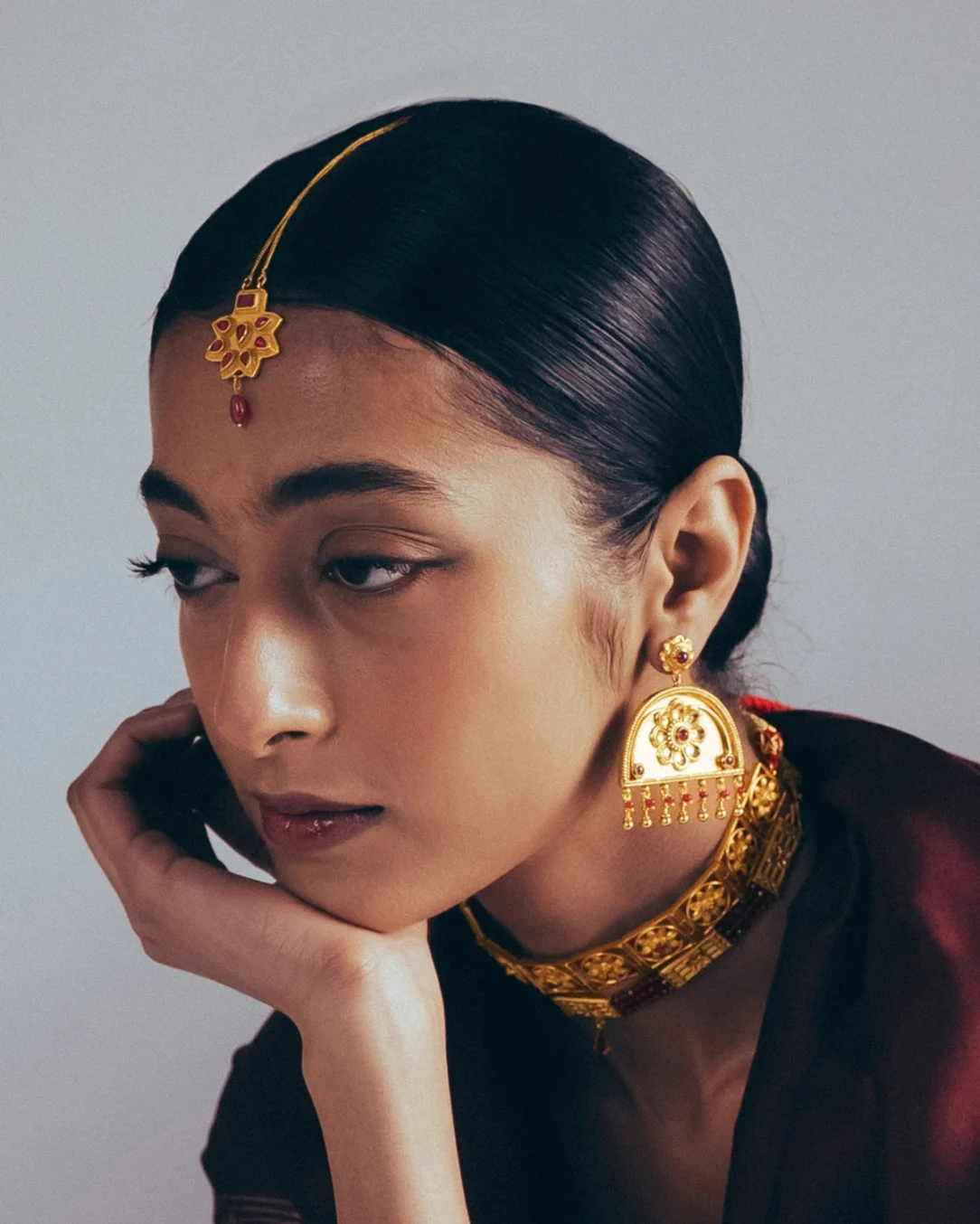
Acting as a vessel for identity, Jobner reinterprets culture, memory and ritual through their jewellery. Image coutesy, Jobner
While Jobner’s idea of inheritance is cultural interpretation into malleable metal, Manasvi Bhushan of Surmeyi picks memory and distance to explore hers. Surmeyi began in California in 2019 after Manasvi made a home on a land seven seas across India. Creating jewellery, at its heart, gave her immense joy and helped her find herself again. “I carried objects that make me feel that I am carrying a bit of home with me — that makes me feel connected to where I feel safe and share familiarity with. These are also objects that make us feel a certain way, whether it’s love or warmth or joy, or an emotion that we want to hold on to, an emotion that grounds us. For me, I would never travel without this little box of jewellery with all my favourite pieces that I had collected over the years, which, when I wear them, make me feel beautiful or confident,” she says.
With Surmeyi, the mogras and the mangoes got a new language and a world to inhabit. Manasvi’s jewellery brand brought a piece of home to many in the States, where traditional craft bridges the distance between two worlds: Where one belongs and the one which people make their own.
“We don’t really start with an object — we start with a story that has stayed with us. If that story feels honest enough, we hope it carries something familiar for someone else, too. That’s really the heart of it for me. We make jewellery that helps people feel more at home in who they already are,” Manasvi shares.
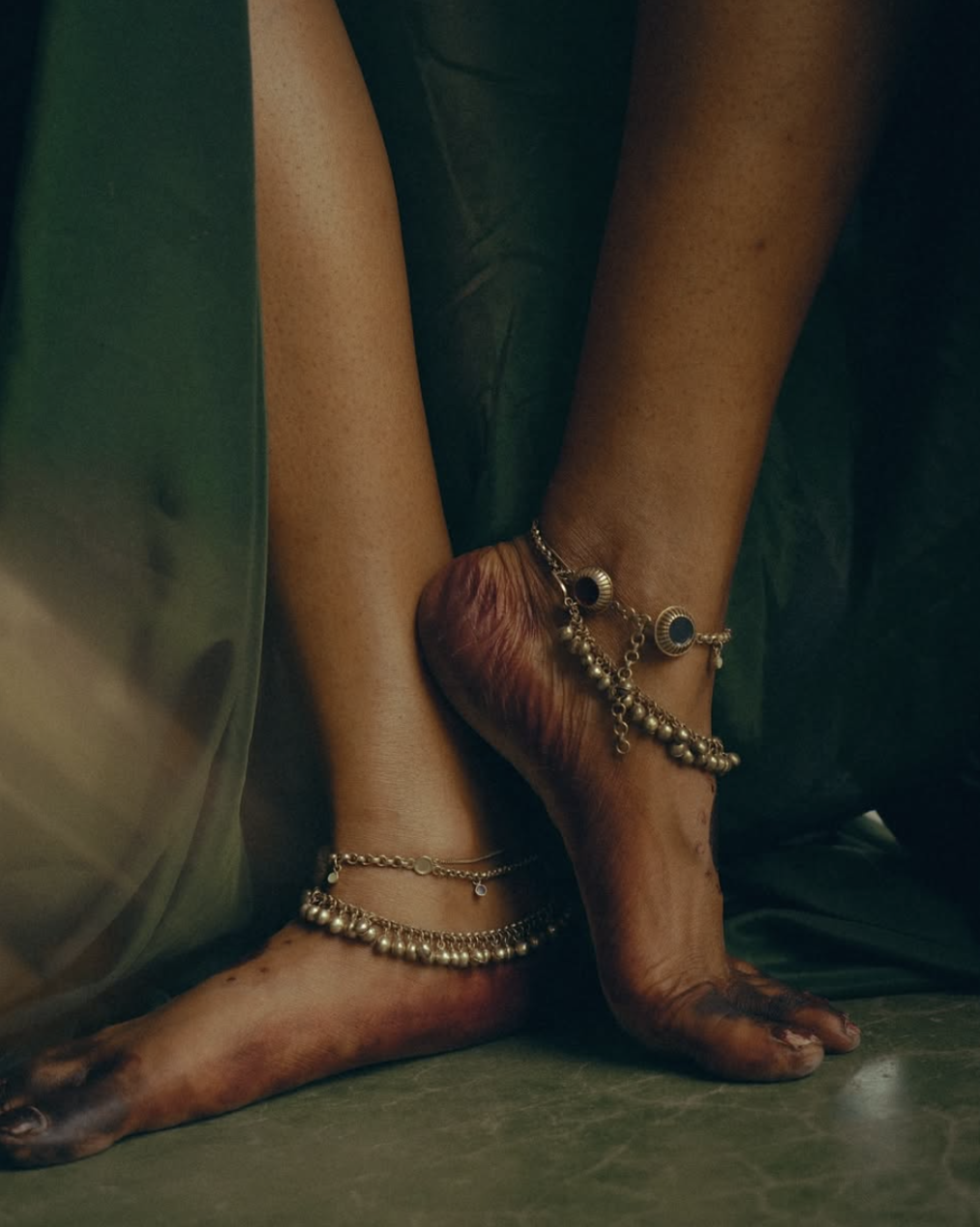
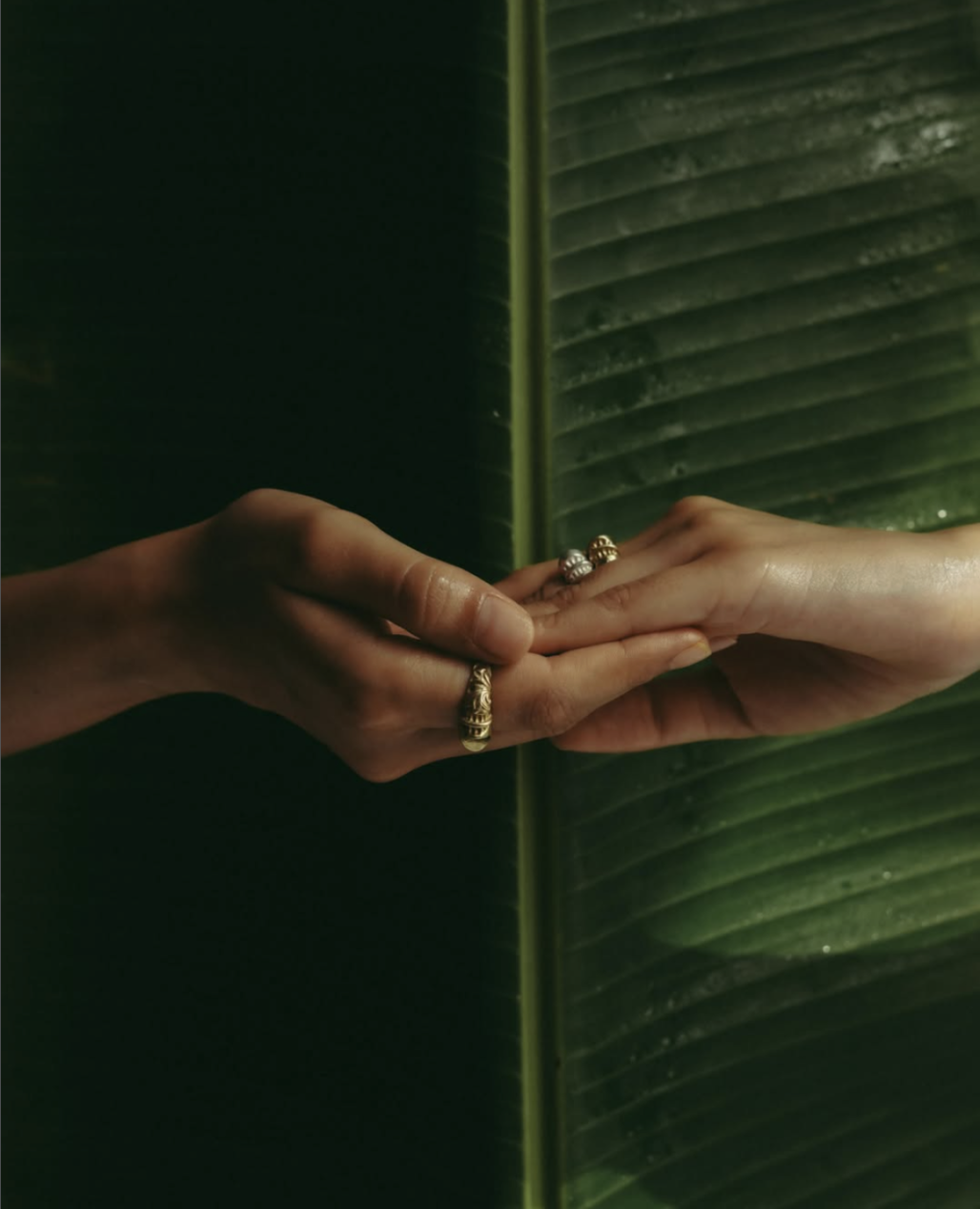
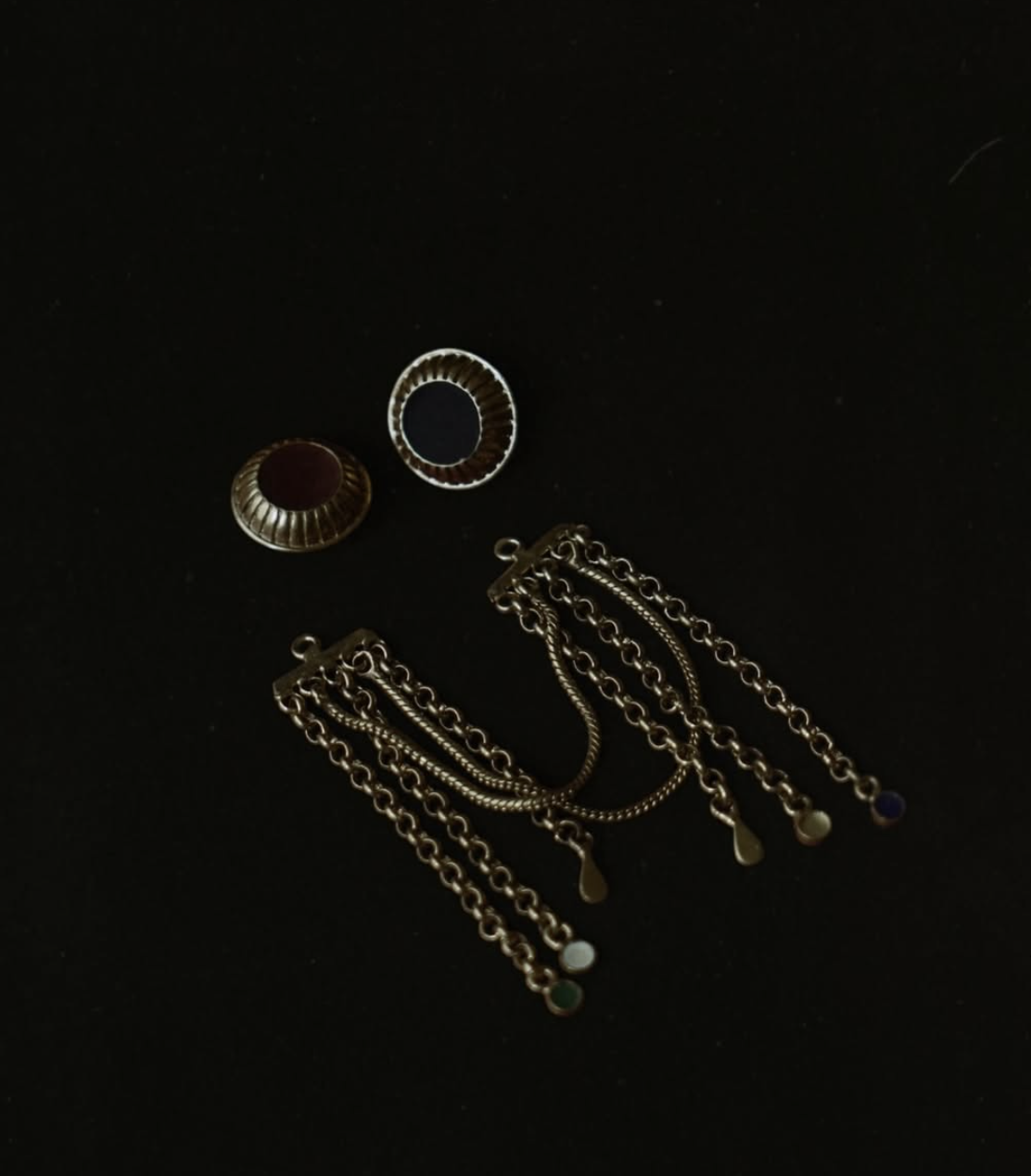
Acting as a bridge between memory and distance, Surmeyi brings a piece of home closer. Image coutesy, Surmeyi
Inheritance, for designer Sarath Selvanathan of Mookuthi, lies in the nosepin. His relationship with jewellery zoomed into the tiniest piece of ornament that adorns a woman’s nose. The nosepin became the starting point of this exploration, which led to the inception of his brand in 2018. A quintessential part of everyday life, Mookuthi taps into the history of the nosepin and reimagines it for someone who would like to carry that little piece of history everywhere they go. “Looking back, I realise I’ve spent all these years trying to understand why something so impossibly small could carry such an extraordinary capacity to transform the person wearing it. Who did it matter to? Why did it matter? What made it matter? Years later, those are still the questions that keep the work alive. The work has changed over the years. The questions haven’t,” he shares.
As the designer picks up the kolam, kondau, and their geometries, the final designs carry those stories into contemporary forms. “What fascinates me isn’t the age of a craft, but its capability. Every time we sit with an artisan, the conversation begins with what their years of experience make possible, and how those capabilities can find expression within the design constraints we set for a collection,” he adds.
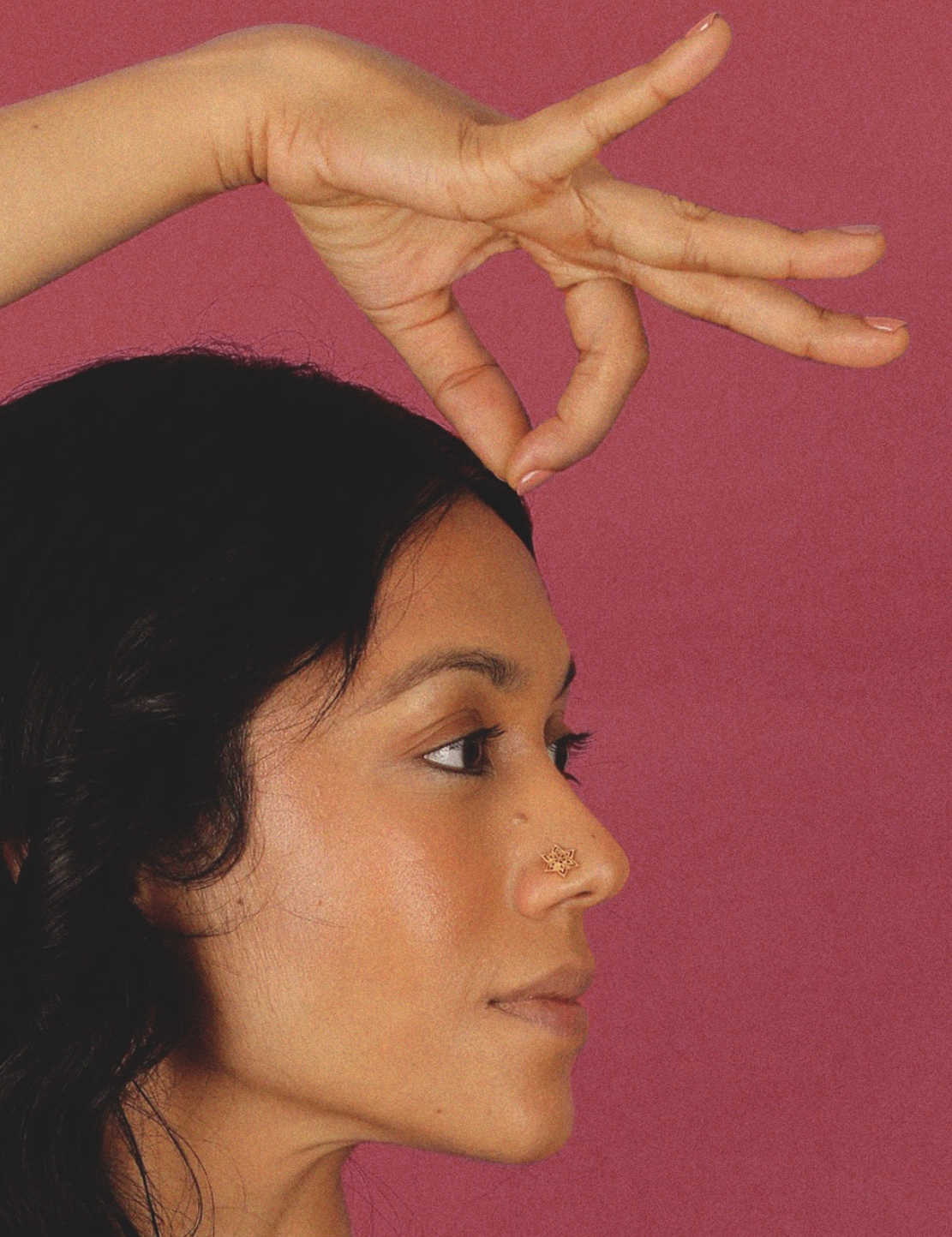
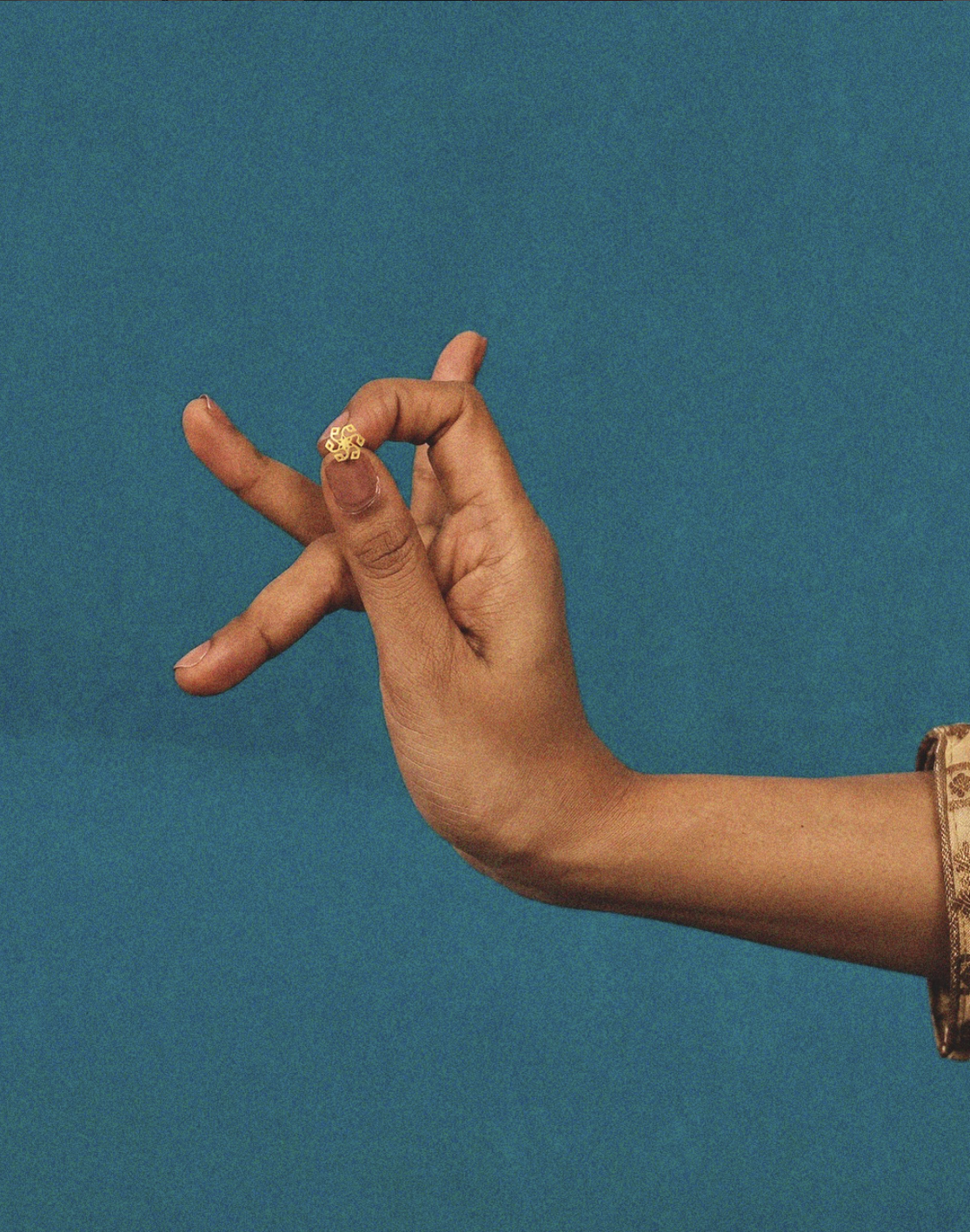
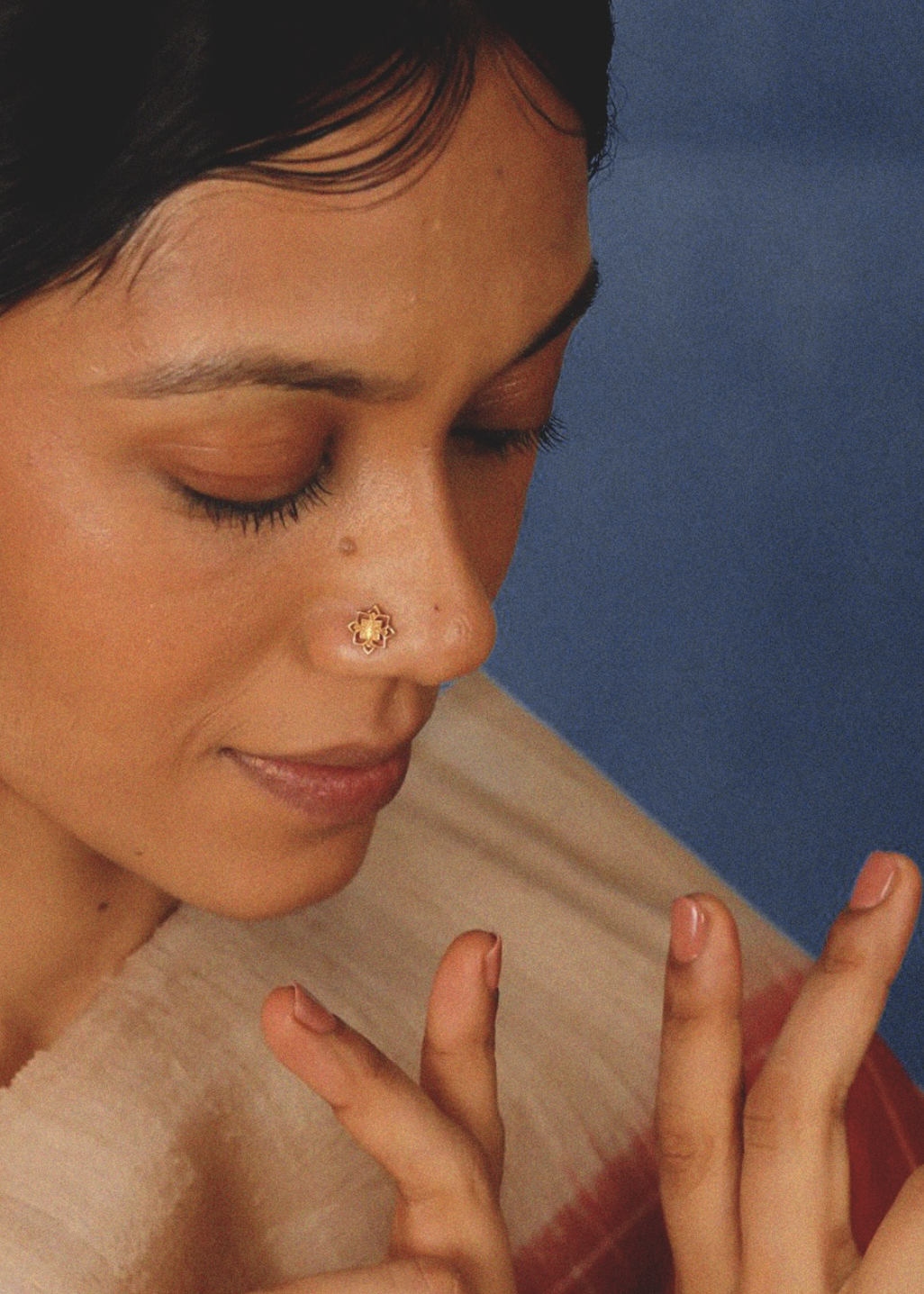
Mookuthi, with its designs, explores a simple question: How can something so small carry the weight of history? Image coutesy, Mookuthi
Over the centuries, the sculptures of women in India that preceded the Dancing Girl were the ones where ornaments adorning the bodies kept getting more elaborate. The yakshis, apsaras, and shailbhanjikas, the ageless women on the peripheries of the divine and human, echoed a deeper philosophical idea: the jewellery they wore was part of their bodies; they came into existence with their ornaments, which made them complete. It was the relationship of the body with the clothing which was alien; hence, we find minimal traces of it on them.
Meanwhile, for the mortals, while the body disappears, their shiny metals become a medium of resistance against time, an attempt to tell the world that we were here.
Words by Harsh Aditya
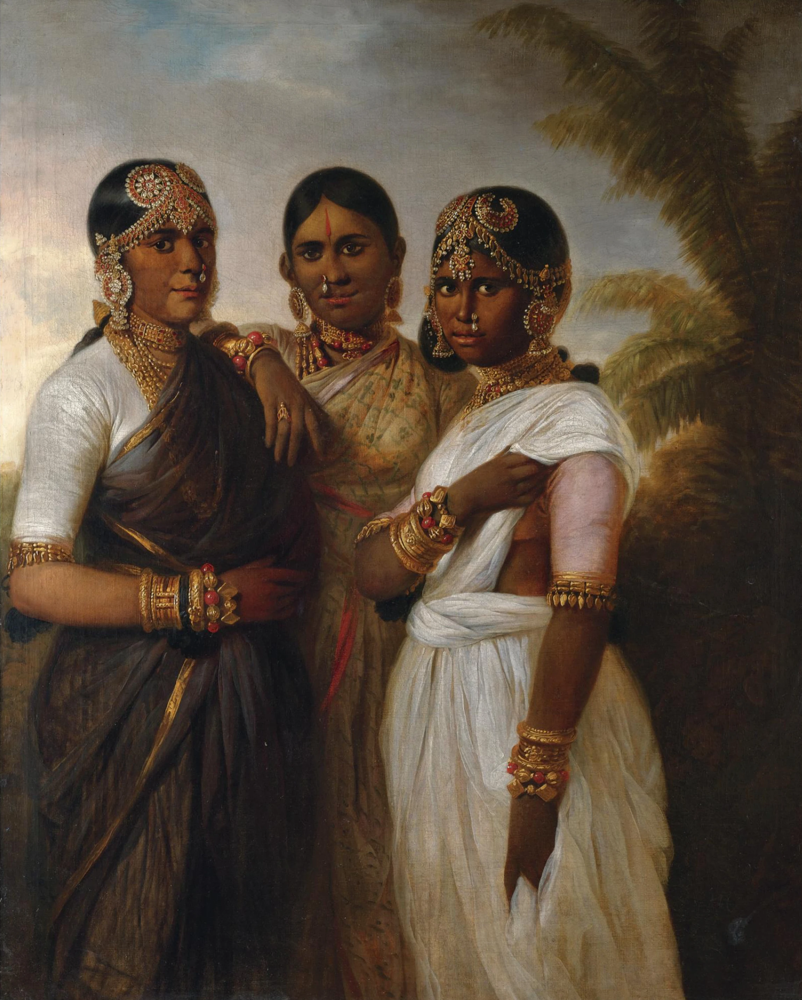
Featured Image: Portrait of Three Princesses from Mysore by Thomas Hickey (1805)