The moment you step out of the aeroplane into Ladakh, you feel the place on your skin. Cold, crisp air rushes into your lungs. There is no smell of the sea, no dampness of trees, no familiar scent of earth or sand. Even the colours seem different here — muted, dusty, almost camouflaged. Somewhere between the thin air and the excitement, you feel it in your head too — a little light-headed, a little overwhelmed, and completely awake.
It is in this terrain that the sā Ladakh Biennale unfolds. Spread across eight locations above 3,000 metres along the Leh–Kargil corridor, the biennale places its artworks out in the open, often making you search for them. You are given coordinates on Google Maps and sent looking. Sometimes the internet disappears; sometimes the landscape is complex enough to leave you guessing. And then, suddenly, there it is — an artwork sitting against the mountains, under the same sun and in the same cold air as you. Walking through the biennale, I found myself paying attention not just to the works, but to everything around them.
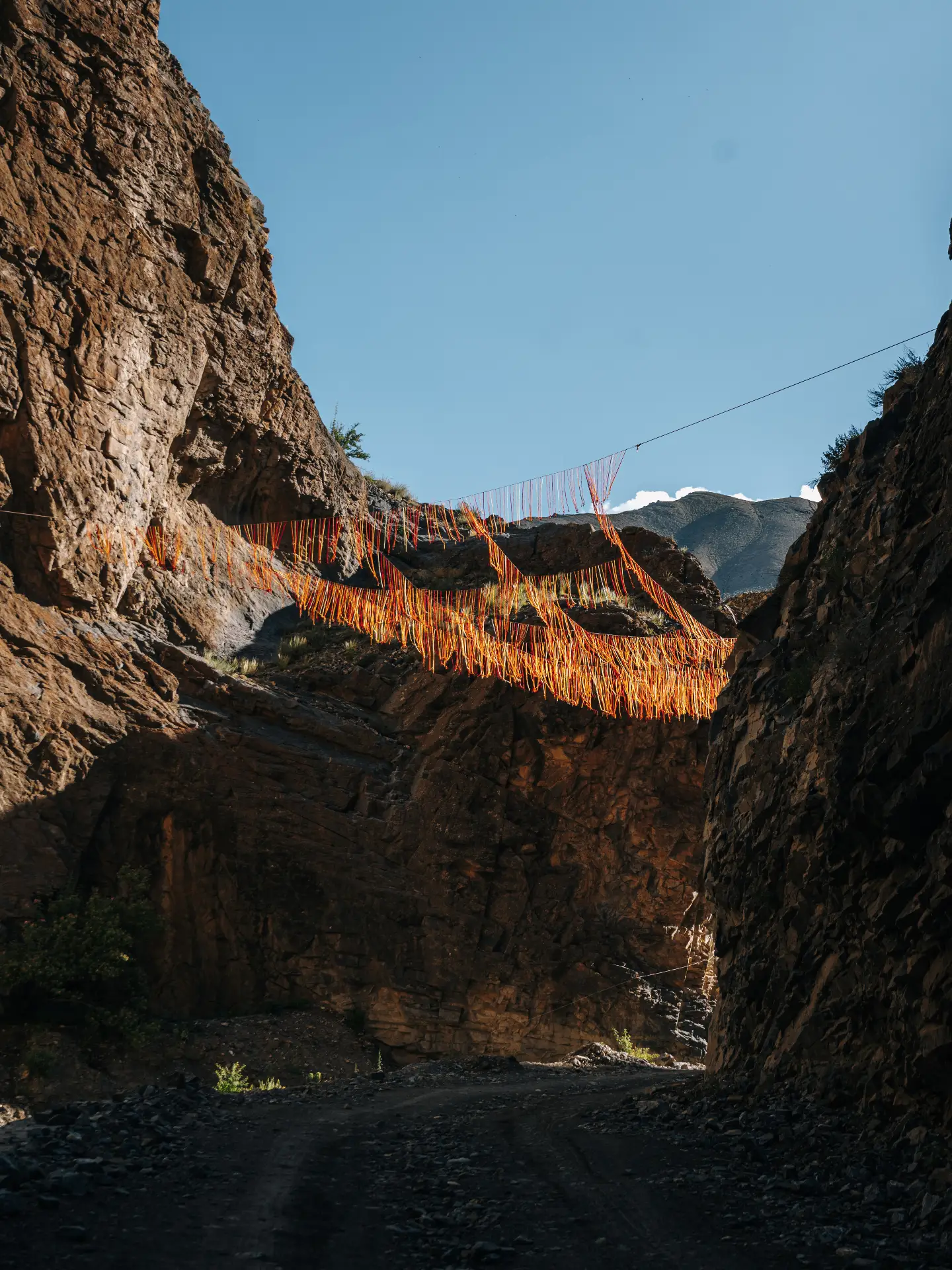
At Henasku, Stanzin Tsepel’s Traces Of Flow begins with a small stream of water that ushers you between two mountains. Cairns appear on either side, guiding you towards the main installation: A veil of orange, red, and yellow strands of thick thread suspended in the air. The air moves through the ravine while the stream runs over the pebbles. Put your ear to the ground and you hear the water clearly. I lay on the soft pebbles by the stream, one arm on my forehead to block the stark sky. Looking up at the web of dangling threads, framed by the two mountains, the installation became less something to look at and more something to sit inside.
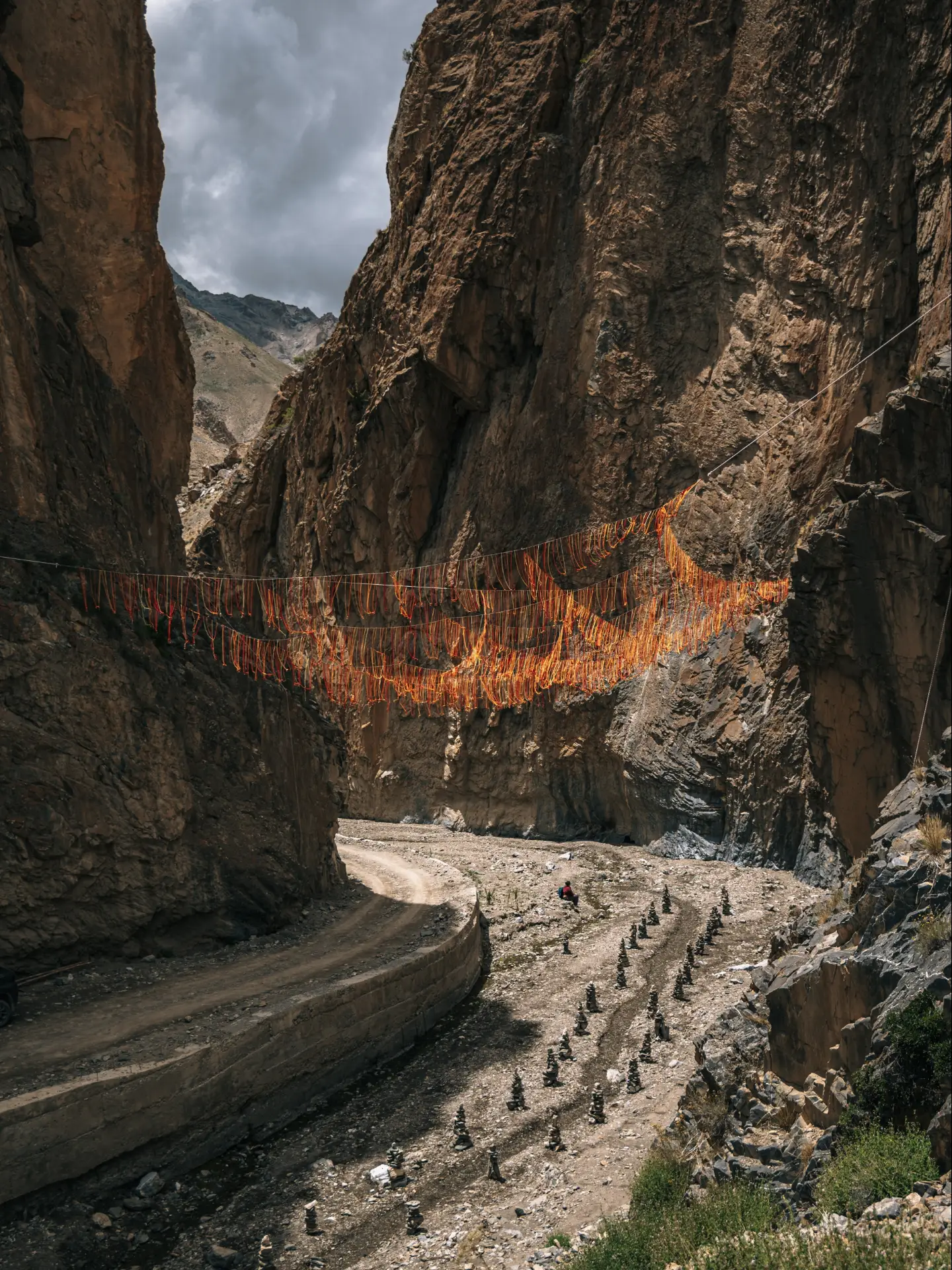
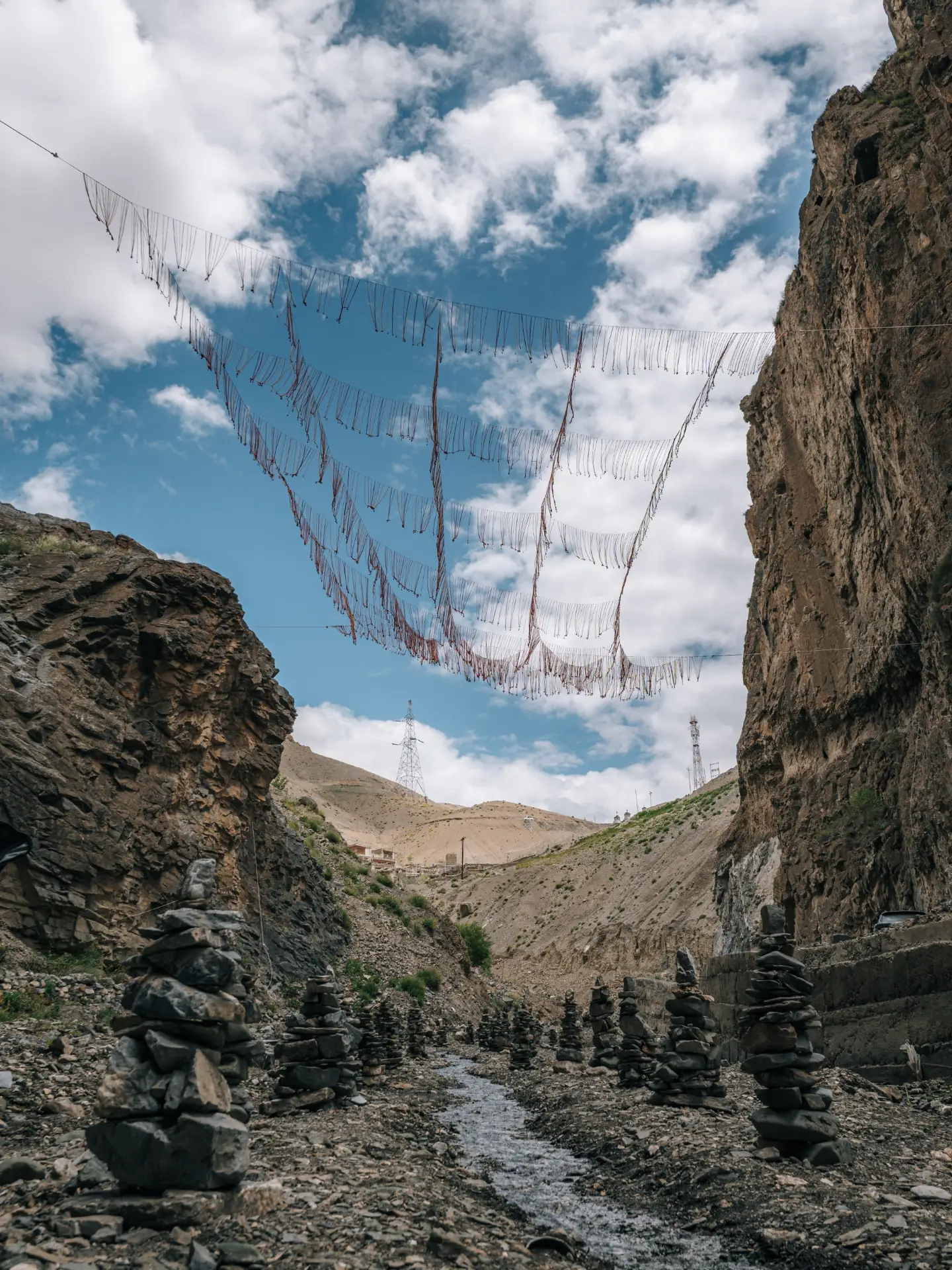
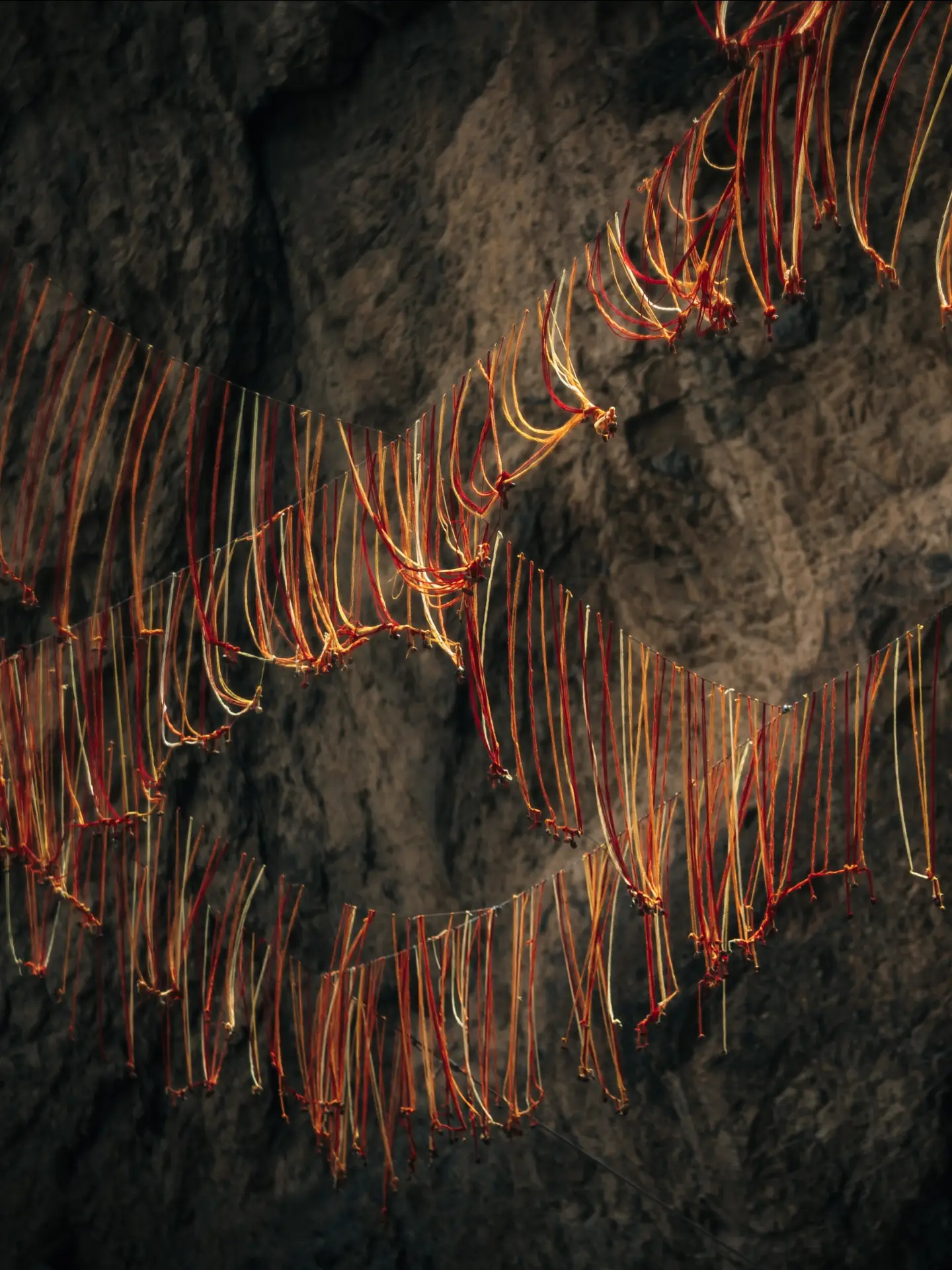
Stanzin Tsepel’s body of work serves as a quiet wake-up call, reflecting on the retreat of the Himalayan glaciers and confronting landscapes that bear the traces of ecological neglect
In Basgo, Chemat Dorjey’s Burrowed In Time places several marmots around a pond in the middle of a hill. A monastery overlooks them, with a road running towards the bottom. The sun-baked mud animals, hands on their bellies, sit around the pond looking serious, as though contemplating their place in a changing climate. Around them, the landscape is comparatively lush and fertile. The contrast between the dry, heat-struck animals and their surroundings becomes part of the work itself.
At Mulbekh, Ayan Biswas’s The Land Is Alive is a black geodesic dome sitting on a shaved patch of tall grass. At first glance, the dome appears to be the only stationary object in sight, while the yellow-green blades of grass move with the wind. With a closer look, though, there is Ayan Biswas himself, sitting beside it in the same sun and welcoming visitors in. The dome has translucent inserts made from plant-based bioplastics, holding pressed leaves and flowers of local plant species between them. It was around 4 pm, and the sunlight came through the inserts, making the flowers and leaves appear almost like slides under a microscope, lit from below and suspended in jelly. Ayan explained the work as I sat inside the dome, looking at the inserts. The air felt noticeably more restrained than outside, making me think about what an enclosure means in such an open landscape.
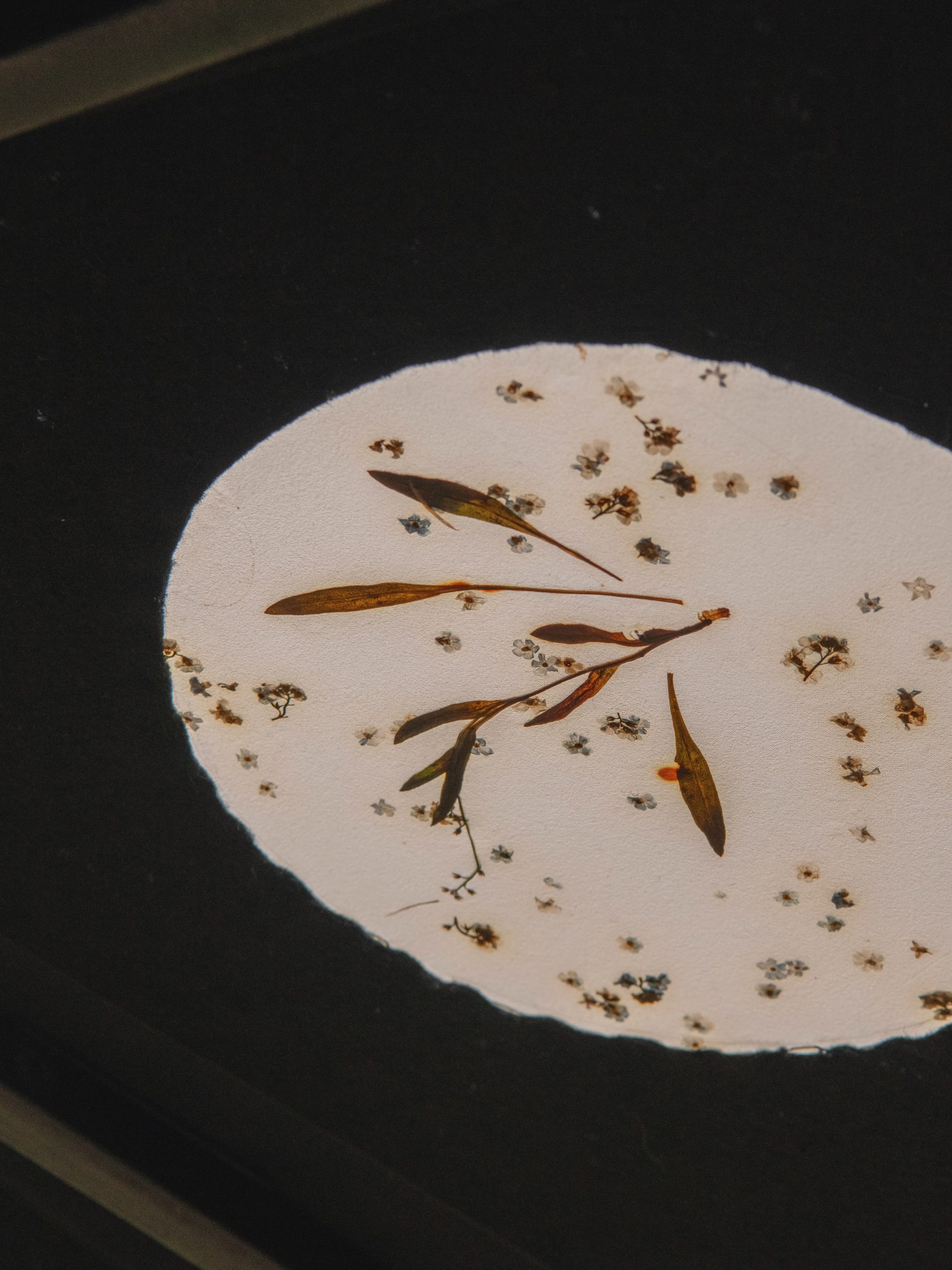
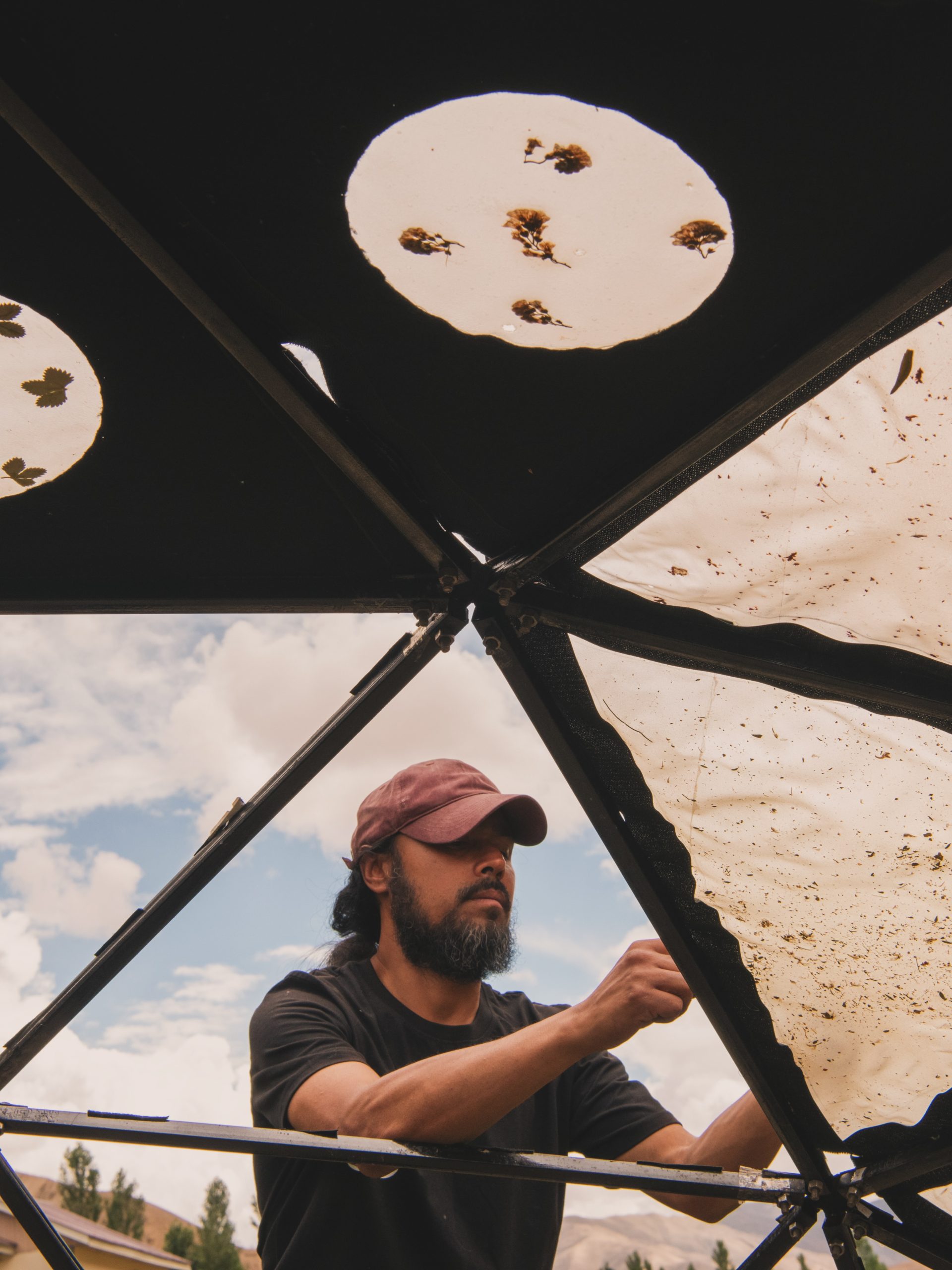
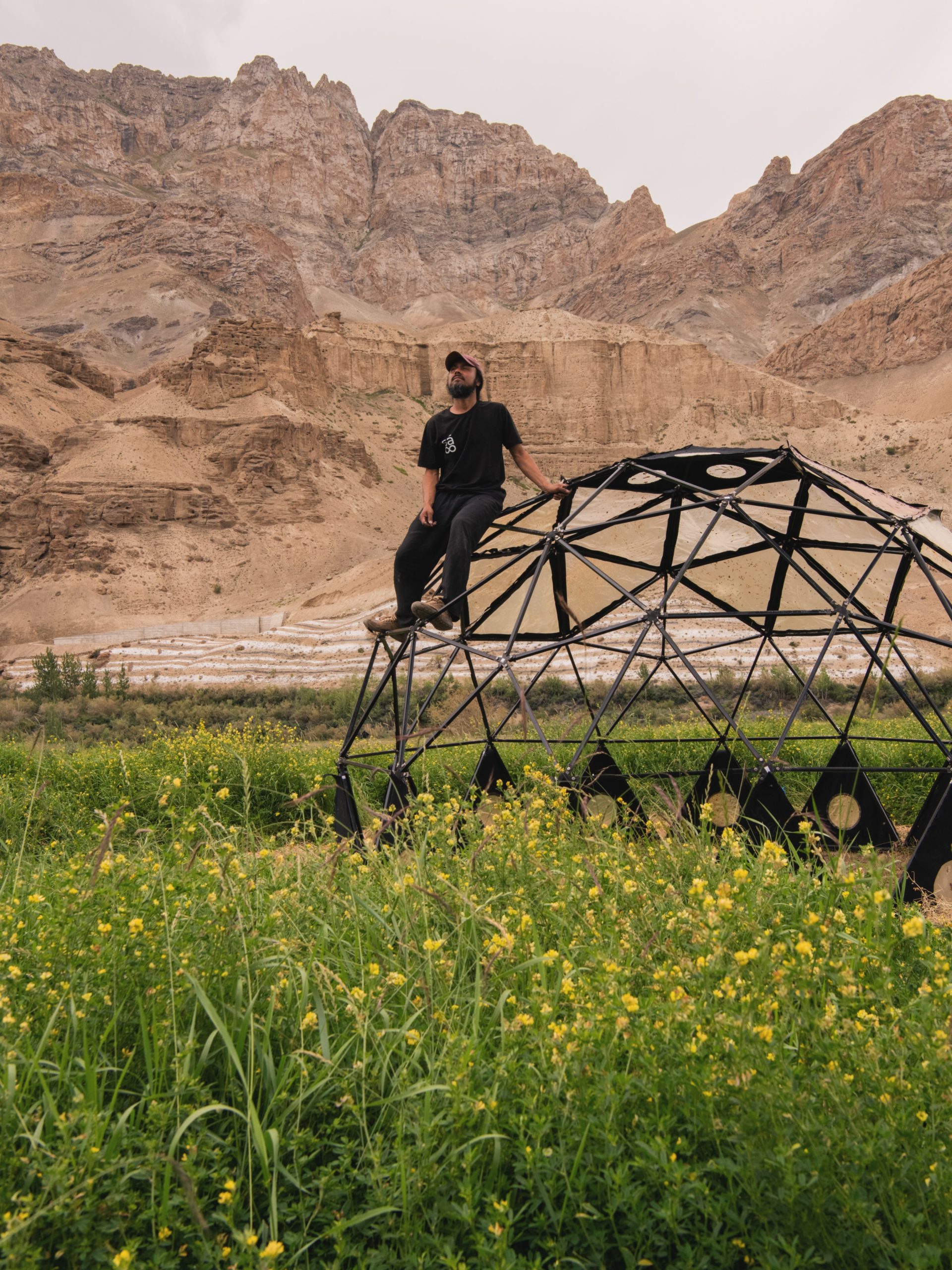
Ayan Biswas’s The Land Is Alive. The installation is a homage to Sapi village’s generations-old indigenous knowledge, transforming its medicinal flora into a vision of protection through a geodesic dome. Courtesy, Suryan Saurabh.
By the time night fell, I reached Himali Singh Soin and David Soin Tappeser’s 3000 Realms. On a bridge, against the mountains and the night sky, tiny hand-forged iron and brass bells hang from green ropes along both sides. Small wooden sticks act as clappers, each attached to an irregularly cut piece of glass. In the darkness, the glass catches whatever little light there is. There was no one else on the bridge, but the bells kept moving as the wind pushed and pulled them, producing an irregular soundscape.
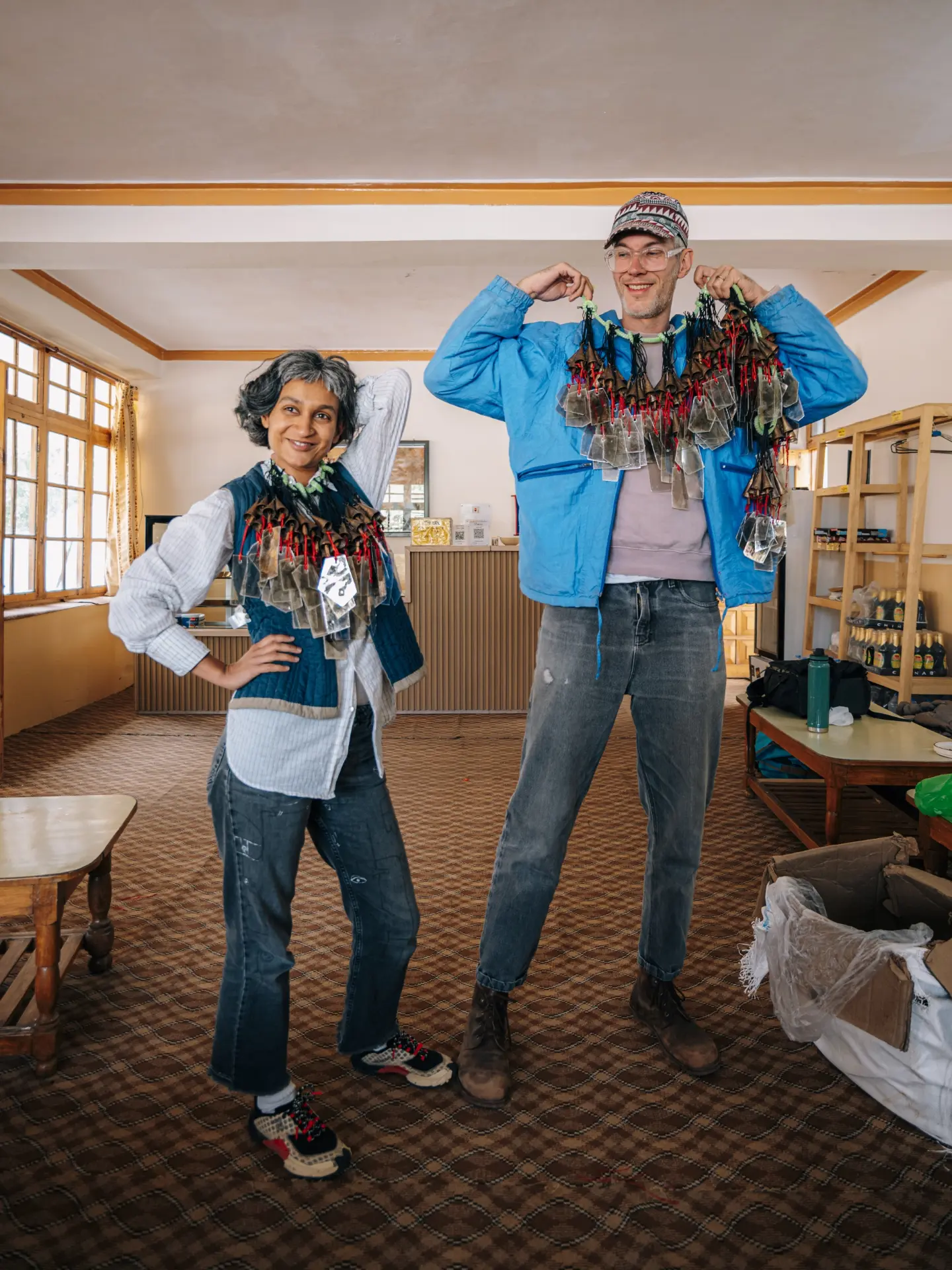
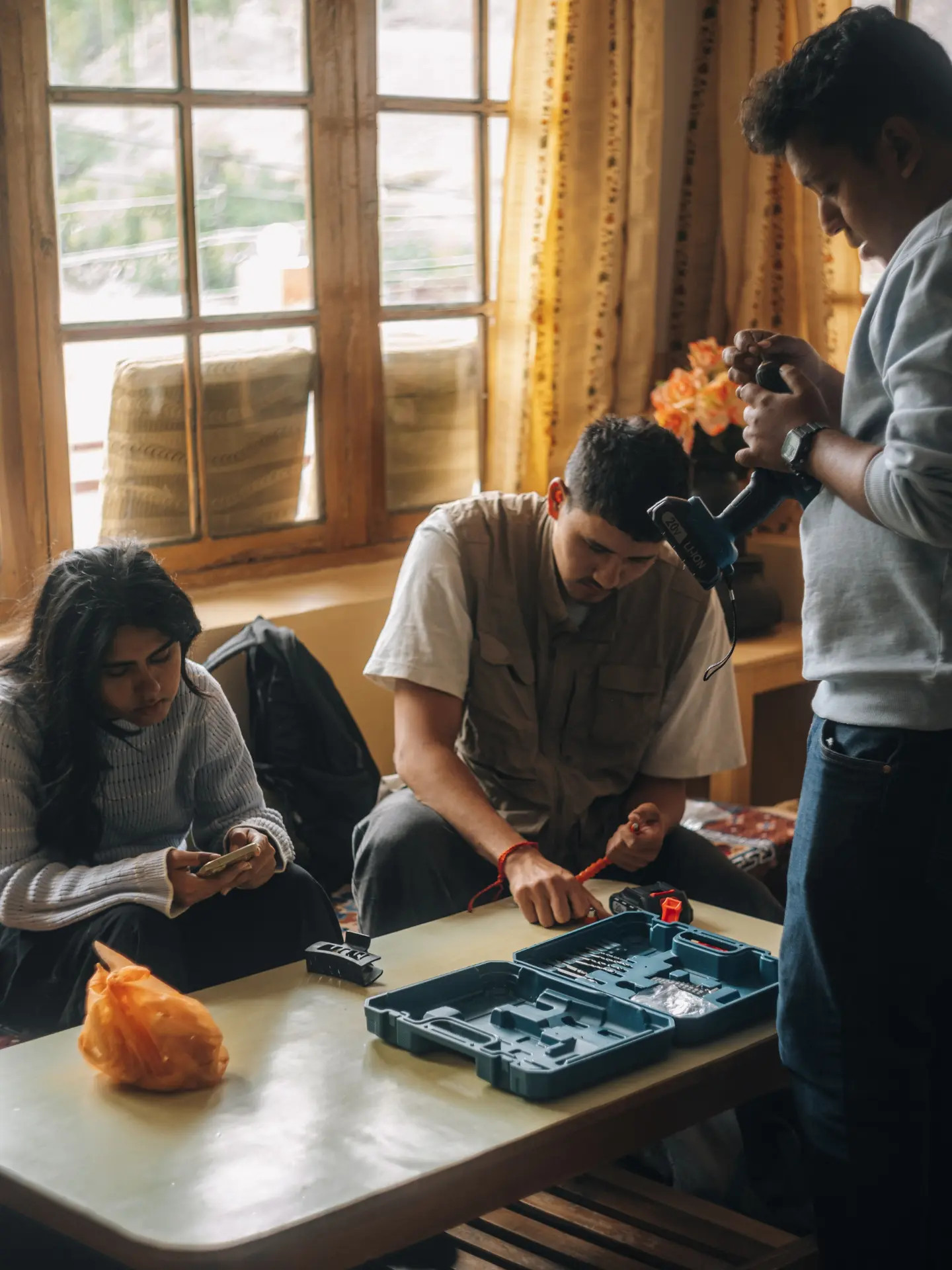
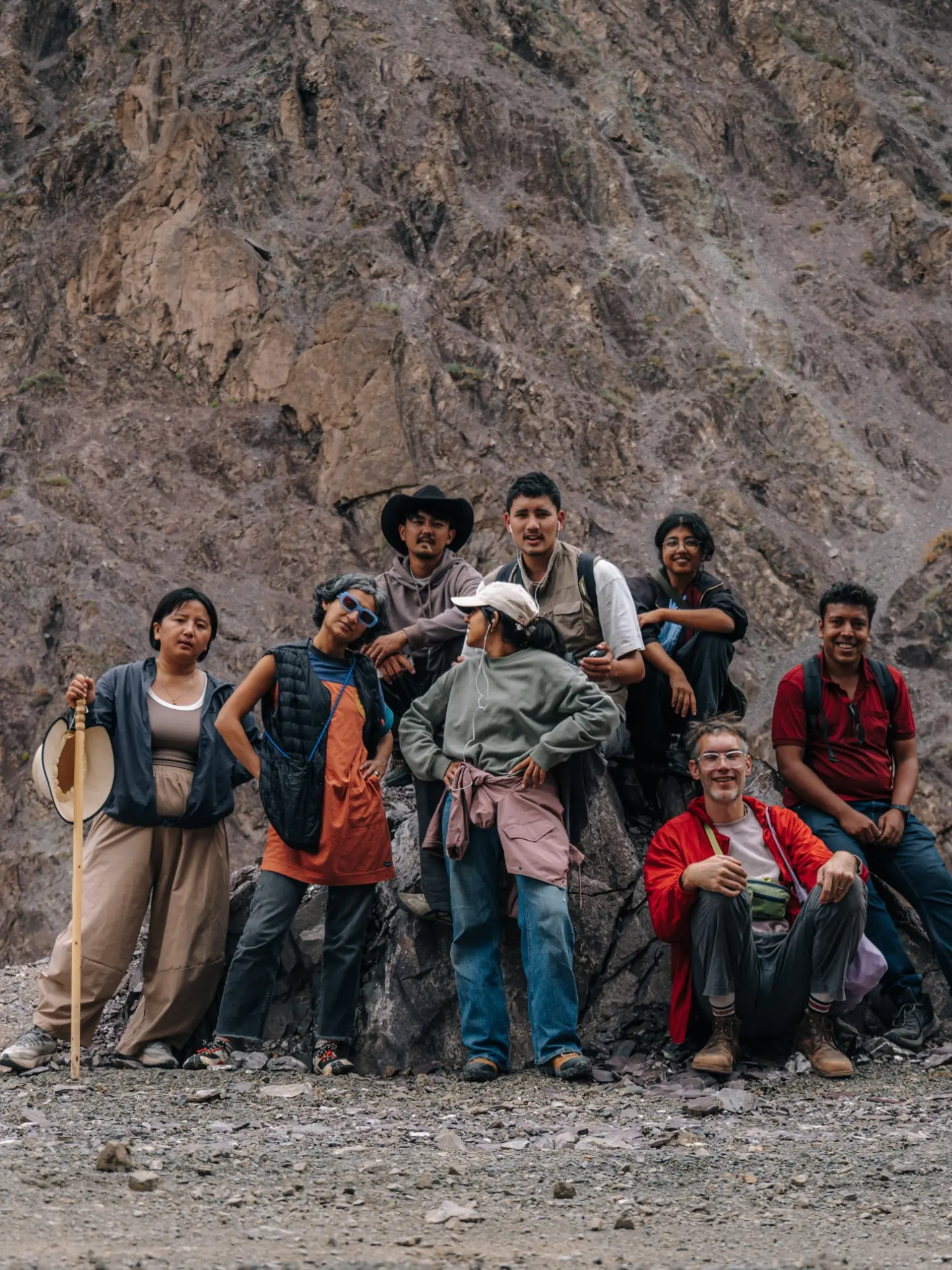
In the making of 3000 Realms, Himali Singh Soin and David Soin Tappeser. Courtesy, Durjoy Chowdhury
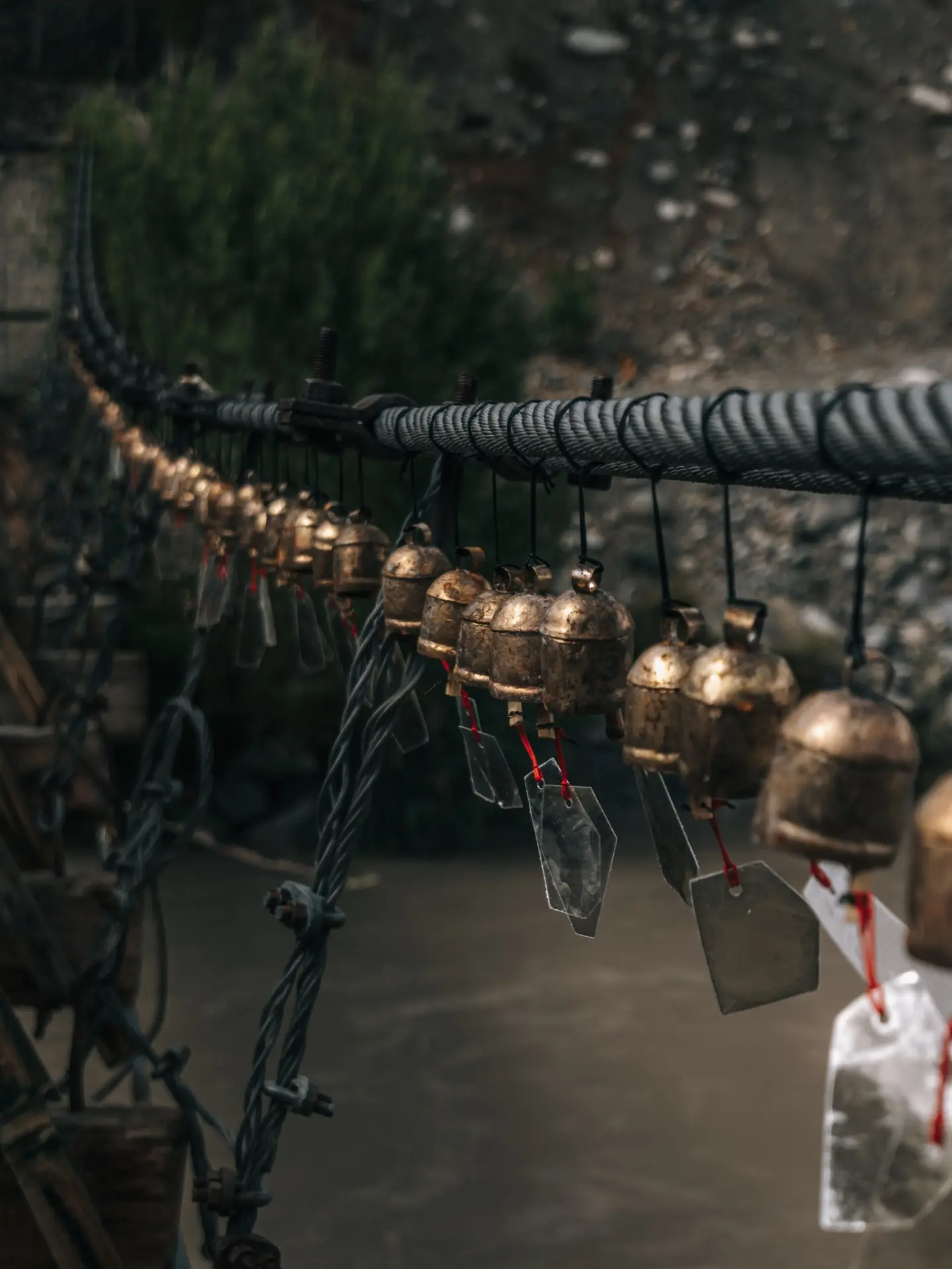
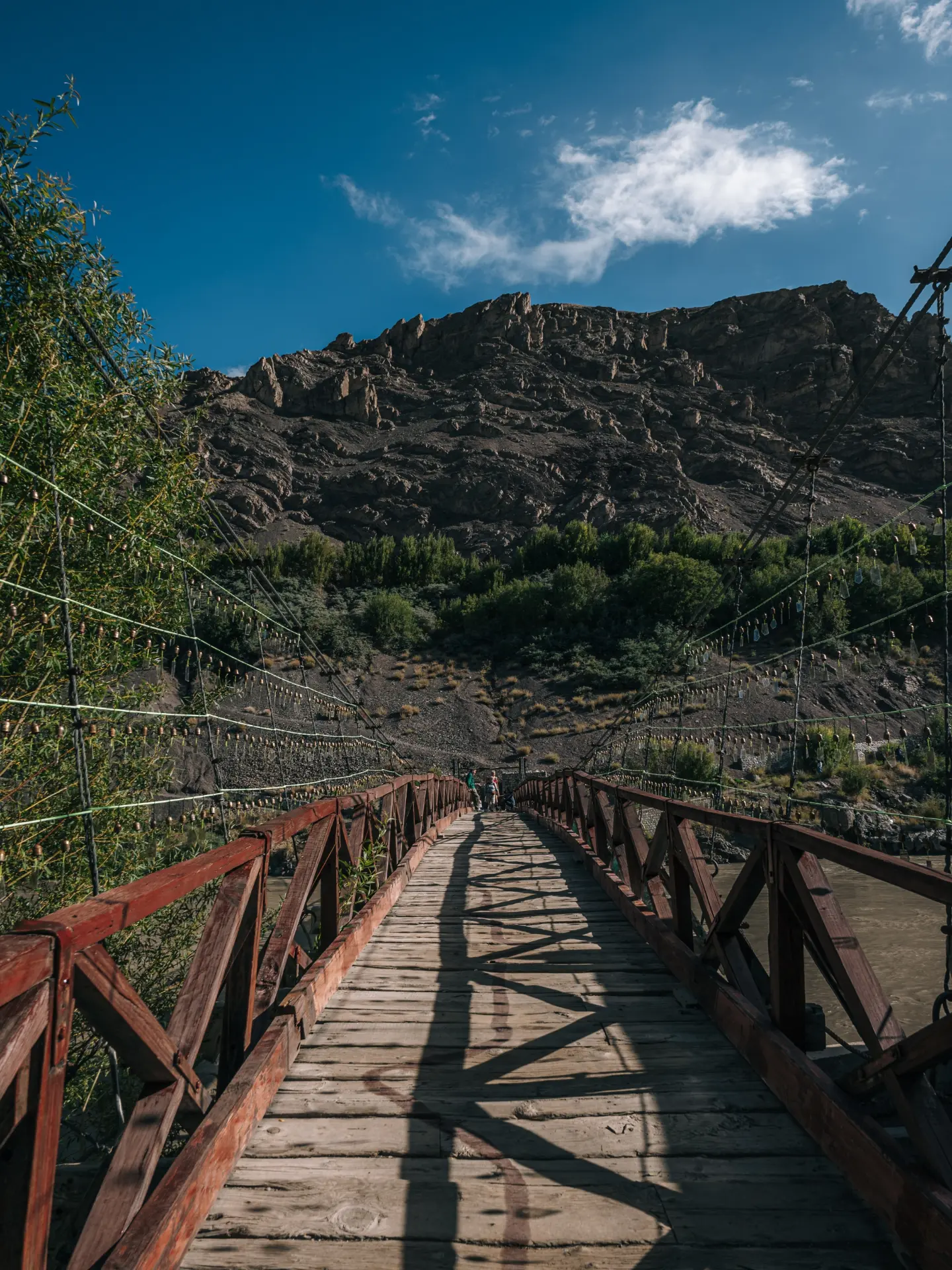
With 3,000 hand-forged bells suspended across Nurla Bridge, the duo creates a shifting interplay of wind, water, and sound
The last was Skarma Sonam Tashi’s Transient Mountains at Lamayuru. The moonland of Lamayuru, light ochre in shade, is already an unusual landscape to encounter. Remnants of what appears to have once been a lake now form rough, eroded shapes across the land. At a viewing point, a blue flag catches the fast winds. The sun is harsh, but the wind is harsher. Standing beneath the flag, I noticed how its colour and texture seemed to echo the sky. Move a little away, however, and the context changes: It is no longer camouflage but a sharp contrast against the yellow mountains.
Moving between the biennale’s different sites, this became increasingly apparent. The works do not exist independently of where they have been placed. The same object can feel different depending on the light, the weather, the distance from which it is seen, or the landscape around it. Context changes art; angle changes art. In Ladakh, sometimes the landscape is not simply where the artwork is — it is part of how you see it.
Words by Tanvee Abhyankar
Featured image courtesy of Suryan Saurabh