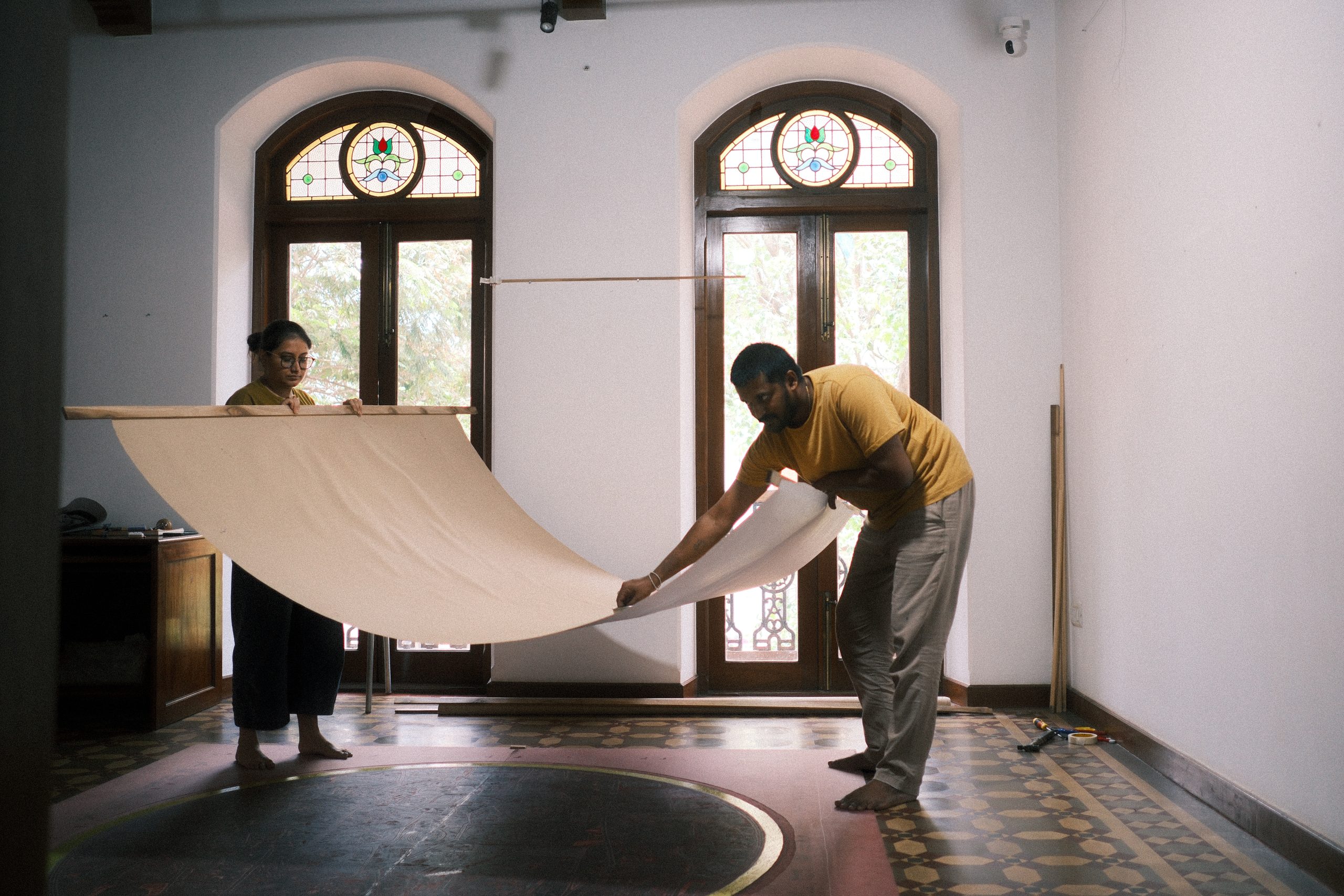
The rains in Mumbai are unforgiving. The months after May, and before September serve the sea — it is relentless in its efforts to pull the land back within itself. The waves crash into the shore, and the city comes to an unwanted halt. Yet, these months remain to be some of the most exciting of the year for those invited to stay at Colaba’s historic Sugra Manzil — home to the Chemould CoLab, and its residency program.
For the residents at CoLab, the days involve unbelievably loud rain, studio visits, workshops, and mentoring sessions. The project is inseparable from the young gallery’s ethos: Supporting emerging artists at the beginning of their career. A common ideal for many artist residencies that continue to emerge across the country as India’s art market matures. An artist’s path is uncommon; there’s no linear path to fame — yet, certain pitstops can surely accelerate one’s career. A residency, or a fellowship, is one such pitstop. The support arrives in material forms, like production costs being covered, food and stay being provided, travel costs being compensated. Yet, it is the immaterial aid that makes the whole experience especially worthwhile. With the residency comes an established network of collectors, gallerists, curators, and critics eager to engage with new talent.
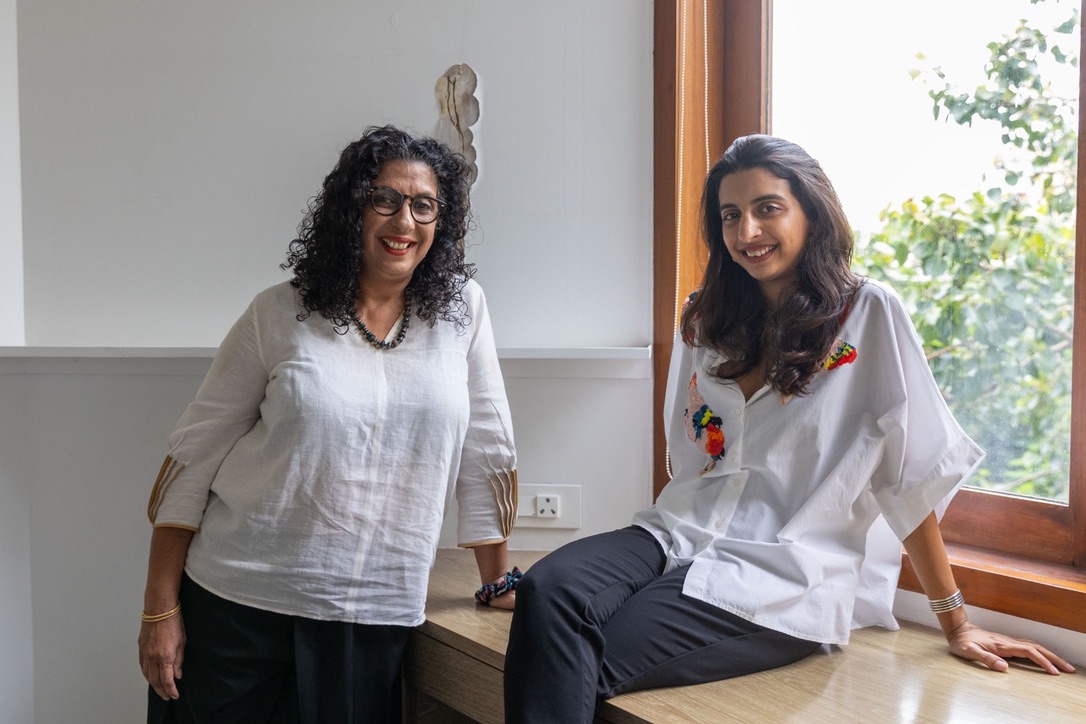
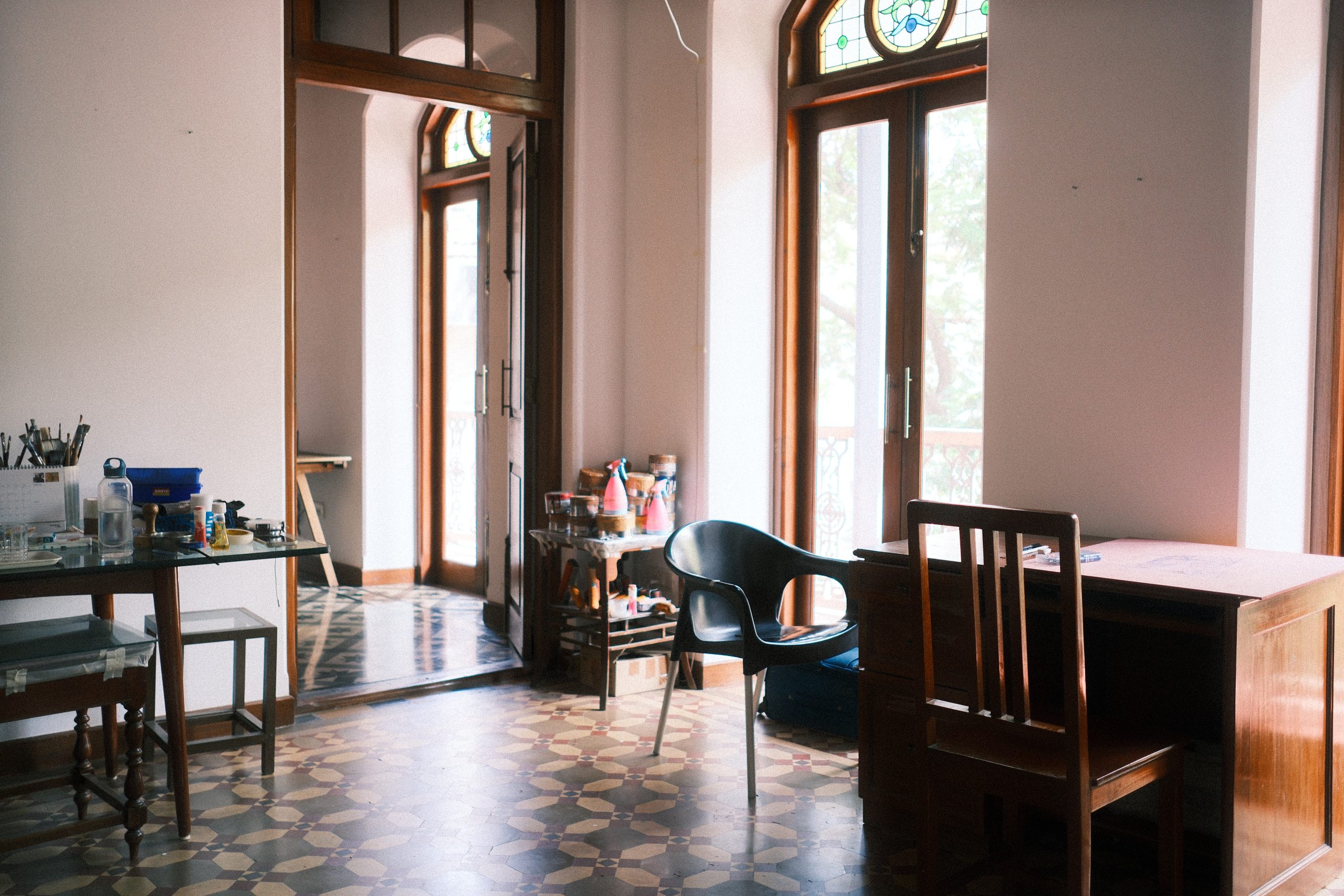
(L-R) Shireen Gandhy of Chemould Prescott Road with daughter, Atyaan Jungalwala; CoLab’s studio space
Every intuition follows their own blueprint for this incubation period. Atyaan Jungalwala’s CoLab, established in 2022, is an extension of the family gallery at Prescott Road, started by the Gandhys in 1963. While it physically and thematically steps away from the traditions of the parent, it retains the strongholds it has within the incredibly opaque art world, one centered on close-knit personal relationships and heritage networks. The exclusivity follows in the manner the artists come in — the residency is invite only. “The programme of the gallery has a certain voice of emerging artists. It’s my decision, while I consult trusted friends from the art ecosystem whose judgment I value,” Jungalwala shares.
During the four months an artist spends at the space, they’re placed right at the heart of the city’s art district. “Most residencies in India are tucked away in more remote locations, away from galleries, exhibitions, and the energy of a thriving cultural ecosystem,” she explains. Last month, during the city’s flagship Art Night Thursday, where galleries push their hours late into the evening and host previews, CoLab invited visitors for an Open Studio, letting them explore the works in-progress. “Seeing an artist at work and understanding the process behind the finished piece is a privilege that most people don’t get to experience,” Jungalwala asserts.
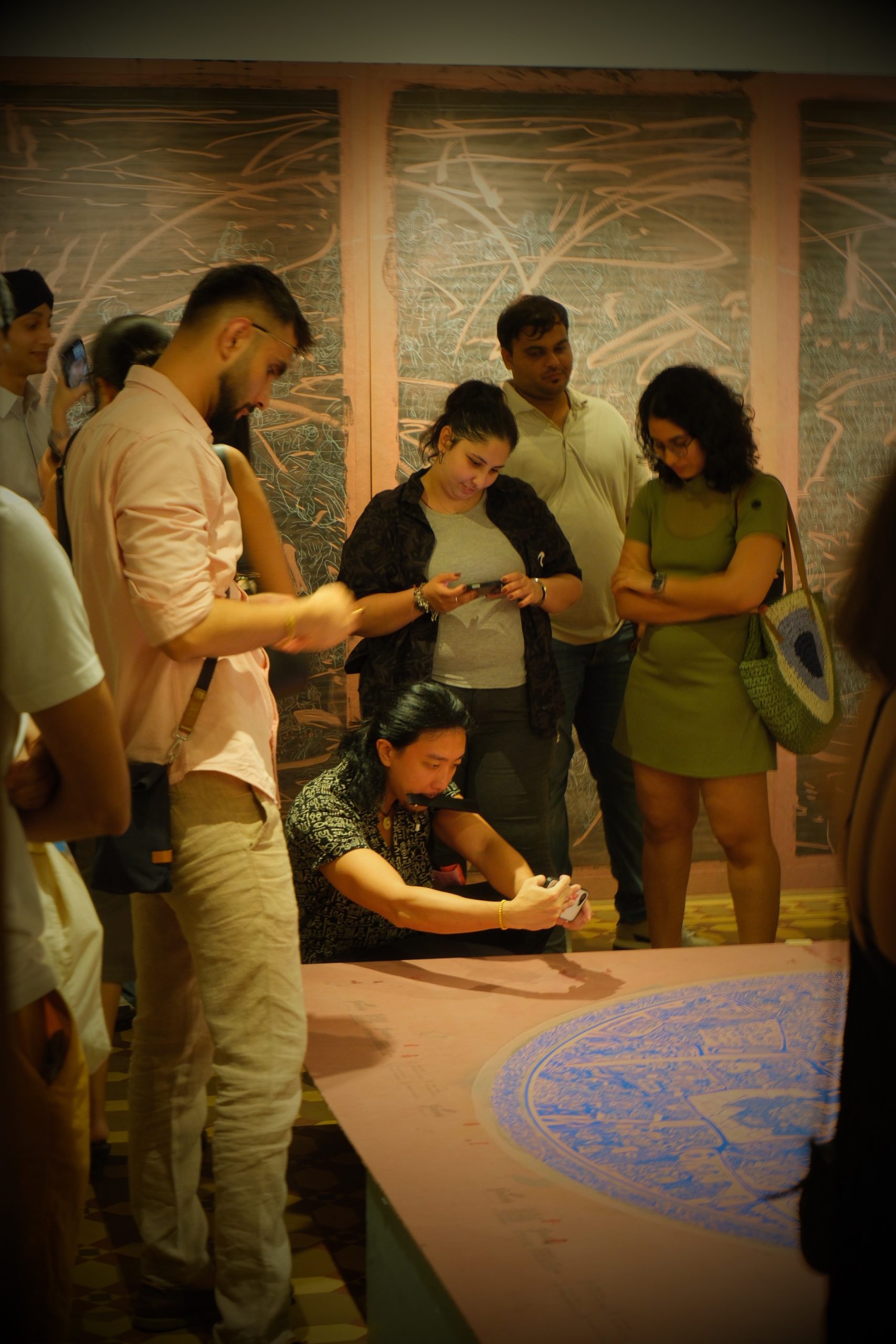
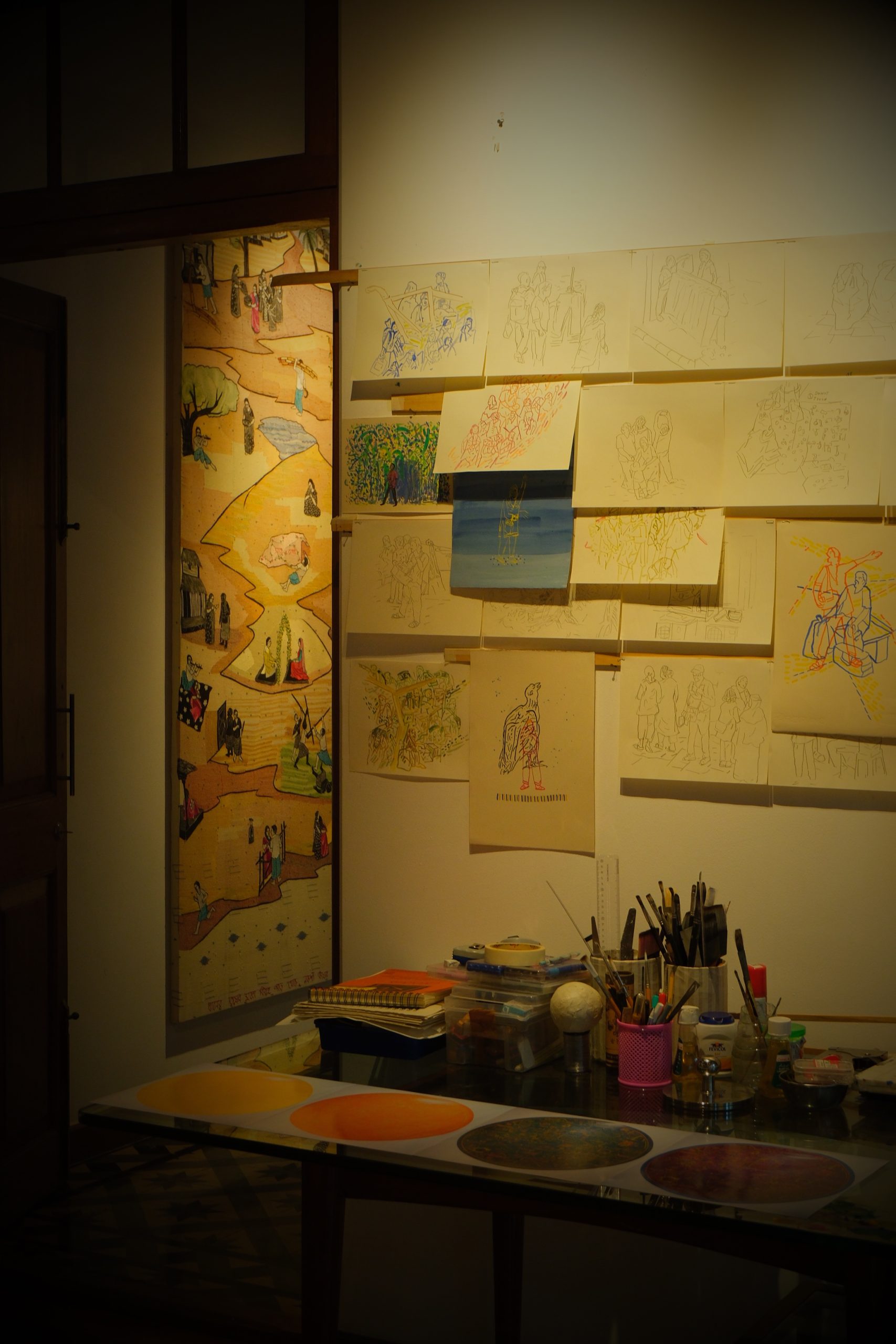
For their ongoing residency, CoLab hosted an open studio session on Art Night Thursday last month
At the end, the artists part with their works. The idea is to establish a longstanding relationship with the gallery itself, reflected in the return of Jayeeta Chatterjee. The trained printmaker was part of the residency in its sophomore edition in 2023. Now, she’s back with visual artist, and her partner, Anila Kumar Govindappa. She will be featured in the gallery’s first international fair presentation at Frieze London this year. Throughout her career, Chatterjee has also participated in other residencies, like the IMMERSE Fellowship held further north in the city: A programme that enables young artists through a model presented by Dr Shantilal K Somaiya School of Art at Somaiya Vidyavihar University.
This young residency program, started in the pandemic, is the culmination of four different patrons’ efforts. Natasha Jeyasingh, art consultant, frequently partnered with artist Al-Qawi Nanavati for their ventures, Carpe Arte Support and Young Art Support — their idea for IMMERSE was taken to collector and friend, Siddharth Somaiya, who welcomed the project, placing it at his family’s university. They eventually brought on curator Shaleen Wadhwana, to oversee the first show, and she stayed on for the following iterations.
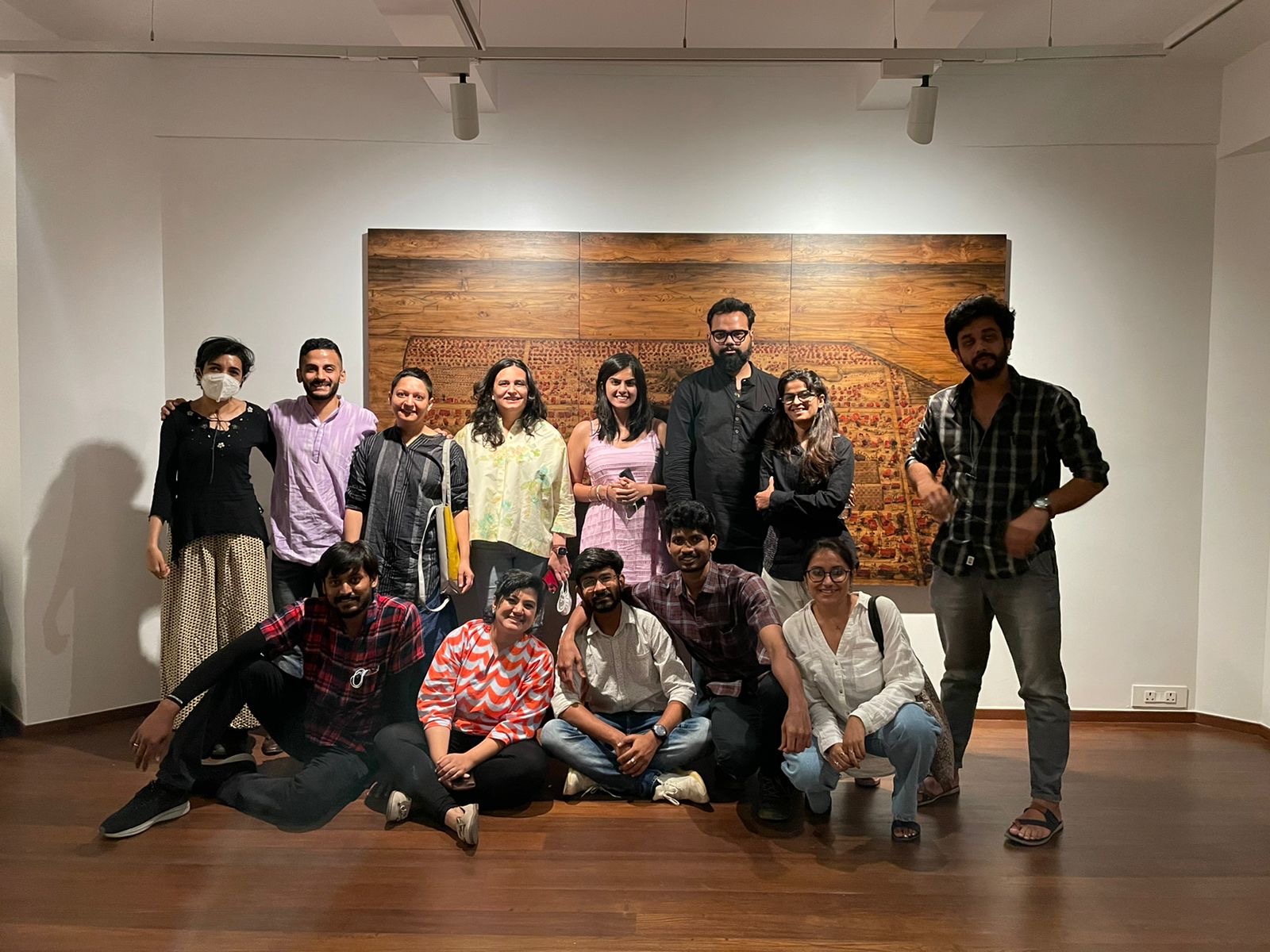
The first iteration of IMMERSE in 2022, came together with the efforts of Natasha Jeyasingh, Al-Qawi Nanavati, Siddharth Somaiya, and Shaleen Wadhwana
Rather than a project-focused program, IMMERSE focuses on being more of a learning experience. The fellowship receives around 500 applications every year, and an external jury makes its selections — the last edition expanded it to 12 artists, and three curators. For the next six months, they engage in Art Night walkthroughs with Capre Art, organise open studio sessions, build a peer ecosystem and hold an extensive exhibition at the end, attended by stakeholders like India Art Fair. The creators know that the residency does not exist in a traditional white wall set-up, and that is exactly why it works — students of the university, too, engage with the residents, “It is this very audience that may not have entered the ensconced South Bombay gallery circuit, and over time, this cross-pollination of audiences has been gratifying to witness,” shares Jeyasingh.
A standing ideal for IMMERSE is its dedication to financially support the artists, cognizant of the limited opportunities that exist within the ecosystem. Relying on the university for resources allows them to deny any commissions. “We have found that collectors really respond to this because they also like the idea of supporting young artists where they know the funds are going to them 100 per cent,” Jeyasingh asserts. Past fellows have made it to Forbes 30 and 30 List, and Art India Magazine’s 30 under 30 List this year.
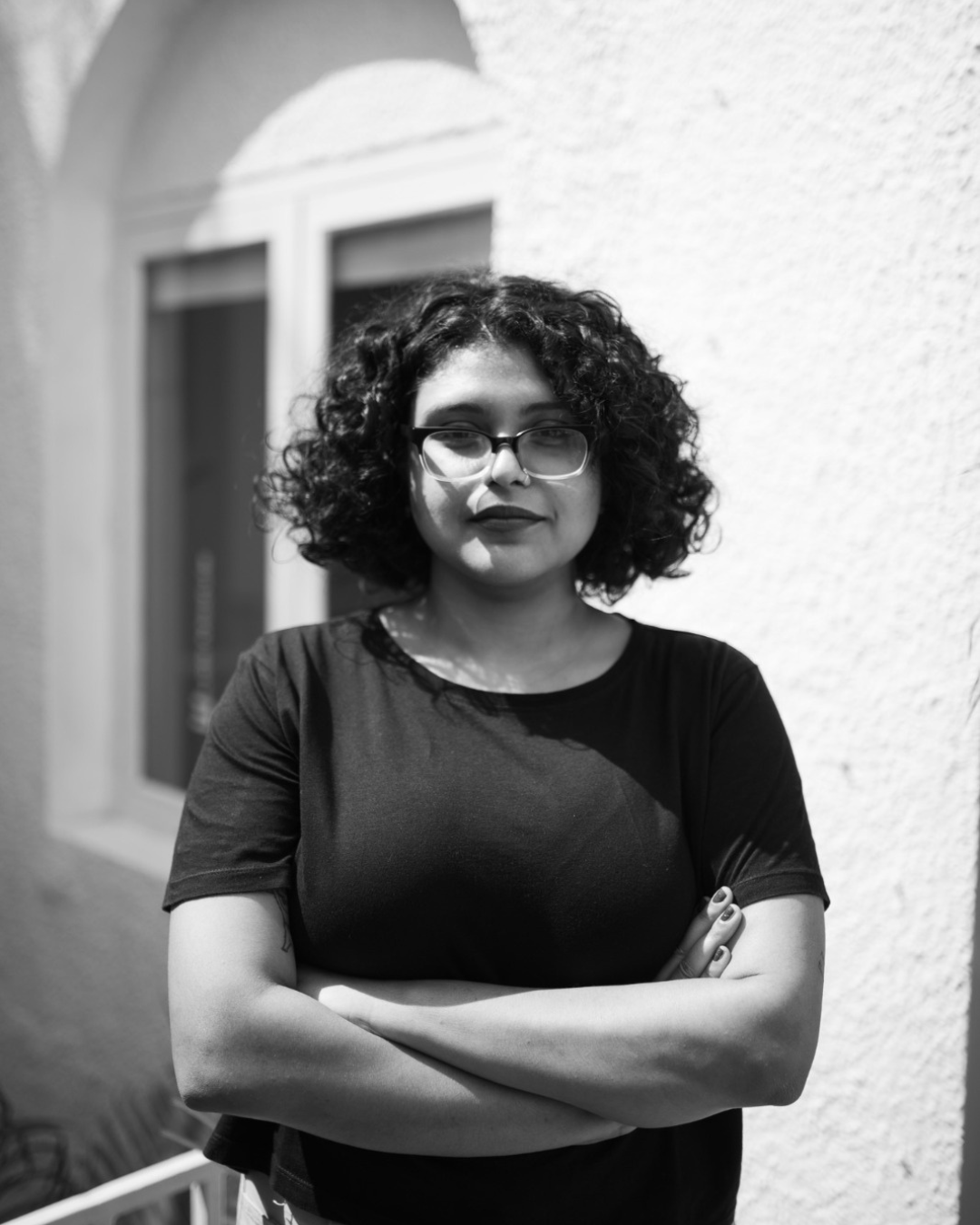
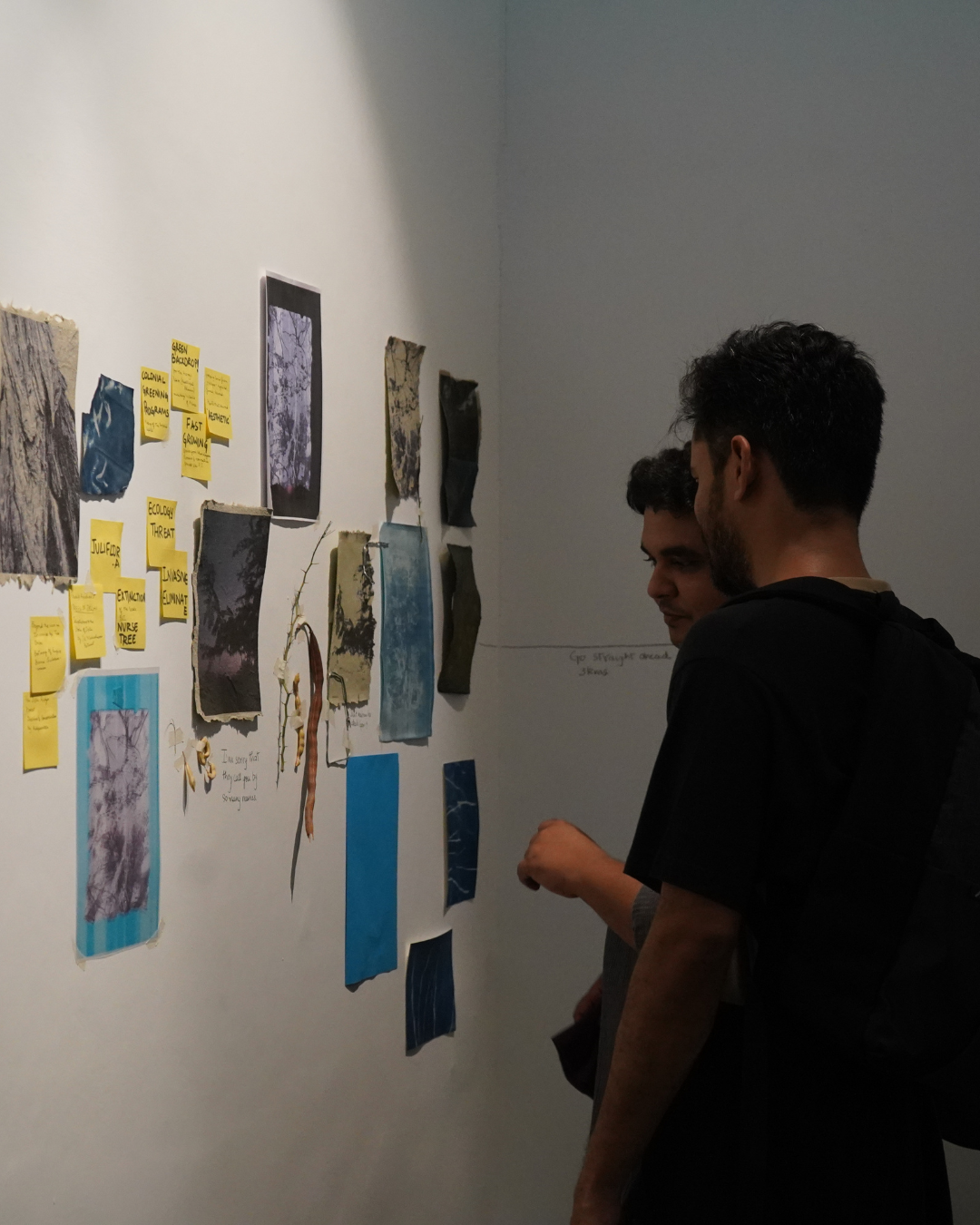
(L-R) Khoj’s Peers Residency is led by curator Gauri Pathak; in 2026, the program completed 22 years
Khoj, in Delhi, a non-profit contemporary arts organization turning 30 next year, rests on a more experimental approach. But, maintains the idea of focusing on a communal experience. This is realised especially in their Peers Residency, which recently wrapped up its 22nd edition at their Khirkee space. Gauri Pathak, Senior Programs and Communication Manager at Khoj, who has been steering the residency for the past five iterations, finds its appreciation for the artists’ inquisitiveness the distinctive point. “Here, they are given the time to experiment, to really think of the residency as a laboratory where the expectation is not to give us a final work,” she shares.
The residency receives an upward of 300 applications for five spots, and lasts for about six weeks, culminating in an Open Day — a display of the residents’ in-progress work. Acceptance, decided by an external jury, comes with a daily stipend, travel and production support and accommodation. In total, Khoj spends about a lakh per resident. The next top 10, who don’t end up making the cut, are still invited by the organization for a feedback session. The mandate, during final selections, is that the cohort must retain a gender-geography balance. As a curator, Pathak prides herself on the residency’s ability to push boundaries of contemporary art discourse, an effect displayed in their insistence on having a critic present alongside the five artists, “Writing is a creative medium as well,” she asserts.
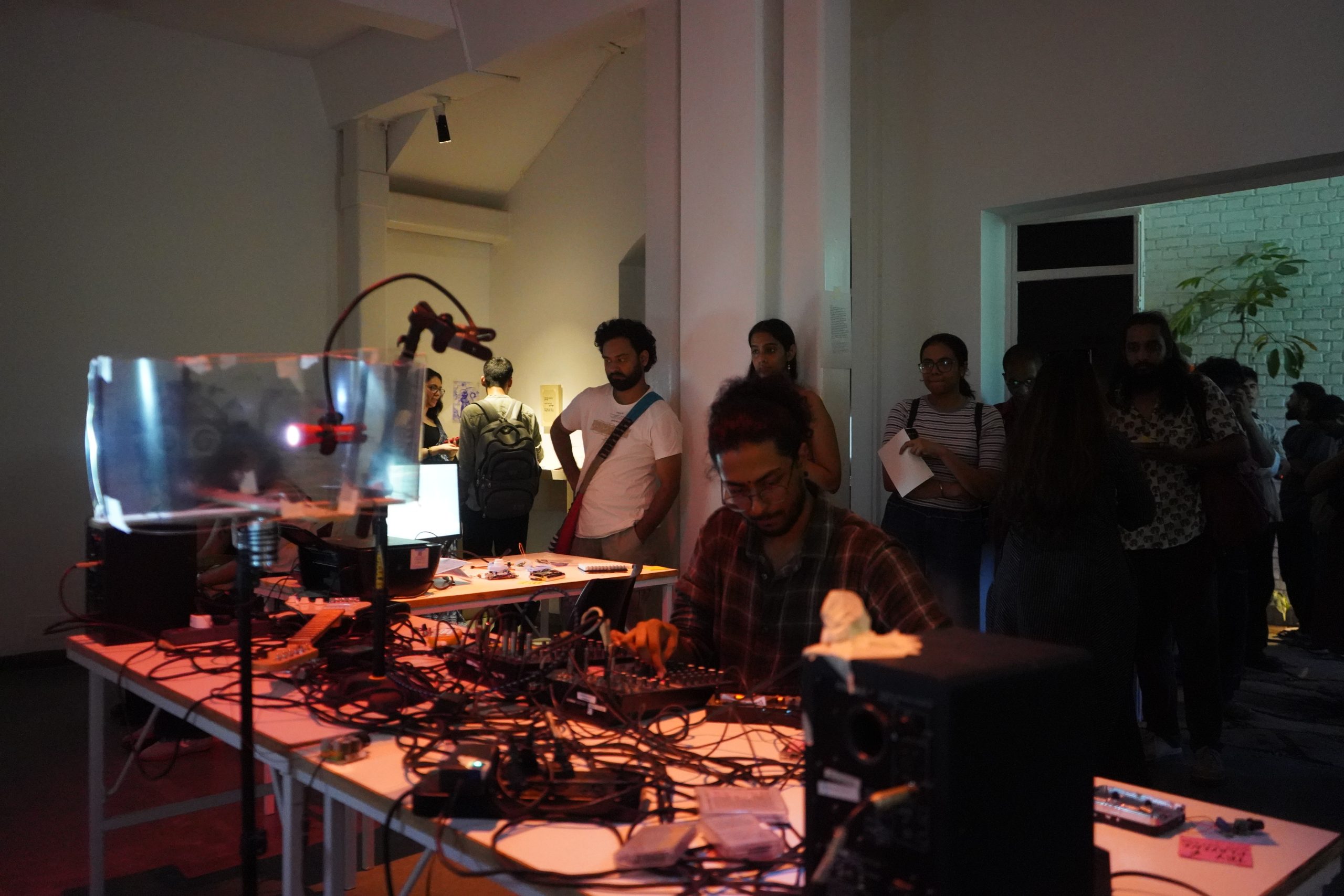
The six-week long Peers culminated in the Open Day, a display of the artists’ works
For all three organisers, art remains to be a historical marker of our times. Their work lies in defining culture; they continue to shape discourse through their influence and generosity. With their residencies, the patrons form a stake in a developing art world, one that represents the next generation of Indian Masters.
Words by Tanya Syed
Feature image courtesy of Chemould CoLab