For centuries, the vertical world stood as a monument to human insignificance — vast, terrifying, and unknowable. It inspired what philosophers called “the sublime” — that feeling when peaks dwarf human comprehension, confronting us with our own smallness. Expeditions to the Himalayas embodied this relationship: approach the overwhelming spectacle, summit if possible, and retreat with photographs that capture grandeur but never intimacy. Mountains and rock faces alike remained distant, spectacular, and inscrutable.
Scottish writer Nan Shepherd, who spent a lifetime walking the Cairngorms, wrote in her memoir The Living Mountain (1977) about encountering a different relationship with peaks: “Yet often the mountain gives itself most completely when I have no destination, when I reach nowhere in particular, but have gone out merely to be with the mountain as one visits a friend with no intention but to be with him.” She had discovered what expeditions missed: summits are goals, yes, but terrain — it teaches.
Indian climbers are embodying this wisdom. Through sustained engagement, they’re transforming spectacle into intimacy. These vertical terrains are ceasing to be monuments and becoming places of revelation. From Sethan’s boulders to Ladakh’s ice walls, climbers are uncovering new dimensions in these landscapes. What begins as terrain becomes relationship — and the rock becomes a mirror.
Documentary photographer, filmmaker, and climber Vibhu Grover learned this during a winter attempt on Kanamo Peak in Spiti. At 18,500 feet, past turnaround time and still hours from the summit, his body gave up. His guide continued; Vibhu descended alone, exhausted and in tears.
But on the way down, he noticed fresh pugmarks in the snow — a snow leopard’s tracks that hadn’t been there that morning.
“One of the biggest surprises for me was realising that turning around isn’t failure,” Vibhu shares. “Some of the most important days I’ve had in the mountains ended without a summit. Over time, I realised those moments were teaching me far more than the climbs that went exactly as planned.”
What started as a failed summit became his longest documentary project, now spanning nine years.
Shepherd wrote of wanting to know “the bare mountain itself, denuded of all that may be mine in it or upon it.” Indian climbers now embody what she unearthed: vertical terrain reveals itself slowly, through prolonged immersion rather than brief encounters.
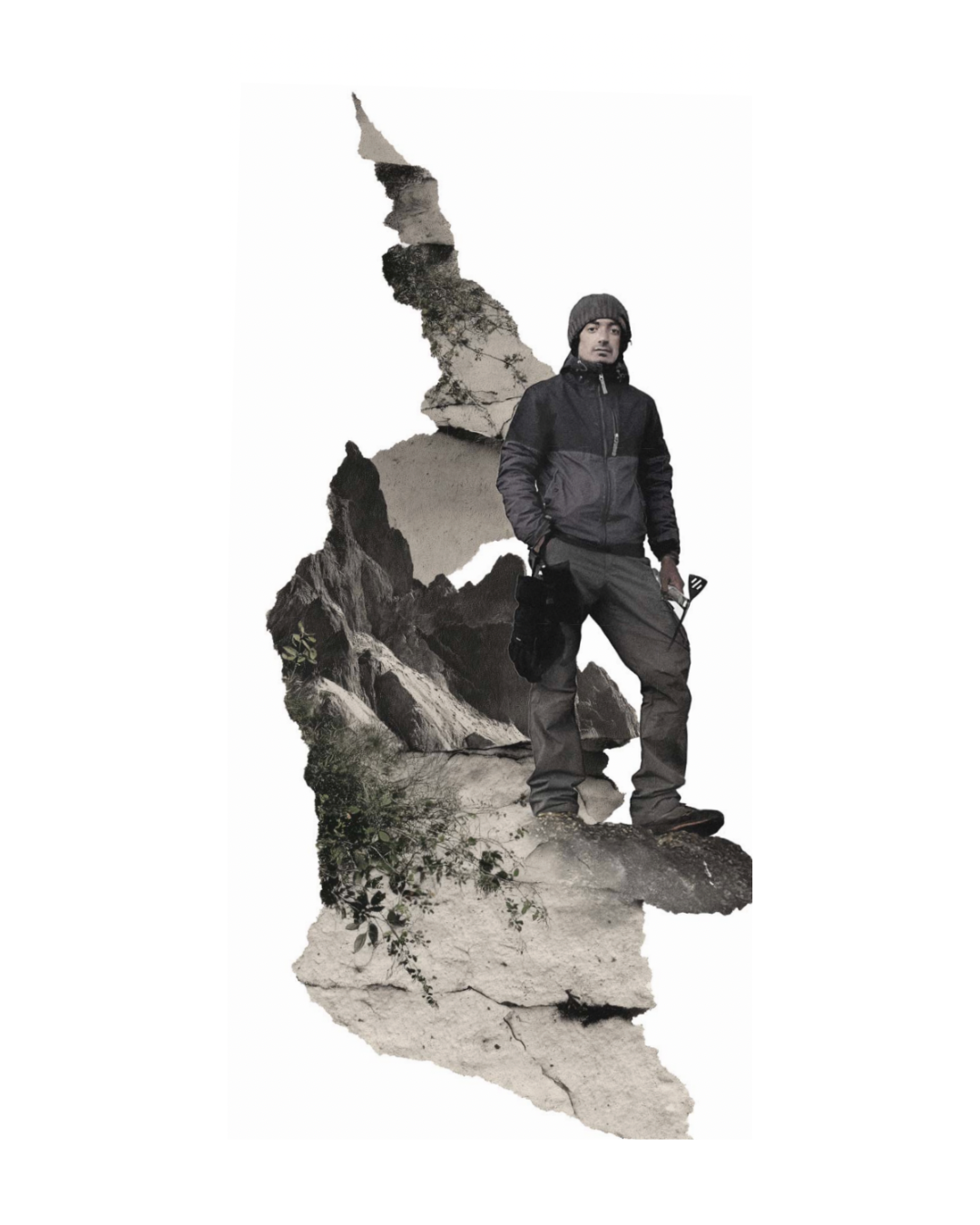
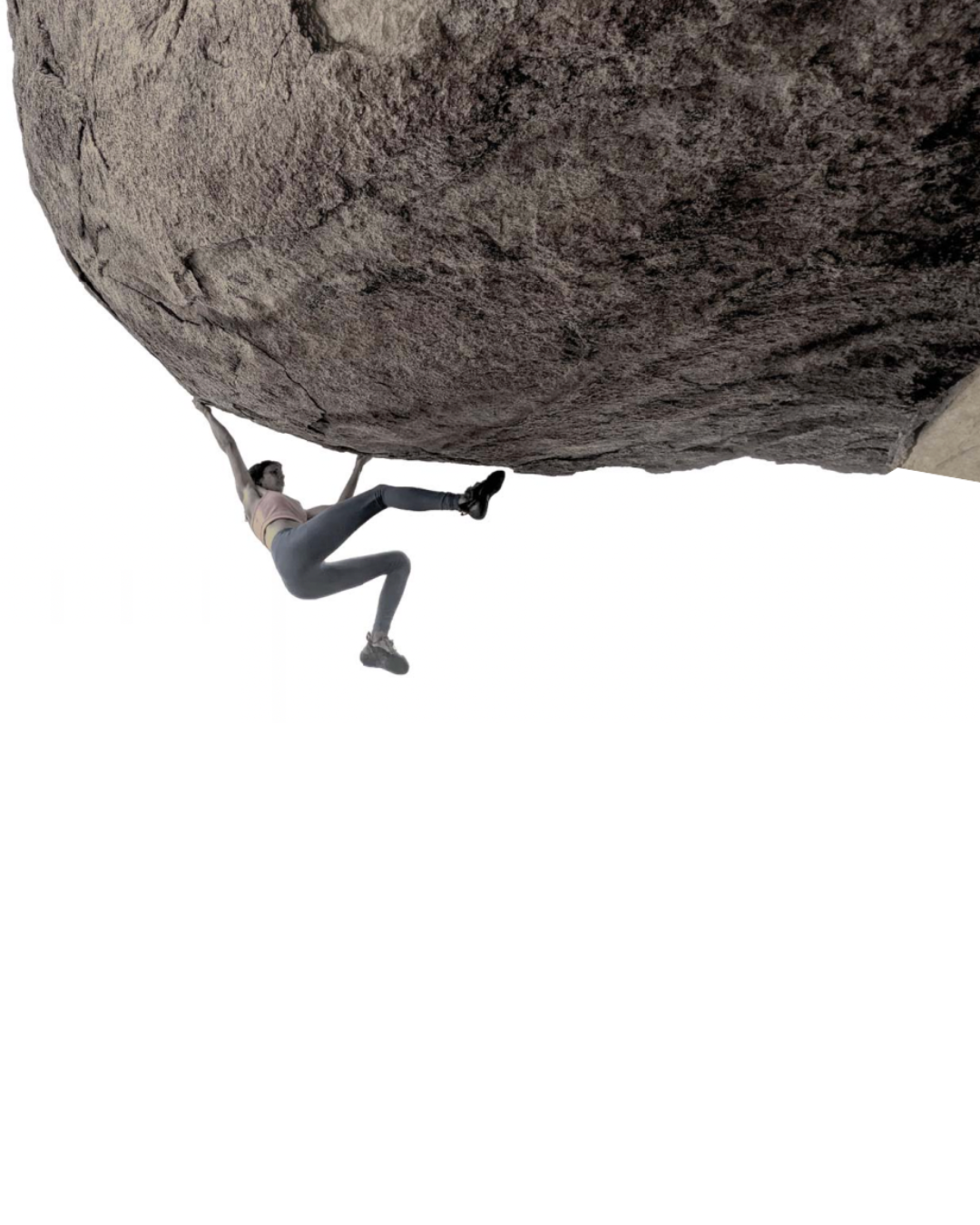
(L-R) Vibhu Grover on Kanamo Peak, where turning back became the beginning of a deeper journey; For Gowri Varanashi, every climb offers a new way of seeing both rock and self.
Gowri Varanashi, founder of the women’s climbing collective Climb Like a Woman, has experienced this through climbs across Hampi, Sethan, and Badami.
In Sethan’s high-altitude air, where morning cold bites exposed skin and granite holds the night’s chill until midday, she’s learned lessons the rock insists on teaching.
“Spending time on rock has taught me that self-doubt is often louder than reality,” she shares.
“When I first began climbing and exploring bouldering, I became deeply aware of how often I tell myself I’m not strong or capable enough, that I can’t do a move before I’ve even truly tried. The rock has shown me, again and again, that these thoughts don’t define my ability.”
“Every place I climb continues to surprise me,” Gowri says. “Climbing has a way of pulling you off the obvious paths into quieter, less explored spaces… into hidden corners where I discover new rocks, unexpected viewpoints, and wildlife encounters I might never have seen otherwise. Even in places I’ve visited many times, there is always something new waiting to be found.”
Personal revelations, however, unfold within collective practice. Climber Prerna Dangi observes how climbing creates what modern life increasingly erodes: “Climbing offers something that is very quickly evaporating from our overall social experience, which is communal experiences. It is an incredibly creative and demanding sport where there are endless directions you can go in, where the gender barrier is the least [challenging].” Initiatives like the Bangalore Climbing Initiative coordinate the sharing of gear, expertise, and transport, creating vital social infrastructure where everyone remains a student of the rock.
Professional rock climber Dhillan Mowli has established over 400 climbing routes on Sethan’s boulders, and through this sustained practice he’s discovered what climbing reveals about emotion itself. “Climbing is like a long-duration 14-course cooking. It allows you to [feel] frustrated, insecure, jealous, excited, uncertain — feelings you rarely get the chance to feel on a day-to-day basis.” What Dhillan describes is the opposite of the sublime’s annihilating awe — it’s an encounter that makes space for the full range of human emotion that daily life often flattens.

Dhillan Mowli has spent years reading the language of stone, one route at a time.
Sustained by climbing enthusiasts and tireless local communities, these destinations are actively shaping India’s new
outdoor identity. The vertical landscapes disclose themselves most fully through persistence — the hundredth climb unveils what the first conceals. Shepherd understood this: “The more one learns to know them, the more they reveal.” The
knowledge she sought was experiential, accumulated through years of persistent engagement. What begins in awe ends in
understanding, and monuments become home.
Words by Rhea Sinha.
Visuals by Vritika Lalwani.