The authentication of an artwork no longer rests on what was once considered indubitable — a foxed certificate, a photograph of an artist presenting the work, or a handwritten note. Trust has pivoted from physical papers to specifically coded certificates and one-of-a-kind marketing goodies. A decisive shift is underway towards digital product passports (DPPs, or dynamic digital labelling that record the entire material history, conservation logs, and lifecycle of an artwork/product), blockchain provenance, and cryptographic fingerprints. Let us focus less on its mechanics, though, and more on what this shift signifies. Trust in art is no longer affixed to a standalone object, but to the organised system that attests, records, and contextualises it. This is a new form of computational trust, and it’s changing the very grammar of ownership. The question that emerges beyond whether new technologies can authenticate art, is what happens when trust becomes computational.
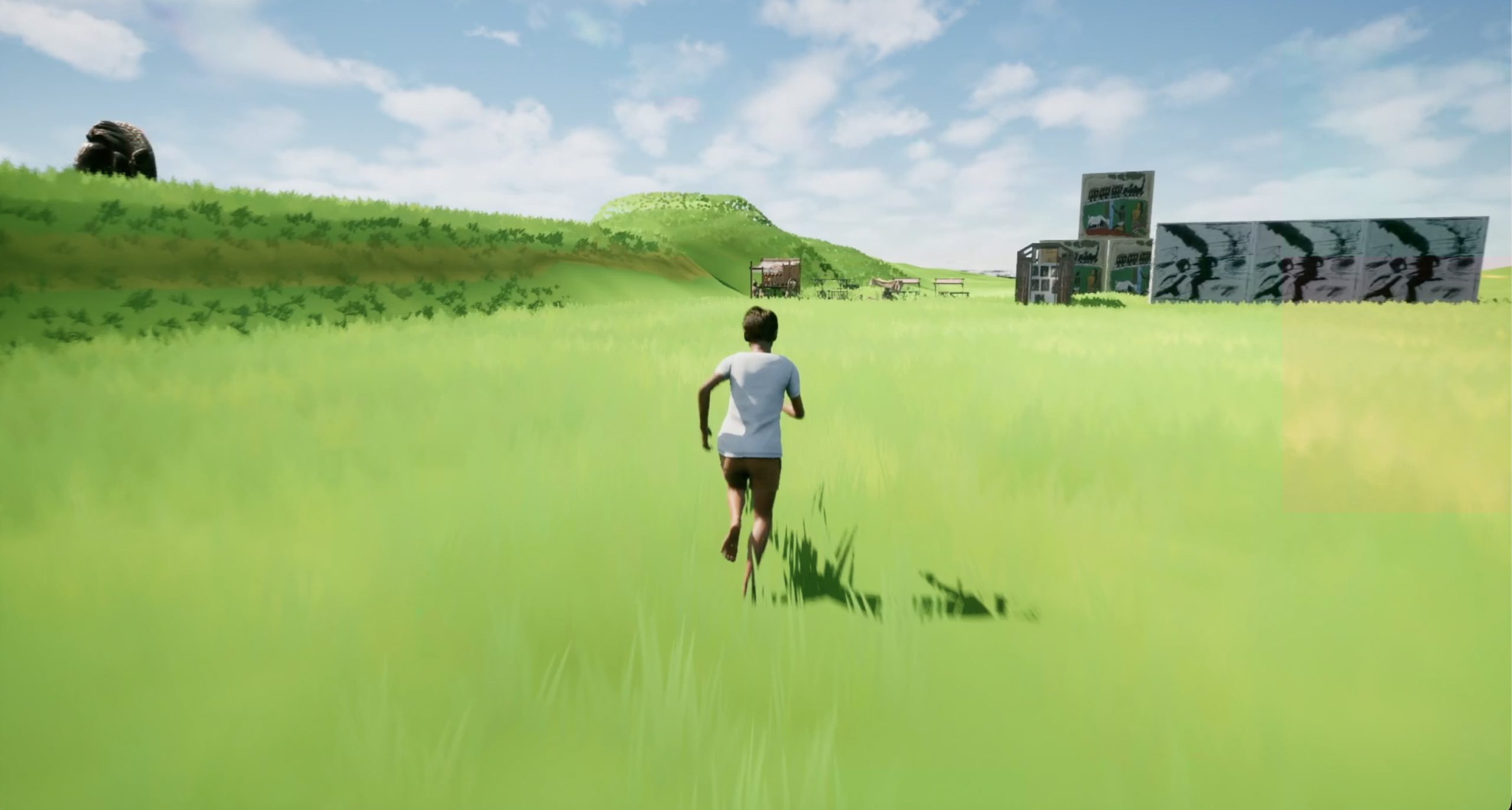
An interactive installation built in Unreal Engine and TouchDesigner that computationally reimagines Satyajit Ray’s cinematic universe as a playable world, where mise-en-scène becomes level design, memory becomes interaction, and every movement rewrites the language of cinema. Courtesy, Coded Playhouses.
Steve Cooke, founder of Tagsmart, a UK-based art authentication firm, works closely with estates and collectors on authentication and is cautious about these new developments: “The perception of blockchain in the art market has unfortunately been damaged following the many abuses of trust that took place in relation to NFTs… almost all collectors of physical artworks value the embodiment of provenance data in a blockchain record only insofar as it complements and corroborates a traditional paper certificate.”
Digital artworks offer a fresh set of conditions under which the rules of collecting and producing art change, not entirely but consequentially. Forgery & counterfeiting have always been the concern, but now it’s the conditions of the image or truth claim itself. What’s real? What’s digital? What’s artificial? These questions have paved the way for a new paradigm. Authenticity doesn’t rest in the object itself, but in the integrity of processes, systems, and histories that produce it.
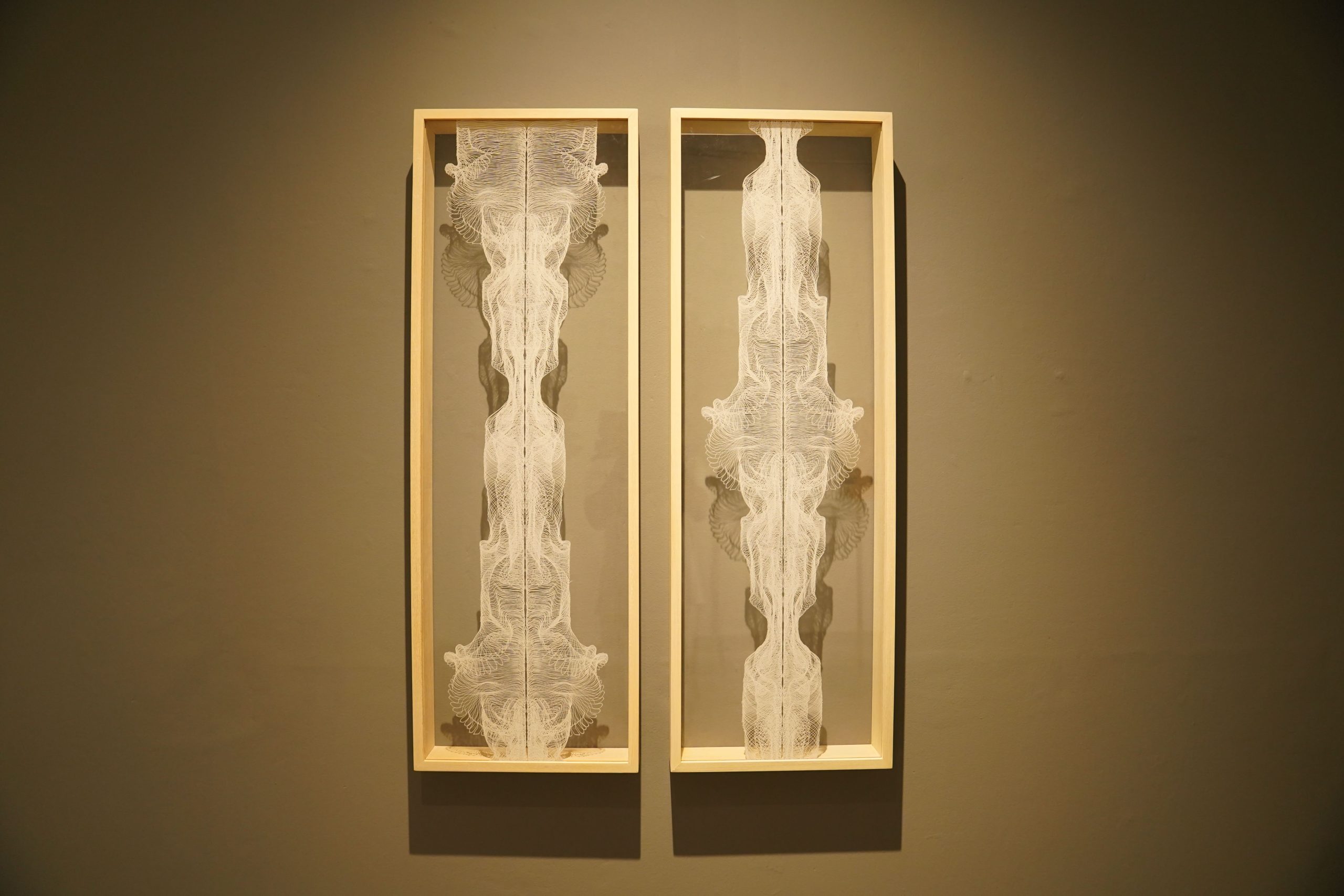
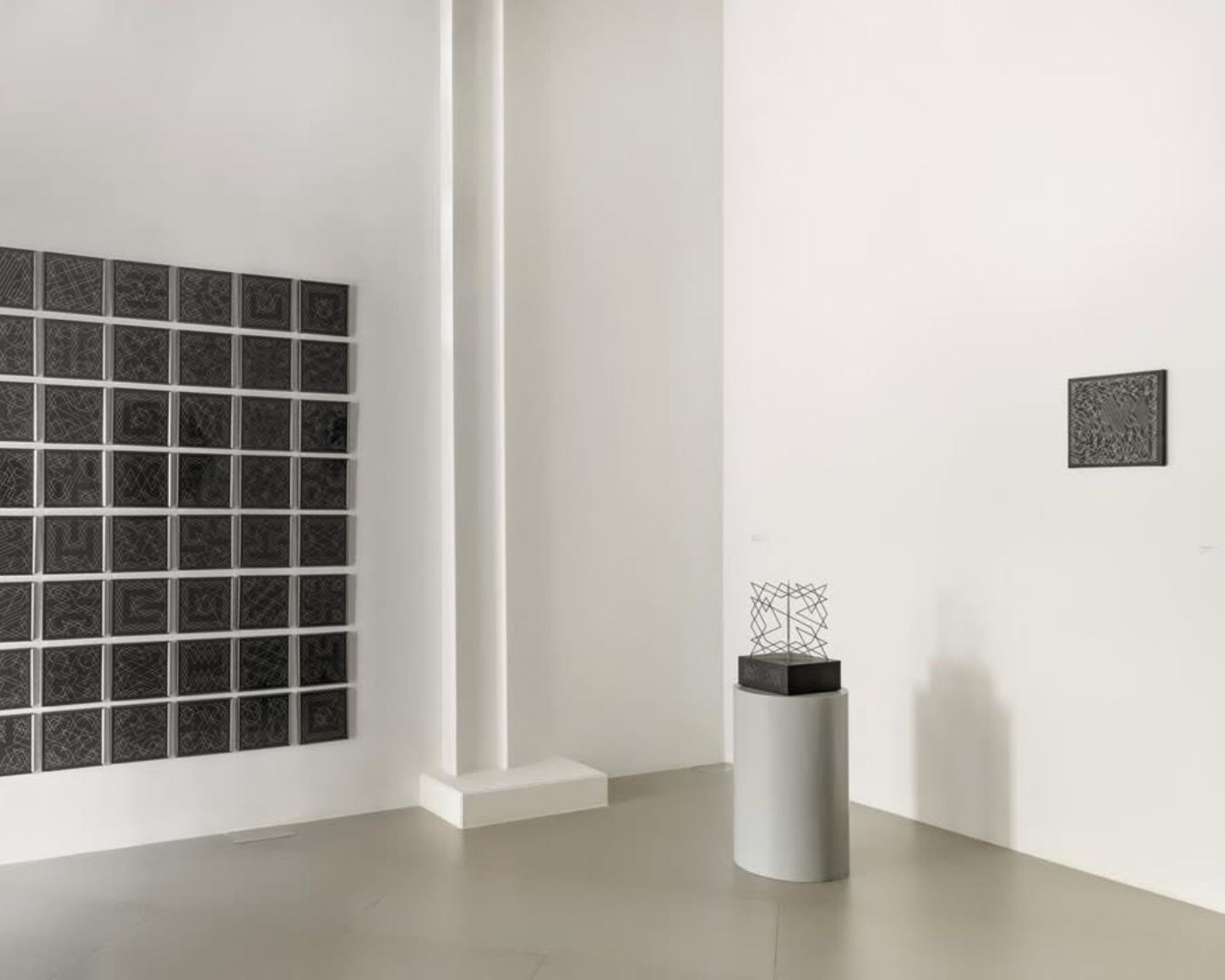
Nadi–Ida and Pingala: Motion Tracking of the Body in Yoga, Etched Diptych, 2023. A study in kinetic computation, translating bodily movement into computational form. Courtesy, Natasha Singh.
Provenance and trust deal with the same question: Where does this come from, and why does that story have my confidence? While blockchain and AI disrupt old evidentiary anchors, the problem worth focusing on may be translation — turning cryptographic proof into something a non-technologist can trust. Computational trust can’t be achieved by replacing human judgement with technological verification. And herein exist the alternative forms: Coffee stained certificates or half-ripped currency notes attached on the top. Anything giving the certificate its material and symbolic identity. That’s how the interface inadvertently becomes part of authentication, guiding the user on how to trust the evidence.
That question of translation looks different once it leaves the software layer and lands on stone, bronze, or wood. LN Tallur, a leading contemporary conceptual artist, when asked whether DPPs and blockchain can meaningfully strengthen provenance and trust for material artworks without reducing art to mere data, said, “…Blockchain and digital product passports can strengthen provenance, authenticity, and trust for collectors and museums. But they should document an artwork, not define its value. Art ultimately derives its significance from its materiality, cultural context, and lived experience…”
Computational media is permeating into multiple disciplines, clearly marked from the inaugural Zero 10 at Art Basel, Refik Anadol’s Dataland museum, and festivals with their dedicated alternate forums for expanded cinema. The Data proves it. The UBS Art Report points to a surge in digital-artwork sales from 2025-2026, with Gen Z buyers driving much of this growth. The European Union’s key legislation, Ecodesign for Sustainable Products Regulation (ESPR), has asked for new products from 2027 to have DPPs documenting their provenance, authenticity, and various life stages. Coupled with the new transparency requirements for AI systems, this highlights the future of the standardization of digital histories, materials, methods, and meanings. The Aura Blockchain Consortium (ABC), a non-profit offering blockchain-agnostic solutions exclusively to luxury brands, while emerging outside the art world, explains how trust is now produced, exhibited, and exchanged.
But how deeply this penetrates the South Asian ecosystem remains an open question. Eikowa, the first Indian art gallery rendering blockchain-registered digital certificates of authenticity, has already begun laying the groundwork there. These endeavours are also being formalised within spaces like StoneX Global’s Design District, the KNMA Museum, and the BRIJ Foundation in India. Natasha Singh, a computational sculptor and 2026 Mazra’ah Artist-in-Residence at Diriyah Art Futures, extends this argument:
“As artworks become computational and generative, authenticity will shift from being tied to a single static object to the integrity of the system that generates it.”
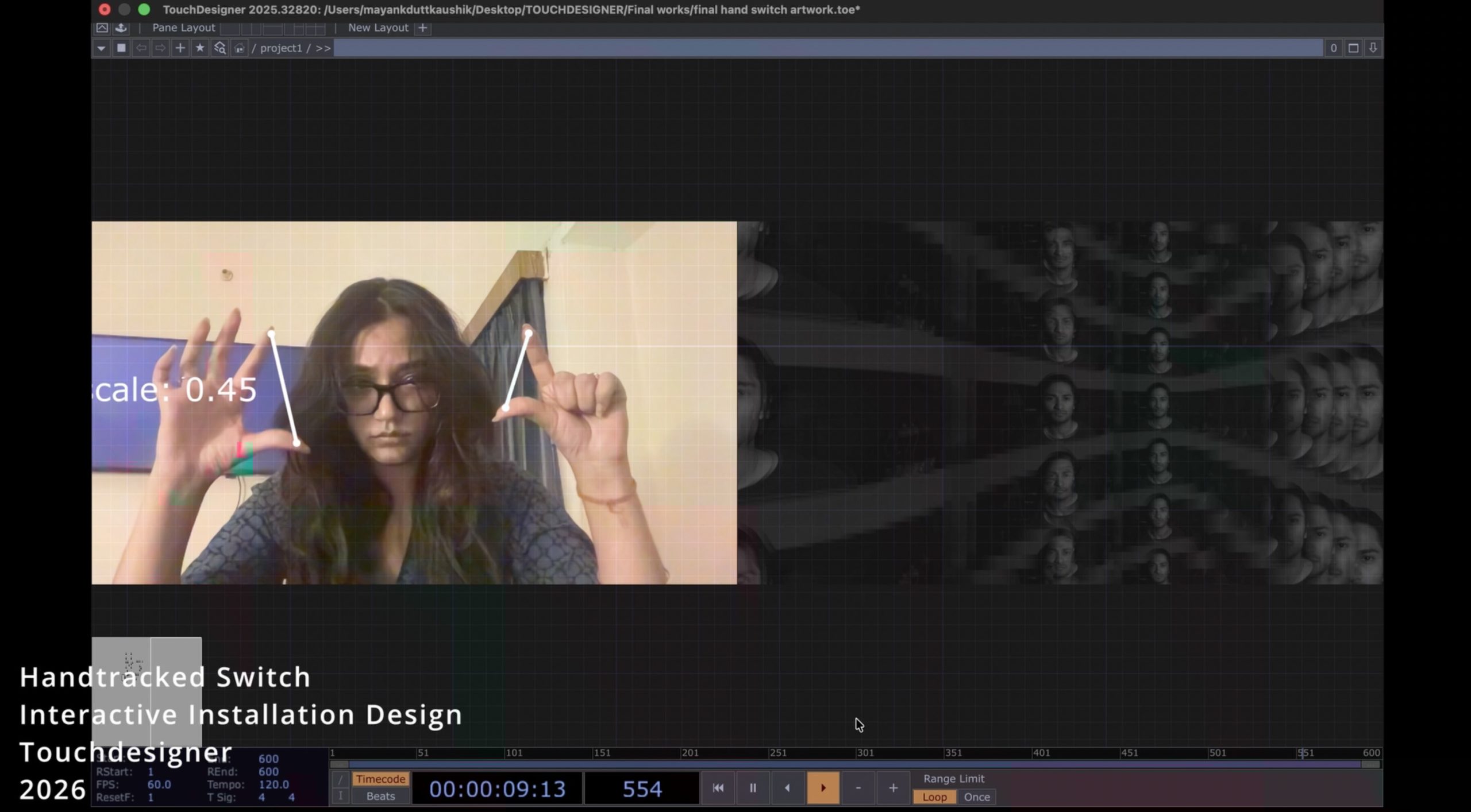
A hand-tracked interactive installation built in TouchDesigner, where gesture becomes interface and movement becomes control. Courtesy. Seerat Kaur Minhas.
Jacopo Gonzato, a computational sculptor, recently visited India for a new project which undertakes a completely new format to establish DPPs and blockchain networks for his computational-sonic sculpture and he puts it in his experience:
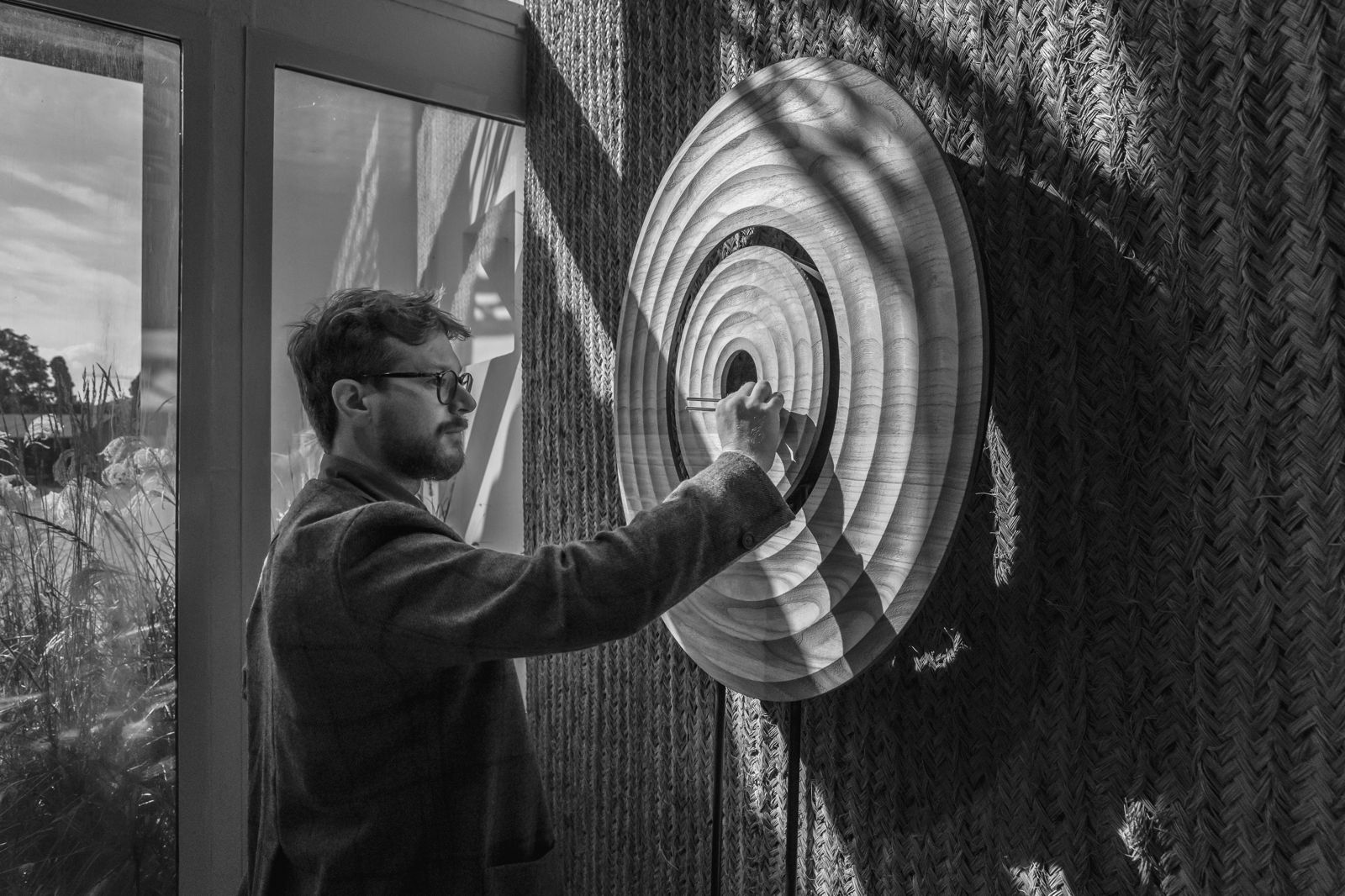
Jacopo Gonzato with one of his computational sound sculptures, where digital design, material craftsmanship, and sonic experience converge into a single immersive work. Courtesy, Jacopo Gonzat.
“What struck me is that technology itself is no longer the dividing line…The real difference is the spirit surrounding it. In India, I encountered an enthusiasm that reminded me of Italy…during the economic boom: the energy of a nation coming to the forefront…That confidence creates the conditions for genuine experimentation and that same applies to Blockchain integration. It allows industry, craftsmanship, technology and art to meet before the outcome is fully known.”
Gonzato’s answer is the wide-angle shot framing this transition. Computational technologies are in fact reconfiguring and reformatting how artworks are created, exhibited, and distributed. They change the way confidence in the work is generated. The future of trust in art may lay, not in replacing the certificate, the art institution, or the expert, but in expanding the ecosystem through which one understands and believes in the artwork. The coefficients that produce the spectatorial affect change. Provenance becomes programmable, authentication distributed, value coded, and an artwork’s history is perpetually accessible. But none of this renders critical human discernment obsolete. It merely changes the paraphernalia for making the judgment. The question with the Indian art ecosystem is not whether it is ready to accept and accommodate computational trust. It is about what kind of trust one wants to build with it. The future of collecting may therefore depend not on having more proof, but on learning how to read new forms of proof.
Words by Mayank Dutt Kaushik