There is a fine line between authentic and performative. Somewhere between being watched and learning to watch oneself, the line begins to blur. Social media today has made this especially difficult to filter out. But the desire to be seen and validated is hardly new, nor is it particular to adulthood. In Maslow’s hierarchy of needs, esteem and recognition sit close to the centre of human motivation. What is concerning now is how early we are given an audience.
Aashna Singh’s short film Dhan Ki Devi finds a child standing at that threshold. A Mumbai-based filmmaker and photographer, Singh’s work is rooted in memory, stories inherited from her grandmother, and questions of identity, power, and performance.Set in a small town during Diwali, the nine-minute debut short chronicles the daily life of Ayesha, a child influencer whose early years are caught between the demands of the camera and the currency of being seen. That inheritance of looking and listening quietly finds its way into this film, asking the audience to do the same.

Multimedia artist Aashna Singh
Nothing about Ayesha’s situation appears immediately alarming. Children have always been encouraged to perform for adults. There is affection in these acts, and a pleasure of seeing a child become what everyone wants. What begins as a child’s performance, however, can become an opportunity, a source of validation, and eventually, a livelihood. “I think it’s wish fulfillment to a certain degree,” Singh says of the parents in the film. Their aspirations come from a familiar desire to give a child what one did not have, recognise a talent, and build a better future around it. Yet, the more Ayesha’s visibility begins to mean something, the harder it becomes to distinguish what she wants from what is wanted for her.
For Ayesha, being a girl adds another layer. Expectations surrounding appearance, behaviour, and desirability enter childhood early, while social media turns that awareness into a permanent mirror. The scrutiny is no longer limited to those around her. It can arrive through a screen, from people she has never met, and follow her after the image is posted. “Women are haunted by these gendered expectations and objectives, and they get into children’s veins faster and younger,” she says. “They become hypervigilant about how they look, who’s looking, their follower count, their body, everything.”
Perhaps the unsettling part is that this performance is not necessarily fake. The camera is not simply documenting Ayesha; it becomes part of how she learns to present herself. “The moment a camera is on, they’re not normal. They switch on their Instagram personality,” Singh adds. What matters, then, is not whether the performance is real, but what it teaches a child about which version of herself is worth displaying. The film does not suggest that childhood disappears all at once. It seems to recede in smaller ways.
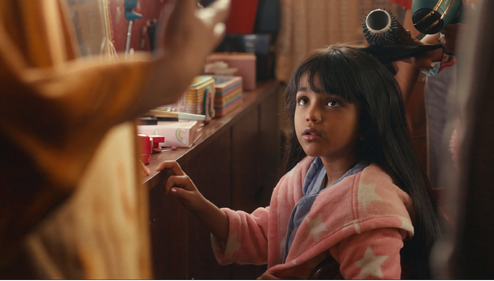
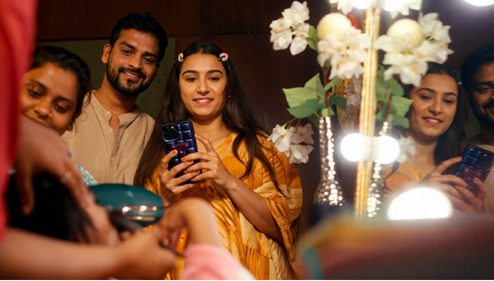
Ebadat Hussain as Ayesha in Dhan Ki Devi, navigating the expectations and gaze that accompany girlhood
This is where Dhan Ki Devi becomes less about a single family and more about the culture surrounding them. The parents make decisions, the child performs, the audience responds, and the platform rewards what keeps people watching. None of these actions exist in isolation. Singh’s concern is not simply who is responsible, but how easily responsibility becomes dispersed. “I don’t think every parent sets out to exploit their child. That’s what makes it complicated. We’re all complicit in this ecosystem; we consume this content, find it adorable and reward the very visibility we might later question,” she says.
Conscious of that complexity and nature of the subject Singh wanted to leave room for the audience to carry a lingering discomfort after watching the film. “The rebellion, for me, lies in hearing the screams muffled by performance,” she says.
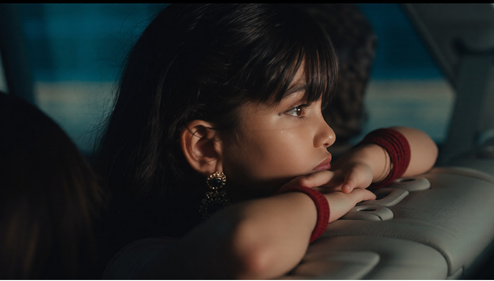
Exploring the tension between contemporary digital life and the constraints of a mediated childhood, the film exposes the vulnerability and quiet erosion of innocence
Dhan Ki Devi offers no single verdict. Set against Diwali, with its associations of prosperity, aspiration, and abundance, the film quietly complicates what it means to have more: More attention, more approval, more opportunity. In Ayesha’s world, however, the pursuit of more also raises a more difficult possibility: That what appears to be gain may come at the cost of something far less tangible.
The film was created under her production house Girgit Films Cinematographer: Piyush Puty
Editor: Vaishnavi Bhate
Producers: Gauri Awasthi & Aashna Singh
Music: Brij Dahlvi
Animation: Lakhi Soni
Cast: Ebadat Hussain , Girish Singh and Meghana Panchal
Poster Design: Akshita Monga
Words by Aditi Veer
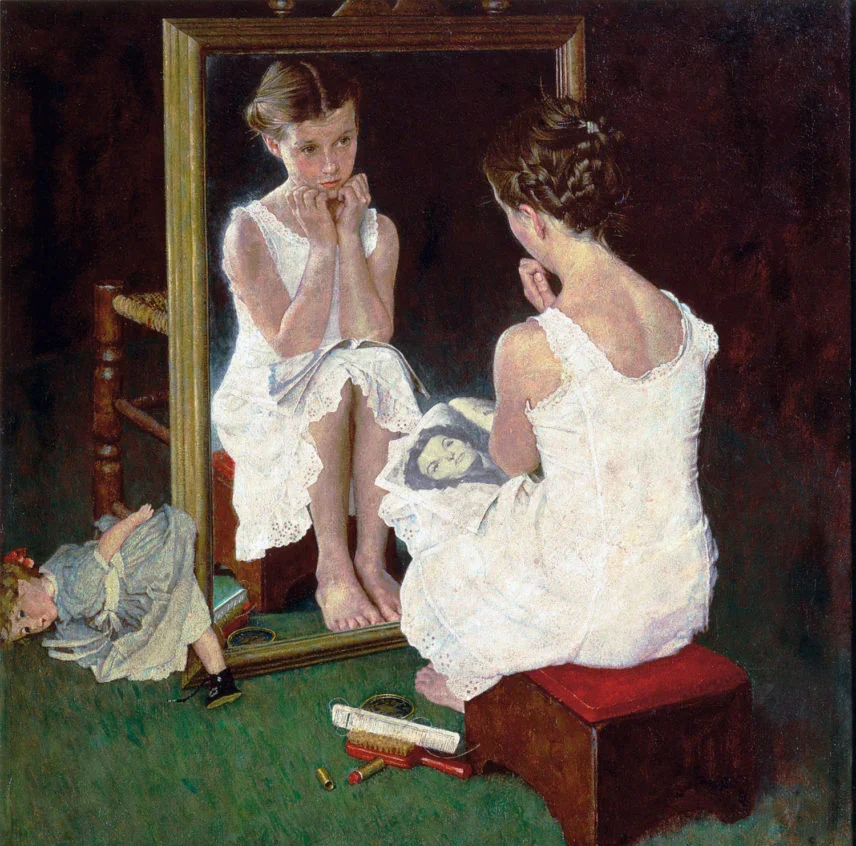
Featured Image: Girl at Mirror by Norman Rockwell (1954)